Skip to content
#edge computing Open access

Deviation-aware digital twin-enabled joint user association and task partitioning for industrial IoT offloading

Sep 2026 · Scientific Reports
IoT and Edge/Fog Computing

Abstract

Latency-critical industrial Internet of Things (IIoT) applications outstrip on-device computing capability, yet digital twin (DT)-assisted multi-access edge computing (MEC) is typically modeled as a perfectly synchronized mirror and treats edge association and task partitioning separately. This paper proposes a deviation-aware three-layer DT-assisted offloading framework spanning IIoT devices, micro base stations (MBSs), and a macro base station (BS). Twins of devices and MBSs are maintained at the BS and explicitly parameterized by CPU-frequency, transmit-power, and bandwidth deviations, so decisions are made from realistically imperfect twin state and the resulting delay-estimation error is quantified. Under delay and energy constraints, discrete user association and continuous partitioning ratios are jointly optimized to minimize average offloading time plus a service-failure penalty, with distinct delay models derived for parallel independent subtasks and serially dependent subtasks. Because the problem is non-convex, NP-hard, and hybrid-variable, a deep multi-agent parameterized Q-network (DMAPQN) is developed in which each device twin acts as an agent and a global mixing network couples local hybrid-action Q-values, preserving the discrete–continuous action structure. Simulations show a 10 MB task completes in 330 ms versus 415, 596, 617, and 705 ms for dichotomy, random, full-MBS, and local execution—a 20.5% gain over the strongest baseline.

Read PDF

Similar papers

#computer vision Review Sep 2017

Agile Software Development Methods: Review and Analysis

This publication proposes a definition and a classification of agile software development approaches and analyses ten software development methods that can be characterized as being "agile" against the defined criterion.

P. Abrahamsson, O. Salo, Jussi Ronkainen et al. · 727 citations · ⚡54
#computer vision Jun 2008

The impact of agile practices on communication in software development

The study shows that agile practices improve both informal and formal communication, but indicates that, in larger development situations involving multiple external stakeholders, a mismatch of adequate communication mechanisms can sometimes even hinder the communication.

M. Pikkarainen, Jukka Haikara, O. Salo et al. · 401 citations · ⚡48
#machine learning Review Open access Oct 2014

Software development in startup companies: A systematic mapping study

The results indicate that software engineering work practices are chosen opportunistically, adapted and configured to provide value under the constrains imposed by the startup context.

Nicolò Paternoster, Carmine Giardino, M. Unterkalmsteiner et al. · 394 citations · ⚡54

Related blog posts

GPT-Lab Sep 17, 2026

Beyond Prompt Engineering: The Role of Tacit Knowledge in Software Engineering

AI is making software generation faster, but speed does not remove the need for expertise. As more work is delegated to AI, tacit knowledge may become one of the most important human advantages in software engineering. The post Beyond Prompt Engineering: The Role of Tacit Knowledge in Software Engineering appeared first on GPT-Lab.

Microsoft Research Blog Aug 31, 2026

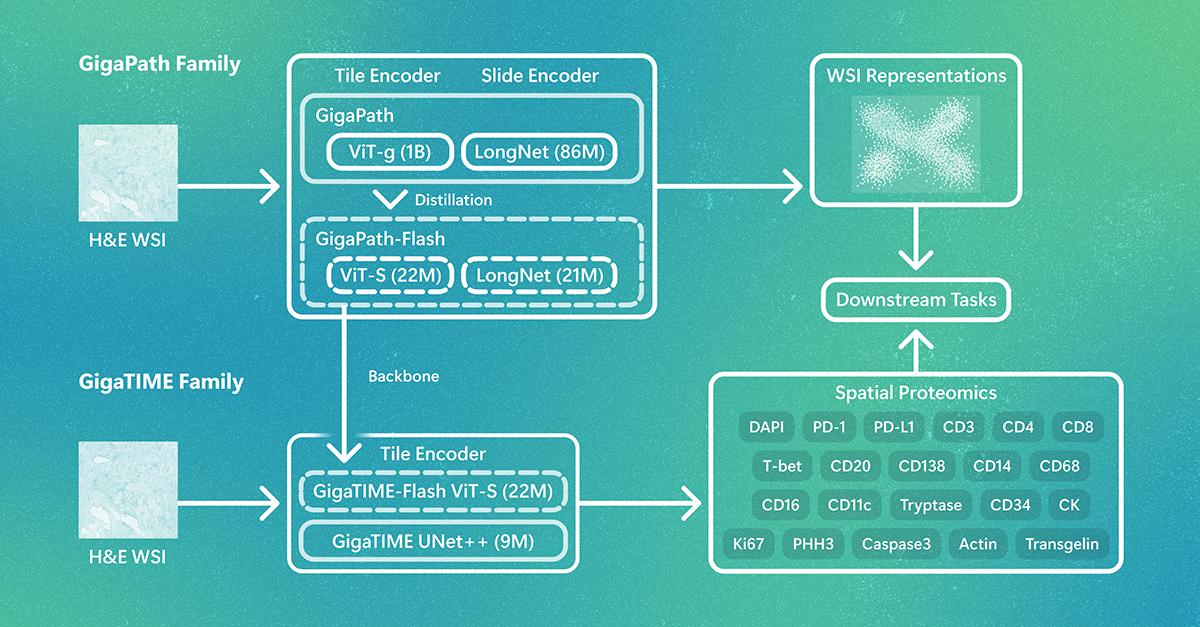
GigaPath-Flash and GigaTIME-Flash: Toward population-scale discovery with efficient pathology foundation models

What if pathology foundation models could do more with less? GigaPath-Flash and GigaTIME-Flash cut computational demands while maintaining strong performance, opening the door to larger studies and broader exploration. The post GigaPath-Flash and GigaTIME-Flash: Toward population-scale discovery with efficient pathology foundation models appeared first on Microsoft Research.

We use cookies to run the site and, with your consent, for analytics and to show ads. See our Cookie Policy.