Skip to content
#edge computing Review Open access

Understanding Photon-Counting CT: Physics, Detector Technology, and Image Reconstructions

Sep 2026 · Italian National Conference on Sensors · Vol 26 · 0 citations · 140 references
Medicine

Abstract

Photon-counting computed tomography (PCCT) represents a detector-level transformation in CT imaging. Unlike conventional energy-integrating detectors, photon-counting detectors directly convert individual X-ray interactions into electrical pulses and classify them according to energy. This architecture enables electronic-noise rejection, smaller detector pixels, improved geometric dose efficiency, and intrinsic spectral acquisition. However, the images available to radiologists are not produced directly by the detector; energy-resolved photon counts must first undergo calibration, correction, projection formation, reconstruction, and material decomposition. This narrative review provides an educational framework linking X-ray attenuation physics, detector materials and architectures, energy thresholds, and detector nonidealities to the resulting PCCT images. It describes conventional polyenergetic and ultra-high-resolution images, virtual monoenergetic imaging, iodine maps, virtual non-contrast imaging, calcium and bone subtraction, virtual non-calcium imaging, effective atomic number maps, electron-density maps, and emerging K-edge techniques. Particular emphasis is placed on the clinical purpose and limitations of each reconstruction, including noise, artifacts, partial-volume effects, misregistration, incomplete subtraction, calibration dependence, and limited cross-platform comparability. Practical considerations for protocol design, image selection, interpretation workflow, and spectral-data archiving are also discussed. Understanding the pathway from photon detection to image formation is essential for selecting the appropriate reconstruction, avoiding misinterpretation, and integrating PCCT effectively into clinical radiology.

Read PDF

Similar papers

#computer vision Review Sep 2017

Agile Software Development Methods: Review and Analysis

This publication proposes a definition and a classification of agile software development approaches and analyses ten software development methods that can be characterized as being "agile" against the defined criterion.

P. Abrahamsson, O. Salo, Jussi Ronkainen et al. · 727 citations · ⚡54
#computer vision Jun 2008

The impact of agile practices on communication in software development

The study shows that agile practices improve both informal and formal communication, but indicates that, in larger development situations involving multiple external stakeholders, a mismatch of adequate communication mechanisms can sometimes even hinder the communication.

M. Pikkarainen, Jukka Haikara, O. Salo et al. · 401 citations · ⚡48
#machine learning Review Open access Oct 2014

Software development in startup companies: A systematic mapping study

The results indicate that software engineering work practices are chosen opportunistically, adapted and configured to provide value under the constrains imposed by the startup context.

Nicolò Paternoster, Carmine Giardino, M. Unterkalmsteiner et al. · 394 citations · ⚡54

Related blog posts

GPT-Lab Sep 17, 2026

Beyond Prompt Engineering: The Role of Tacit Knowledge in Software Engineering

AI is making software generation faster, but speed does not remove the need for expertise. As more work is delegated to AI, tacit knowledge may become one of the most important human advantages in software engineering. The post Beyond Prompt Engineering: The Role of Tacit Knowledge in Software Engineering appeared first on GPT-Lab.

Microsoft Research Blog Aug 31, 2026

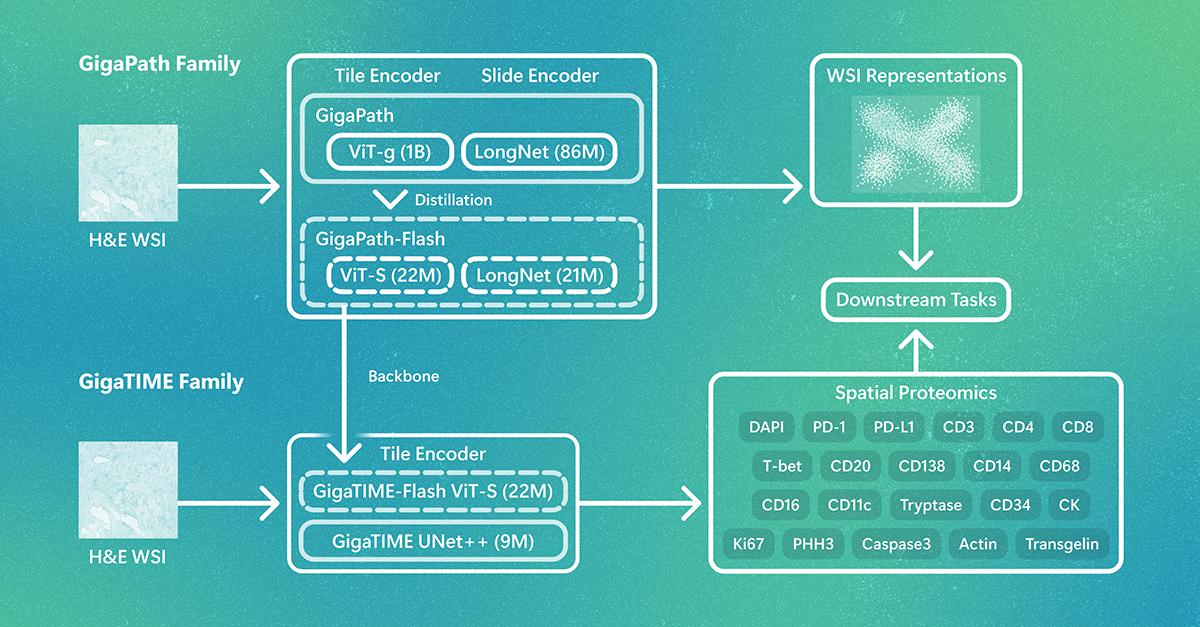
GigaPath-Flash and GigaTIME-Flash: Toward population-scale discovery with efficient pathology foundation models

What if pathology foundation models could do more with less? GigaPath-Flash and GigaTIME-Flash cut computational demands while maintaining strong performance, opening the door to larger studies and broader exploration. The post GigaPath-Flash and GigaTIME-Flash: Toward population-scale discovery with efficient pathology foundation models appeared first on Microsoft Research.

We use cookies to run the site and, with your consent, for analytics and to show ads. See our Cookie Policy.