This study bridges leadership and operational innovation by demonstrating that ethical leadership acts not only as a relational trust builder, but also as a structural enabler that activates human resource and knowledge capabilities.
Abstract
This article aims to examine how ethical leadership shapes innovative work behavior (IWB) in knowledge-intensive software development environments by positioning perceived human resource management (HRM) practices and knowledge management (KM) processes as dual organizational mechanisms.
Grounded in social learning theory and the ability–motivation–opportunity (AMO) framework, an empirical model was tested using survey data from 717 software professionals in Türkiye. Data were analyzed using structural equation modeling and Hayes’ PROCESS macro.
Ethical leadership significantly enhances IWB both directly and indirectly. Perceived HRM fairness and developmental support strongly boost KM processes, establishing a sequential pathway through which ethical leadership drives employee-led innovation.
This study bridges leadership and operational innovation by demonstrating that ethical leadership acts not only as a relational trust builder, but also as a structural enabler that activates human resource and knowledge capabilities.
The study contributes an integrative framework linking adaptive leadership, digital change management, Digital HRM effectiveness, and innovation culture and shows that adaptive leadership is not a peripheral condition, but a social mechanism that converts digital tools into accepted and meaningful HR practices.
T. N. Habsjah, A. Buchdadi, Corry Yohana· International Journal Of Eco...· 0 citations
Knowledge Management (KM) initiatives frequently struggle not because of technological limitations but due to persistent misalignment between organisational culture and KM objectives. While prior research has established the importance of culture, leadership, and social dynamics, there remains limited theoretical clar...
K. Albright· European Conference on Knowl...· 0 citations
The study concludes that performance outcomes are best explained through a mechanism-based linkage rather than a technology-only perspective in public sector contexts.
Ferdinandus Christian, Asadur Rahman Muhammad, Dyah Widowati et al.· Jurnal Indovisi· 0 citations
Employee innovation has become a critical factor for organizational sustainability and competitiveness, particularly in the banking sector, which faces increasing demands for service excellence, digital transformation, and operational efficiency. This study aims to examine the influence of transformational leadership o...
Winanti Dwi Utari, R. Kurniasih, Daryono Daryono et al.· The International Conference...· 0 citations
Sustaining organizational change following public-sector leadership training remains a major challenge, as post-training innovations frequently fail to become institutionalized due to leadership turnover and staff rotation. Although widely studied, empirical evidence explaining how leadership, human resources, and tech...
Jerry Marantika, Aldri Frinaldri, Retwando Retwando· IAIC Transactions on Sustain...· 0 citations
This study investigates how transformational leadership enhances digital readiness among Malaysian micro, small, and medium enterprises (MSMEs) by mediating knowledge infrastructure. It addresses the managerial question of how leaders’ decisions translate into technological preparedness in resource-constrained contexts...
Muhammad Saqib Iqbal, Muhammad Fawad Khan, Zulhasni Abdul Rahim et al.· Journal on Innovation and Su...· 0 citations
Related blog posts
Microsoft Research Blog· microsoft.comOct 30, 2026
Evaluating Microsoft Copilot at enterprise scale requires test data that captures the full complexity of real organizations, yet real enterprise data contains sensitive information that cannot be used for evaluation under any circumstances. The post From synthetic enterprise data evaluations to real Microsoft Copilot AI confidence appeared first on Microsoft Research.
Microsoft Research Blog· microsoft.comOct 29, 2026
Host Sowbhagya Suresh shares some of the latest news and cutting-edge research from across Microsoft—from understanding the challenges facing coding agents to uncovering how people use AI at work and improving extended-range weather forecasting. The post Microsoft Research Focus – Edition #97 appeared first on Microsoft Research.
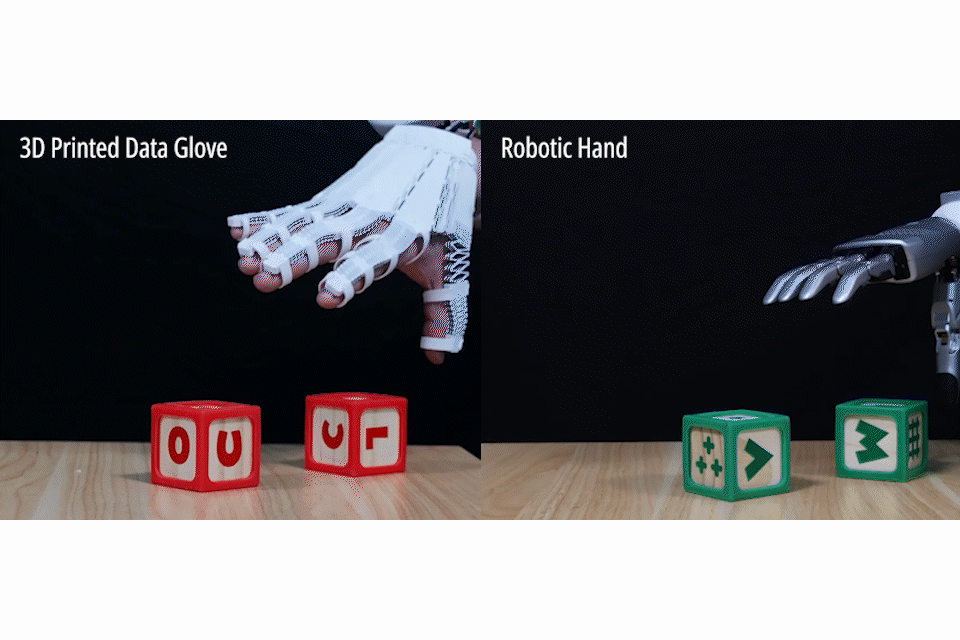
“X-Hinges” helps design and 3D print items like lamps and gloves with an interactive twist: automatically embedded sensors that perceive and adaptively respond to human contact.
We use cookies to run the site and, with your consent, for analytics and to show ads.
See our Cookie Policy.