Skip to content
#edge computing Open access

IDENTIFICATION OF REGIONAL TECTONIC STRUCTURES OF CAMEROON VOLCANIC LINE USING GRAVIMAGNETIC AND 2D LAPLACIAN TERRAIN ANALYSIS TECHNIQUES

Aug 2026 · Geodynamics & Tectonophysics · 0 citations · 34 references

Abstract

Cameroon is made up of an extensive tectonic system that includes a geologically significant structure in Central Africa called the Cameroon Volcanic Line (CVL). In this study, a multi-phase approach was applied to identify new tectonic structures across the CVL using gravity data from the XGM2019e_2159 model, magnetic data from EMAG2, and topographic data from GMRT. First-order and second-order vertical derivatives of both magnetic and gravity data were used to filter geologic structures in the study areas. To understand the trend of the structures based on the potential field, edge enhancement of potential-field data using normalized statistics (standard deviation edge detection) and phase sym­metry were applied. Phase symmetry provides phase-based formulation that can detect ridges and valleys corresponding to geological structures regardless of anomaly strength, making it robust to noise and interpolation artifacts. For de­tailed analysis to delineate new and already existing lineaments, a 2D Laplacian terrain transformation of the topographic data was computed at various heights from 20 to 105 km. The gravitational and magnetic structures discovered were superimposed on the transformed topographic map and drawn out to identify the orientation and direction of the faults. The study further illustrates the occurrence of potential geologic features associated with gravity anomalies, magnetic anomalies, and the new lineaments identified in the area. These results highlight that the lineaments identified are mostly orientated SE-SW and act as evidence of the still continuing process of deformation of the CVL. This finding is essential for advanced regional tectonic modeling across the CVL.

Read PDF

Similar papers

#computer vision Review Sep 2017

Agile Software Development Methods: Review and Analysis

This publication proposes a definition and a classification of agile software development approaches and analyses ten software development methods that can be characterized as being "agile" against the defined criterion.

P. Abrahamsson, O. Salo, Jussi Ronkainen et al. · 727 citations · ⚡54
#computer vision Jun 2008

The impact of agile practices on communication in software development

The study shows that agile practices improve both informal and formal communication, but indicates that, in larger development situations involving multiple external stakeholders, a mismatch of adequate communication mechanisms can sometimes even hinder the communication.

M. Pikkarainen, Jukka Haikara, O. Salo et al. · 401 citations · ⚡48
#machine learning Review Open access Oct 2014

Software development in startup companies: A systematic mapping study

The results indicate that software engineering work practices are chosen opportunistically, adapted and configured to provide value under the constrains imposed by the startup context.

Nicolò Paternoster, Carmine Giardino, M. Unterkalmsteiner et al. · 394 citations · ⚡54

Related blog posts

GPT-Lab Sep 17, 2026

Beyond Prompt Engineering: The Role of Tacit Knowledge in Software Engineering

AI is making software generation faster, but speed does not remove the need for expertise. As more work is delegated to AI, tacit knowledge may become one of the most important human advantages in software engineering. The post Beyond Prompt Engineering: The Role of Tacit Knowledge in Software Engineering appeared first on GPT-Lab.

Microsoft Research Blog Aug 31, 2026

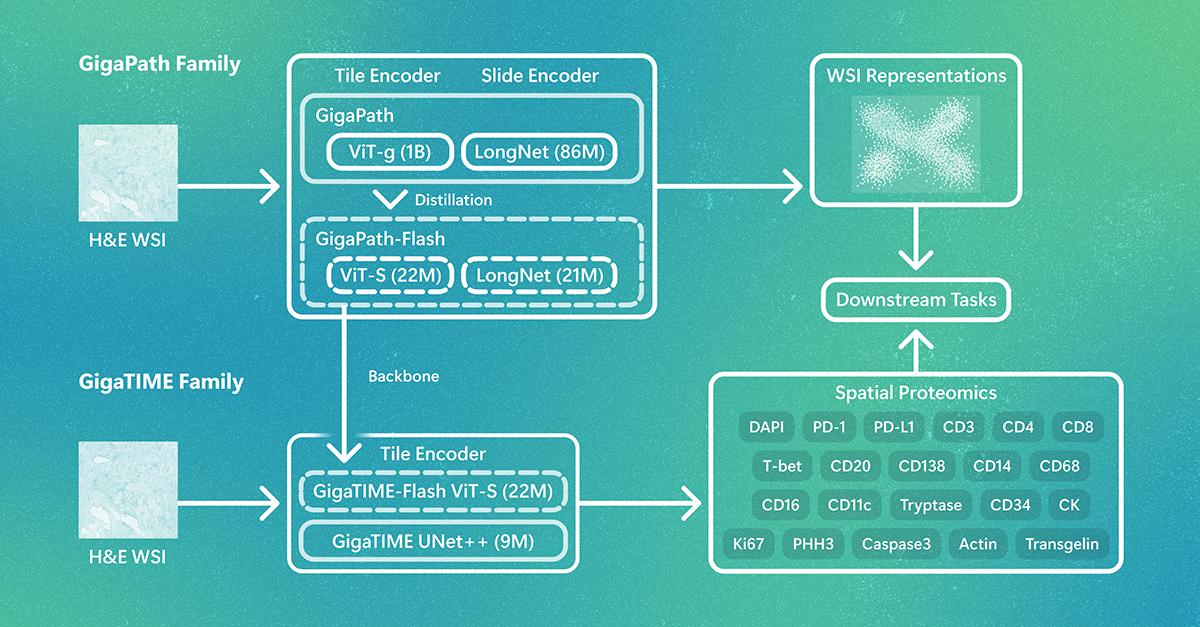
GigaPath-Flash and GigaTIME-Flash: Toward population-scale discovery with efficient pathology foundation models

What if pathology foundation models could do more with less? GigaPath-Flash and GigaTIME-Flash cut computational demands while maintaining strong performance, opening the door to larger studies and broader exploration. The post GigaPath-Flash and GigaTIME-Flash: Toward population-scale discovery with efficient pathology foundation models appeared first on Microsoft Research.

We use cookies to run the site and, with your consent, for analytics and to show ads. See our Cookie Policy.