Aug 2026· JAREE (Journal on Advanced Research in Electrical Engineering)· 0 citations· 20 references
TL;DR
A novel video-based stress detection system with speaking awareness that dynamically processes facial features according to online detection of speech activities to demonstrate the system's applicability to real-world applications in stress tracking across healthcare, educational, and workplace well-being contexts.
Abstract
The assessment of psychological stress through non-contact computer vision methods faces significant challenges when facial expressions are affected by motions caused by speech. In this paper, we introduce a novel video-based stress detection system with speaking awareness that dynamically processes facial features according to online detection of speech activities. The system employs an extended 41-minute Trier Social Stress Test protocol with a controlled baseline, moderate stress induction, peak stress increase, and recovery stages to comprehensively record the dynamics of stress development. Facial landmark detection is handled by MediaPipe Face Mesh and provides 468 three-dimensional landmarks with sub-pixel accuracy, while the speaking-aware processing strategy dynamically selects the most appropriate feature sets: seven robust ones during speech-containing intervals like face movement, eye aspect ratio, and forehead wrinkles, and nine full-featured ones during silent intervals with additional mouth and jaw metrics. The adaptive strategy addresses the intrinsic limitation of traditional facial analysis, which treats speaking and non-speaking states homogeneously. Deployment on the Raspberry Pi CM4 edge computing device enables real-time operation with privacy preservation via localized processing. Empirical testing with 71 participants illustrates strong performance with an F1-score of 83.16%, outperforming conventional methods by 4.24%. Cross-population validation affirms good generalization potential across various populations for the entire 41-minute protocol, thereby demonstrating the system's applicability to real-world applications in stress tracking across healthcare, educational, and workplace well-being contexts.
This publication proposes a definition and a classification of agile software development approaches and analyses ten software development methods that can be characterized as being "agile" against the defined criterion.
P. Abrahamsson, O. Salo, Jussi Ronkainen et al.· arXiv.org· 727 citations· ⚡54
The study shows that agile practices improve both informal and formal communication, but indicates that, in larger development situations involving multiple external stakeholders, a mismatch of adequate communication mechanisms can sometimes even hinder the communication.
M. Pikkarainen, Jukka Haikara, O. Salo et al.· Empirical Software Engineeri...· 401 citations· ⚡48
The results indicate that software engineering work practices are chosen opportunistically, adapted and configured to provide value under the constrains imposed by the startup context.
Nicolò Paternoster, Carmine Giardino, M. Unterkalmsteiner et al.· Information and Software Tec...· 394 citations· ⚡54
The perception of the impact of agile methods is predominantly positive, and several challenge areas were discovered, but based on this study, agile methods are here to stay.
M. Laanti, O. Salo, P. Abrahamsson· Information and Software Tec...· 260 citations· ⚡20
AI is making software generation faster, but speed does not remove the need for expertise. As more work is delegated to AI, tacit knowledge may become one of the most important human advantages in software engineering. The post Beyond Prompt Engineering: The Role of Tacit Knowledge in Software Engineering appeared first on GPT-Lab.
MIT News · Artificial Intelligence· news.mit.eduSep 9, 2026
A weeklong summer workshop brought higher education faculty to campus to explore how AI and machine learning materials can be adapted for their classrooms.
MIT News · Artificial Intelligence· news.mit.eduSep 2, 2026
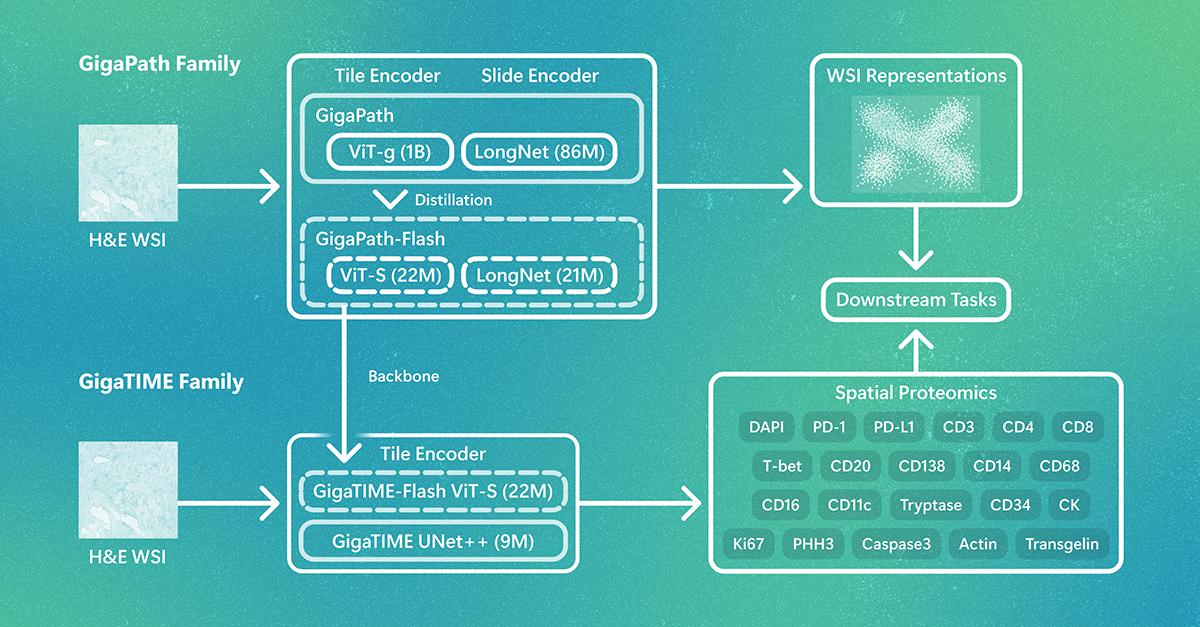
What if pathology foundation models could do more with less? GigaPath-Flash and GigaTIME-Flash cut computational demands while maintaining strong performance, opening the door to larger studies and broader exploration. The post GigaPath-Flash and GigaTIME-Flash: Toward population-scale discovery with efficient pathology foundation models appeared first on Microsoft Research.
We use cookies to run the site and, with your consent, for analytics and to show ads.
See our Cookie Policy.