Skip to content
#edge computing Preprint

Wedge problems and dispersive shock waves in the two-dimensional Toda lattice

Aug 2026 · 0 citations · 63 references
Physics

Abstract

We study the formation and interaction of dispersive shock waves (DSWs) in the two-dimensional Toda lattice subject to wedge-type initial conditions, and show that their interaction gives rise to a discrete analog of Mach reflection for dispersive shock waves in discrete systems. The initial jump across each leg of the wedge acts locally as a Riemann problem for the one-dimensional Toda lattice, producing two oblique DSWs whose leading-edge soliton amplitude is determined explicitly by the one-dimensional Whitham modulation theory. The two-dimensional nature of the problem manifests when these oblique DSWs meet along the symmetry axis. We show that, for compressive wedges (i.e., when the initial conditions are such that two oblique DSWs that are generated propagate toward each other), a critical slope $q_{\mathrm{cr}}$ separates two regimes: in the subcritical regime ($q<q_{\mathrm{cr}}$) the interaction is resonant and it produces an expanding DSW whose amplitude, length and velocity are explicitly computed by using exact soliton solutions of the two-dimensional Toda lattice; in the supercritical regime ($q>q_{\mathrm{cr}}$) the interaction is ordinary and produces a localized peak whose amplitude is determined analytically. We also show qualitatively that a similar dichotomy between two regimes exists for expansive wedges (i.e., when the initial conditions are such that the two oblique DSWs propagate away from each other). We confirm all analytical predictions by comparing them with the results of direct numerical simulations. Finally, we show that the continuum limit of the result is consistent with the analogous theory for the Kadomtsev-Petviashvili equation, providing an independent validation of the analytical framework.

View source

Similar papers

#computer vision Review Sep 2017

Agile Software Development Methods: Review and Analysis

This publication proposes a definition and a classification of agile software development approaches and analyses ten software development methods that can be characterized as being "agile" against the defined criterion.

P. Abrahamsson, O. Salo, Jussi Ronkainen et al. · 727 citations · ⚡54
#computer vision Jun 2008

The impact of agile practices on communication in software development

The study shows that agile practices improve both informal and formal communication, but indicates that, in larger development situations involving multiple external stakeholders, a mismatch of adequate communication mechanisms can sometimes even hinder the communication.

M. Pikkarainen, Jukka Haikara, O. Salo et al. · 401 citations · ⚡48
#machine learning Review Open access Oct 2014

Software development in startup companies: A systematic mapping study

The results indicate that software engineering work practices are chosen opportunistically, adapted and configured to provide value under the constrains imposed by the startup context.

Nicolò Paternoster, Carmine Giardino, M. Unterkalmsteiner et al. · 394 citations · ⚡54

Related blog posts

GPT-Lab Sep 17, 2026

Beyond Prompt Engineering: The Role of Tacit Knowledge in Software Engineering

AI is making software generation faster, but speed does not remove the need for expertise. As more work is delegated to AI, tacit knowledge may become one of the most important human advantages in software engineering. The post Beyond Prompt Engineering: The Role of Tacit Knowledge in Software Engineering appeared first on GPT-Lab.

Microsoft Research Blog Aug 31, 2026

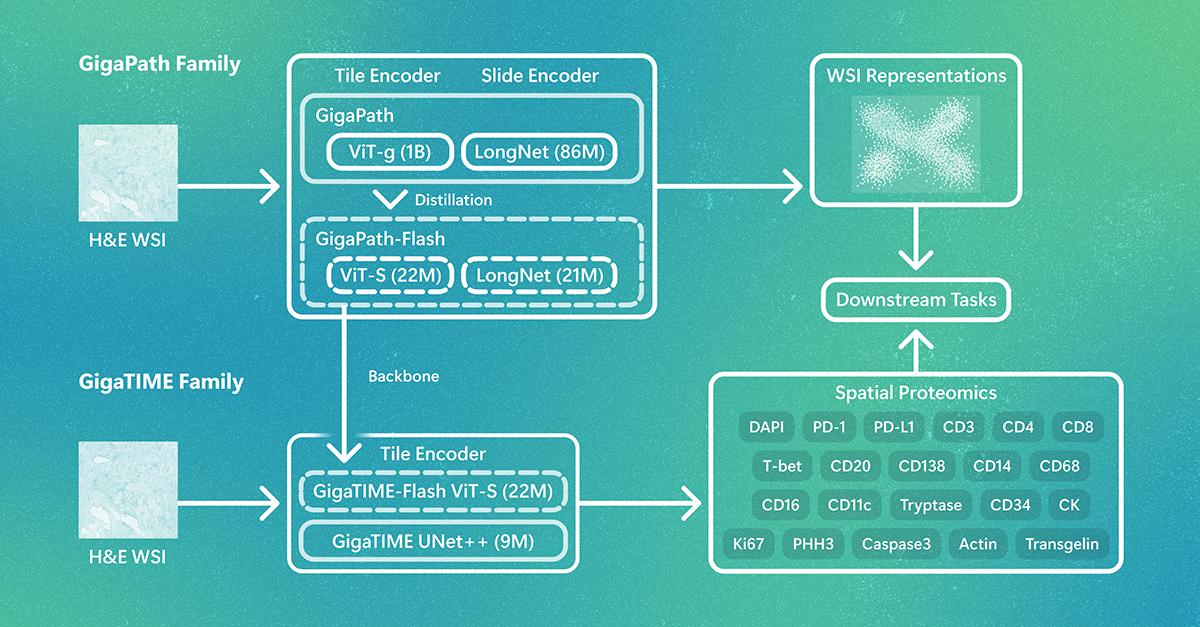
GigaPath-Flash and GigaTIME-Flash: Toward population-scale discovery with efficient pathology foundation models

What if pathology foundation models could do more with less? GigaPath-Flash and GigaTIME-Flash cut computational demands while maintaining strong performance, opening the door to larger studies and broader exploration. The post GigaPath-Flash and GigaTIME-Flash: Toward population-scale discovery with efficient pathology foundation models appeared first on Microsoft Research.

We use cookies to run the site and, with your consent, for analytics and to show ads. See our Cookie Policy.