Skip to content

EVA: Efficient Token Compression Co-Optimization With Heterogeneous CIM Architecture for Video LLM Acceleration

Sep 2026 · IEEE Transactions on Very Large Scale Integration (vlsi) Systems · Vol 34, pp. 2935-2948 · 0 citations · 52 references

Abstract

Video large language models (VLLMs) enable powerful multimodal reasoning but face severe efficiency challenges on edge devices due to the massive computational and memory demands caused by lengthy video-token sequences. Existing methods struggle to efficiently compress spatiotemporally redundant tokens while minimizing DRAM access overhead during inference. In this work, we propose EVA, a co-designed algorithm–hardware framework for accelerating VLLMs. At the algorithm level, we introduce an efficient training-free token compression (ETC) method that combines greedy temporal segmentation (GTS) to adaptively partition frames by content similarity, with diversity spatiotemporal compression (DSC) to retain semantically rich tokens from both static and dynamic regions. The method is plug-and-play, requires no retraining, and employs sign similarity to enable hardware-friendly computing at scale. At the hardware level, we design a heterogeneous accelerator integrating a lightweight token compression engine (TCE), a computing-in-memory (CIM) engine for in situ execution of linear layers, and a reconfigurable digital attention engine with hardware-specialized attention computation and an interleaved pipeline dataflow. Across multiple models and video benchmarks, EVA preserves accuracy under aggressive token reduction and delivers substantial efficiency gains. Notably, on LLaVA-OneVision-7B, EVA compresses 90% of video tokens while maintaining 97.8% of the original accuracy. EVA achieves up to <inline-formula> <tex-math notation="LaTeX">$10.3\times $ </tex-math></inline-formula> speedup and <inline-formula> <tex-math notation="LaTeX">$47.4\times $ </tex-math></inline-formula> energy reduction compared to GPU, and achieves up to <inline-formula> <tex-math notation="LaTeX">$3.8\times $ </tex-math></inline-formula> speedup over prior specialized accelerators, demonstrating a practical path toward scalable VLLM inference on resource-constrained devices.

View source

Similar papers

#computer vision Review Sep 2017

Agile Software Development Methods: Review and Analysis

This publication proposes a definition and a classification of agile software development approaches and analyses ten software development methods that can be characterized as being "agile" against the defined criterion.

P. Abrahamsson, O. Salo, Jussi Ronkainen et al. · 727 citations · ⚡54
#computer vision Jun 2008

The impact of agile practices on communication in software development

The study shows that agile practices improve both informal and formal communication, but indicates that, in larger development situations involving multiple external stakeholders, a mismatch of adequate communication mechanisms can sometimes even hinder the communication.

M. Pikkarainen, Jukka Haikara, O. Salo et al. · 401 citations · ⚡48
#machine learning Review Open access Oct 2014

Software development in startup companies: A systematic mapping study

The results indicate that software engineering work practices are chosen opportunistically, adapted and configured to provide value under the constrains imposed by the startup context.

Nicolò Paternoster, Carmine Giardino, M. Unterkalmsteiner et al. · 394 citations · ⚡54

Related blog posts

GPT-Lab Sep 17, 2026

Beyond Prompt Engineering: The Role of Tacit Knowledge in Software Engineering

AI is making software generation faster, but speed does not remove the need for expertise. As more work is delegated to AI, tacit knowledge may become one of the most important human advantages in software engineering. The post Beyond Prompt Engineering: The Role of Tacit Knowledge in Software Engineering appeared first on GPT-Lab.

Microsoft Research Blog Aug 31, 2026

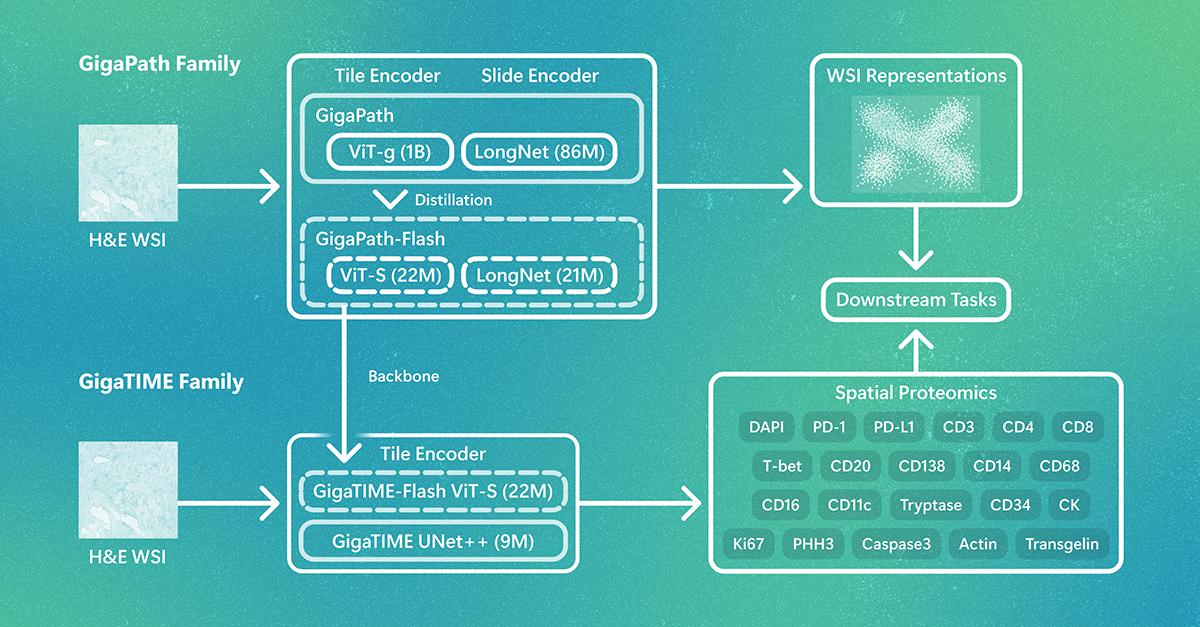
GigaPath-Flash and GigaTIME-Flash: Toward population-scale discovery with efficient pathology foundation models

What if pathology foundation models could do more with less? GigaPath-Flash and GigaTIME-Flash cut computational demands while maintaining strong performance, opening the door to larger studies and broader exploration. The post GigaPath-Flash and GigaTIME-Flash: Toward population-scale discovery with efficient pathology foundation models appeared first on Microsoft Research.

We use cookies to run the site and, with your consent, for analytics and to show ads. See our Cookie Policy.