Embodied navigation requires agents to translate heterogeneous goals and visual observations into actions across tasks, environments, and robot embodiments. Modern vision-language models (VLMs) already encode spatial priors for visual grounding, spatial reasoning, and pointing, but these capabilities are rarely elicited directly for robot control. Existing navigation systems instead rely on task- or embodiment-specific components, fragmenting perception, reasoning, and action while offering limited generalization. Here we present LightNav-0, a compact generalist embodied navigation model that elicits the spatial intelligence of a pretrained VLM and aligns it with navigation, without task-specific prediction heads. LightNav-0 represents diverse navigation tasks through a unified token interface: dual-channel pointing expresses task-, scene-, and embodiment-agnostic spatial intent, while a residual vector-quantized action tokenizer maps this intent to precise, embodiment-specific trajectories. Together with temporally aware visual history compression, ER mid-training, supervised fine-tuning, and reinforcement learning, this formulation supports instruction following, open-vocabulary object navigation, and visual tracking within a single model. The navigation training corpus spans 2K+ scenes and 4K+ hours of embodied navigation data. LightNav-ER, the embodied-reasoning checkpoint used to initialize LightNav-0, attains the highest complete-set average across 8 embodied-reasoning benchmarks, while LightNav-0 achieves state-of-the-art monocular success rates across all 10 public navigation simulation settings. Real-world evaluations further demonstrate zero-shot generalization across robot embodiments, diverse scenes, and static and dynamic targets. These results establish compact VLMs as a unified and transferable backbone for generalist embodied navigation.
GAOKAO-Bench is introduced, an intuitive benchmark that employs questions from the Chinese GAOKAO examination as test samples, including both subjective and objective questions that contribute a robust evaluation benchmark for future large language models and offers valuable insights into the advantages and limitations of such models.
Xiaotian Zhang, Chun-yan Li, Yi Zong et al.· arXiv.org· 216 citations· ⚡17
This work investigates the possibilities of using LLMs in a resume screening setting via a document retrieval framework that simulates job candidate selection and finds that the MTEs are biased, significantly favoring White-associated names in 85% of cases and female-associated names in only 11.1% of cases.
Empirically, PRISM reduces the end-to-end time for data selection and model tuning to just 30% of conventional pipelines, and achieves this efficiency while simultaneously enhancing performance, surpassing models fine-tuned on the full dataset across eight multimodal and three language understanding benchmarks.
Jinhe Bi, Yifan Wang, Danqi Yan et al.· arXiv.org· 73 citations· ⚡4
The method, ECCOLA, is presented, which aims at making the high-level AI ethics principles more practical, making it possible for developers to more easily implement them in practice.
Ville Vakkuri, Kai-Kristian Kemell, P. Abrahamsson· EUROMICRO Conference on Soft...· 64 citations· ⚡6
This paper designs Markov decision processes (MDPs) for different combinatorial problems and proposes to train conditional GFlowNets to sample from the solution space and demonstrates that GFlowNet policies can efficiently find high-quality solutions.
Dinghuai Zhang, H. Dai, Esmeralda S. Whitammer et al.· Advances in Neural Informati...· 59 citations· ⚡8
An empirical study on the current state of practice in artificial intelligence ethics is conducted by means of a multiple case study of five case companies, which indicates a gap between research and practice in the area.
Ville Vakkuri, Kai-Kristian Kemell, Joni Kultanen et al.· arXiv.org· 56 citations· ⚡6
Related blog posts
MIT News · Artificial Intelligence· news.mit.eduJul 30, 2026
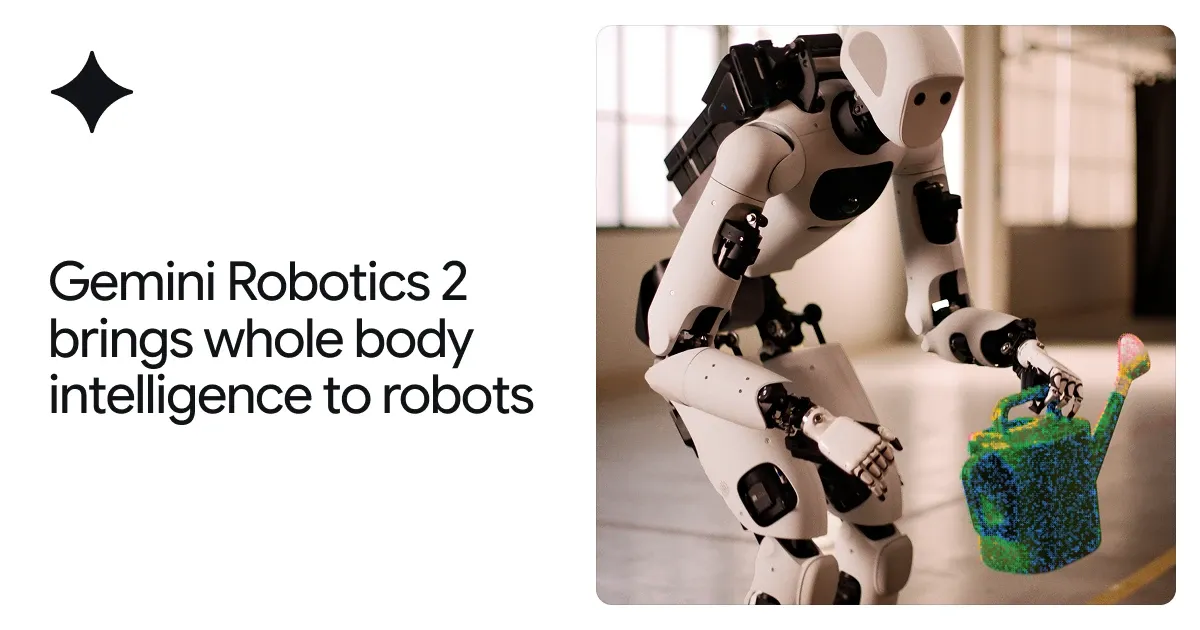
From feet to fingertips — we are teaching robots intelligent whole-body control, fine dexterity, and teamwork to complete a broad range of complex tasks.