Large vision-language models (LVLMs) frequently generate content unsupported by visual inputs. Preliminary experiments show that visual evidence is primarily incorporated into answer-side representations in early-to-middle decoder layers, while its direct influence progressively weakens in later layers. This attenuation suggests that visual evidence acquired earlier may be insufficiently utilized during subsequent generation. Based on this observation, we propose EviAnchor, a training-free and single-branch inference framework that preserves and reactivates visual evidence throughout generation. EviAnchor introduces Regional Evidence Anchor (REA) slots to progressively aggregate dense visual tokens into spatially structured representations. It then strengthens the current decision state's access to these visual anchors through decision-conditioned evidence routing, mitigating excessive dependence on textual context. Finally, the model resumes its native Transformer computation to integrate the retrieved visual evidence with question semantics and generation history. Experiments across POPE, CHAIR, and MMHal-Bench demonstrate consistent improvements in visual grounding.

This publication proposes a definition and a classification of agile software development approaches and analyses ten software development methods that can be characterized as being "agile" against the defined criterion.
P. Abrahamsson, O. Salo, Jussi Ronkainen et al.· arXiv.org· 727 citations· ⚡54
The study shows that agile practices improve both informal and formal communication, but indicates that, in larger development situations involving multiple external stakeholders, a mismatch of adequate communication mechanisms can sometimes even hinder the communication.
M. Pikkarainen, Jukka Haikara, O. Salo et al.· Empirical Software Engineeri...· 401 citations· ⚡48
The results indicate that software engineering work practices are chosen opportunistically, adapted and configured to provide value under the constrains imposed by the startup context.
Nicolò Paternoster, Carmine Giardino, M. Unterkalmsteiner et al.· Information and Software Tec...· 394 citations· ⚡54
The possibility of inferring high-dimensional data inference in a model that consists of a prior and an auxiliary differentiable constraint given some additional information is considered, thereby allowing a range of potential applications in adapting models to new domains and tasks.
Alexandros Graikos, Esmeralda S. Whitammer, N. Jojic et al.· Neural Information Processin...· 316 citations· ⚡15
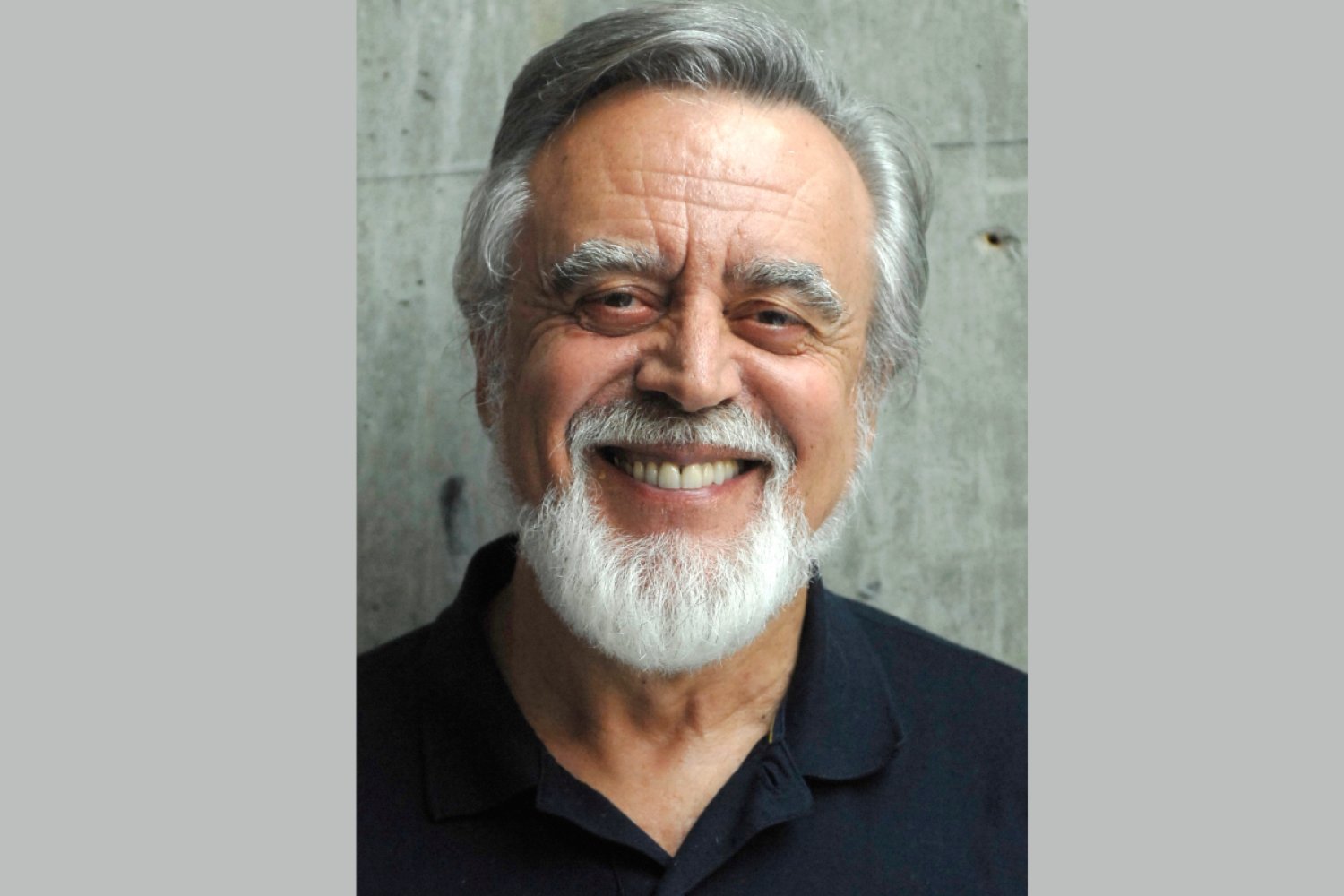
Known for his clear and elegant writing style, Bertsekas shaped fields from control and optimization to large-scale computation and artificial intelligence.