Skip to content
#robotics #human-computer interaction Preprint Open access

Crisis Governance at the Joints. Mapping the Ethical and Societal Territory of Crisis Management Technologies: The Case of Human-Swarm Teaming

Anthony Longo
Nov 2026
Robotics Human-computer Interaction

Abstract

Crisis and disaster governance increasingly relies on technologies that sense, classify and act faster than humans can. Drone swarms coordinated with human operators, known as human-swarm teaming, provide a productive case to review the field of crisis governance. They promise better situational awareness in disaster response, but they also raise questions about human control, responsibility, surveillance, triage, dual use and public legitimacy. This report maps the ethical and societal territory that HST opens up. It unpacks this territory with a 3i-framework, the Interface, where operators and swarms work together, the Infrastructure, where organisations distribute tasks, decisions and blame, and the Imaginary, where law, policy and shared societal assumptions define what a crisis is and which interventions it justifies. The central claim is that these concerns cannot be addressed one level at a time. Many of the most pressing problems, such as responsibility gaps and the erosion of meaningful human control, arise at the joints between levels, through four translations, habits harden, routines become stories, principles become procedures, and procedures become prompts. Drawing on a critical review of literature across philosophy of technology, political theory, moral psychology, philosophy of mind, AI ethics, and critical disaster and security studies, the report develops this framework, illustrates it with two worked examples, and derives design and governance implications and a set of questions for developers, emergency organisations and policymakers.

View source

Similar papers

#artificial intelligence Conference Open access Jun 2018

Gibson Env: Real-World Perception for Embodied Agents

This paper investigates developing real-world perception for active agents, proposes Gibson Environment for this purpose, and showcases a set of perceptual tasks learned therein.

F. Xia, Amir Zamir, Zhi-Yang He et al. · 1,069 citations · ⚡112
#computer vision Review Sep 2017

Agile Software Development Methods: Review and Analysis

This publication proposes a definition and a classification of agile software development approaches and analyses ten software development methods that can be characterized as being "agile" against the defined criterion.

P. Abrahamsson, O. Salo, Jussi Ronkainen et al. · 727 citations · ⚡54
#computer vision Jun 2008

The impact of agile practices on communication in software development

The study shows that agile practices improve both informal and formal communication, but indicates that, in larger development situations involving multiple external stakeholders, a mismatch of adequate communication mechanisms can sometimes even hinder the communication.

M. Pikkarainen, Jukka Haikara, O. Salo et al. · 401 citations · ⚡48
#machine learning Review Open access Oct 2014

Software development in startup companies: A systematic mapping study

The results indicate that software engineering work practices are chosen opportunistically, adapted and configured to provide value under the constrains imposed by the startup context.

Nicolò Paternoster, Carmine Giardino, M. Unterkalmsteiner et al. · 394 citations · ⚡54

Related blog posts

MIT News · Artificial Intelligence Nov 13, 2026

Helping robots fit into the human workplace

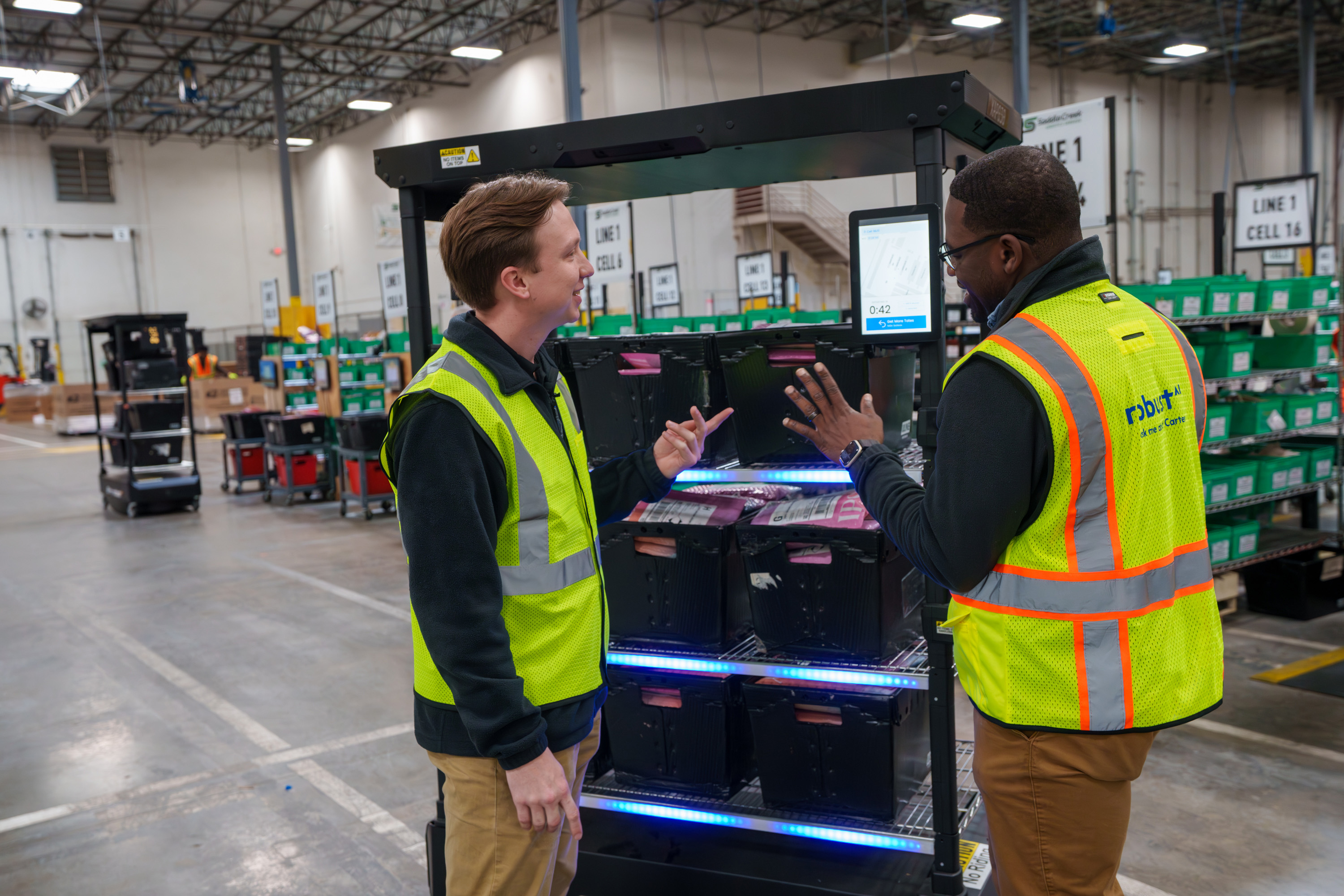
Founded by Anthony Jules ’92, SM ’92 and Professor Emeritus Rodney Brooks, Robust AI’s robots are designed to collaborate with humans in factories and warehouses.

We use cookies to run the site and, with your consent, for analytics and to show ads. See our Cookie Policy.

