Text-Aware, Vision-Blind: How Multimodal Image Editing Systems Handle Unsafe Inputs
Ziqing YangYixin WuMichael BackesYang Zhang
Nov 2026
Machine LearningComputer VisionCybersecurity
Abstract
Multimodal image generation systems have made rapid progress and increasingly emphasize content safety. However, their safety mechanisms tend to rely on a single modality and lack joint consideration of both visual content and text prompts, particularly in instruction-guided image editing, where the uploaded image may itself carry risk. We thus introduce EditSafetyBench, a benchmark that measures system-level safety awareness of advanced image editing systems, containing 5,940 image-instruction pairs, covering safe and unsafe images across 11 risk categories and three edit intents. We then probe the benchmark dataset on four systems, including Gemini, GPT, Qwen API, and Qwen Local. Based on our evaluation, we observe a systematic text-vision safety mismatch: Gemini and GPT refuse 87.1\% and 81.6\% cases containing unsafe-intent editing prompts, while only refusing 24.2\% and 22.4\% cases with both unsafe images and neutral instructions. At the category level, most risks are considered inconsistently by different systems, e.g., GPT allows 70.4\% editing attempts of unsafe political content while Gemini only allows 34.8\%. Notably, sexual content shows the strongest visual sensitivity, likely benefiting from mature NSFW identification works. Our findings highlight the need for safety guardrails that jointly reason over both visual and textual modalities in image editing systems.

It is found that Llama 3 delivers comparable quality to leading language models such as GPT-4 on a plethora of tasks, and performs competitively with the state-of-the-art on image, video, and speech recognition tasks.
This paper investigates developing real-world perception for active agents, proposes Gibson Environment for this purpose, and showcases a set of perceptual tasks learned therein.
F. Xia, Amir Zamir, Zhi-Yang He et al.· 2018 IEEE/CVF Conference on...· 1,069 citations· ⚡112
This publication proposes a definition and a classification of agile software development approaches and analyses ten software development methods that can be characterized as being "agile" against the defined criterion.
P. Abrahamsson, O. Salo, Jussi Ronkainen et al.· arXiv.org· 727 citations· ⚡54
The study shows that agile practices improve both informal and formal communication, but indicates that, in larger development situations involving multiple external stakeholders, a mismatch of adequate communication mechanisms can sometimes even hinder the communication.
M. Pikkarainen, Jukka Haikara, O. Salo et al.· Empirical Software Engineeri...· 401 citations· ⚡48
The results indicate that software engineering work practices are chosen opportunistically, adapted and configured to provide value under the constrains imposed by the startup context.
Nicolò Paternoster, Carmine Giardino, M. Unterkalmsteiner et al.· Information and Software Tec...· 394 citations· ⚡54
Research Manager Mike Walker reflects on a career spanning hacker culture, cybersecurity, and AI, sharing lessons about trust, teamwork, leadership, and why solving difficult problems requires curiosity, judgment, agility—and an understanding of the rules. The post Learn the rules: The hacker mindset appeared first on Microsoft Research.
MIT News · Artificial Intelligence· news.mit.eduOct 28, 2026
Professor Paris Smaragdis develops computers with superhuman hearing for applications like speech recognition, music understanding, and environmental monitoring.
Exploring how generative AI could make machine vision more accessible to businesses. The post GenEye in a Box: Making Machine Vision Something You Can Just Ask For appeared first on GPT-Lab.
Microsoft Research Blog· microsoft.comAug 11, 2026
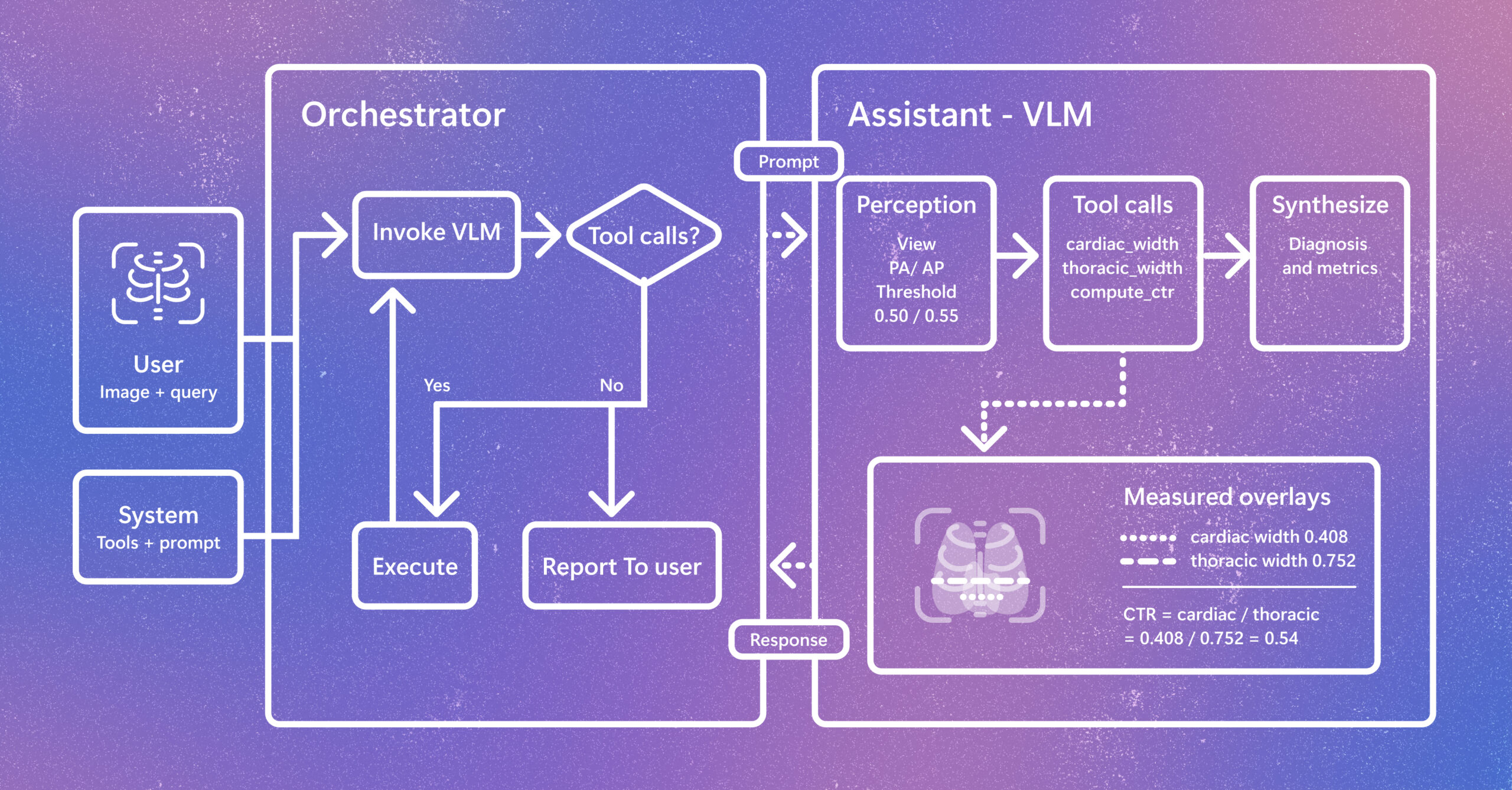
Radiology AI is evolving beyond report generation. CARE-X explores a unified approach that combines flexible reasoning, calibrated predictions, and measurement-based tools for chest X-ray interpretation. The post Introducing CARE-X: Towards Clinically Useful Radiology VLMs with Auxiliary Supervision, Reward-Aligned Learning, and Tool-Augmented Measurement appeared first on Microsoft Research.
We use cookies to run the site and, with your consent, for analytics and to show ads.
See our Cookie Policy.