Fixing the Twin, Not the Detector: Sim-to-Real Roadside LiDAR Detection from Digital-Twin Data
KuanLin ChenFeng-jui Kuo
Nov 2026
Machine LearningComputer Vision
Abstract
Roadside LiDAR detectors are expensive to train on real labels, and digital twins promise to replace these labels, but a detector trained on a twin meets a different sensor, different objects and different annotation conventions on the real site. We describe the pipeline that placed first in the LUMPI track of the UrbanTwin Sim2Real LiDAR Challenge (IEEE BigData 2026 Cup, 0.5541 combined score) and fifth on its V2X-Real track (0.8102). Every detector is a CenterPoint model trained only on synthetic data, on a single 8 GB laptop GPU. Most of the gain came from correcting differences between the twin and the real site rather than from the detector. We align the twin's coordinates, point density and box convention with the test sensor, generate the pedestrians and riders that the twins lack, plus street clutter as unlabeled negatives, and rebuild twin objects at real size and real point density. A non-learned resampling to the per-cell point density of unlabeled real frames lifts LUMPI realism from 0.589 to 0.947, against 0.949 between real frames. Label-free post-processing then exploits what a fixed roadside sensor guarantees: static structures recur in every frame, and real objects have characteristic point statistics. Reporting the validation and test gain of each component side by side, we find that corrections of systematic sim-to-real differences transfer to the test set, typically keeping a quarter to three quarters of their validation gain, while choices that fit the few objects of a validation set do not.

It is found that Llama 3 delivers comparable quality to leading language models such as GPT-4 on a plethora of tasks, and performs competitively with the state-of-the-art on image, video, and speech recognition tasks.
This paper investigates developing real-world perception for active agents, proposes Gibson Environment for this purpose, and showcases a set of perceptual tasks learned therein.
F. Xia, Amir Zamir, Zhi-Yang He et al.· 2018 IEEE/CVF Conference on...· 1,069 citations· ⚡112
This publication proposes a definition and a classification of agile software development approaches and analyses ten software development methods that can be characterized as being "agile" against the defined criterion.
P. Abrahamsson, O. Salo, Jussi Ronkainen et al.· arXiv.org· 727 citations· ⚡54
The study shows that agile practices improve both informal and formal communication, but indicates that, in larger development situations involving multiple external stakeholders, a mismatch of adequate communication mechanisms can sometimes even hinder the communication.
M. Pikkarainen, Jukka Haikara, O. Salo et al.· Empirical Software Engineeri...· 401 citations· ⚡48
The results indicate that software engineering work practices are chosen opportunistically, adapted and configured to provide value under the constrains imposed by the startup context.
Nicolò Paternoster, Carmine Giardino, M. Unterkalmsteiner et al.· Information and Software Tec...· 394 citations· ⚡54
Related blog posts
MIT News · Artificial Intelligence· news.mit.eduOct 28, 2026
Professor Paris Smaragdis develops computers with superhuman hearing for applications like speech recognition, music understanding, and environmental monitoring.
Exploring how generative AI could make machine vision more accessible to businesses. The post GenEye in a Box: Making Machine Vision Something You Can Just Ask For appeared first on GPT-Lab.
Microsoft Research Blog· microsoft.comAug 11, 2026
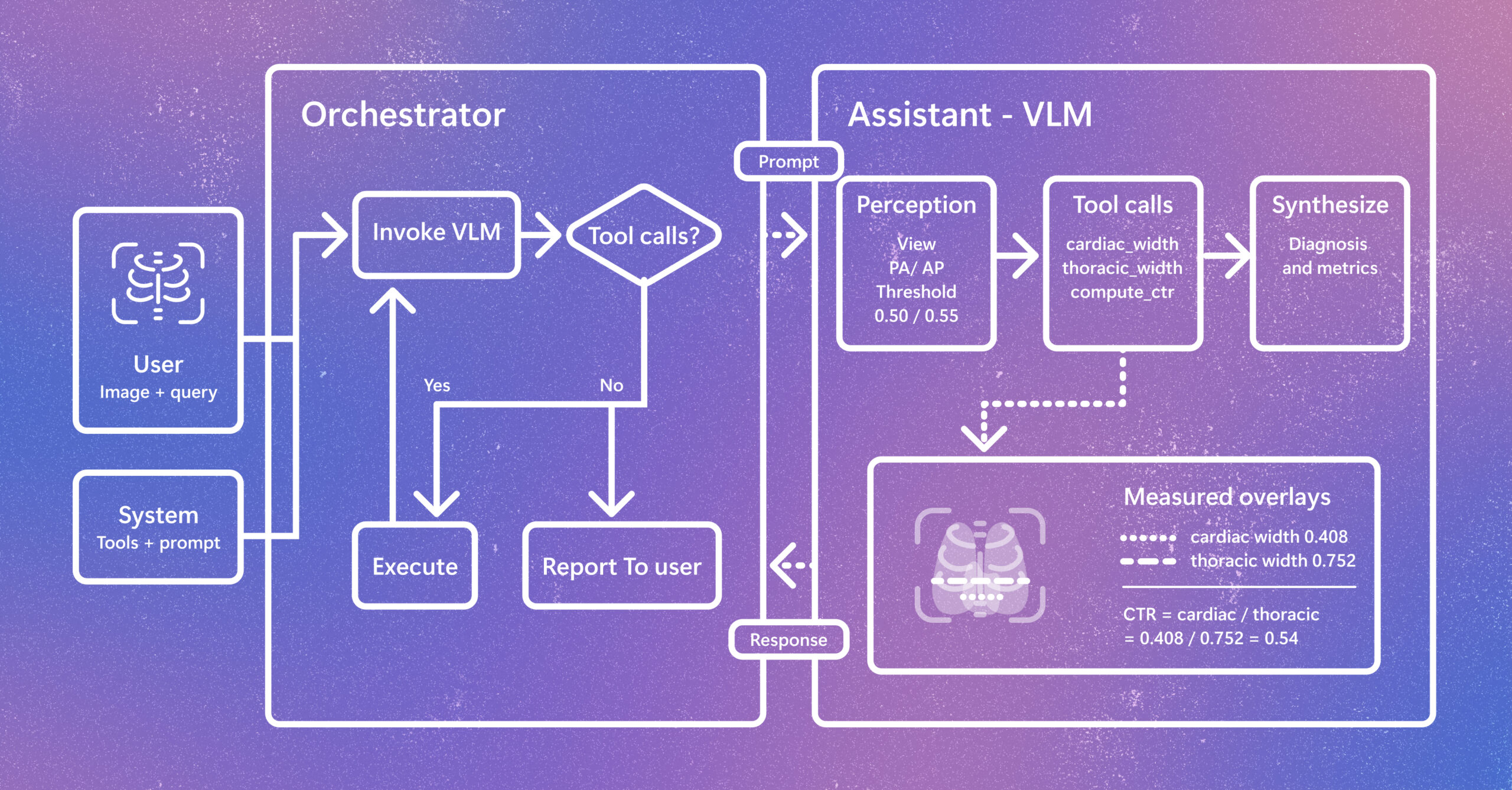
Radiology AI is evolving beyond report generation. CARE-X explores a unified approach that combines flexible reasoning, calibrated predictions, and measurement-based tools for chest X-ray interpretation. The post Introducing CARE-X: Towards Clinically Useful Radiology VLMs with Auxiliary Supervision, Reward-Aligned Learning, and Tool-Augmented Measurement appeared first on Microsoft Research.