Skip to content
#machine learning #computer vision Preprint Open access

What One Sample Cannot See: Why Fewer Denoising Steps Can Score Higher on Physics Benchmarks

Yutao Li Chen Wang
Nov 2026
Machine Learning Computer Vision

Abstract

When a storm can head north or south, a forecast down the middle may score better under squared error than either plausible path. The same paradox appears when video generators are tested as world models: fewer denoising steps can raise physics scores even as videos blur or stop moving early. Why? Physics-IQ compares each generated video with one recording, although a scene can have multiple valid futures. An exact decomposition shows its scores can reward reduced variation among generated futures, even when their distribution becomes less accurate. We introduce Kernel Physics-IQ to remove this incentive in expectation, needing only two independent samples per condition. Two-step sampling lowers Kernel Physics-IQ in all five image-to-video models. For CogVideoX, the official score rises by 0.055 while ours falls by 0.131. Changing the sampling schedule reveals further differences official scores miss. In controlled physical systems with known outcome probabilities, our metric favors the true distribution over collapsed predictions. In short, a world model should be judged not only by how closely one video matches what happened, but by how faithfully its predictions represent what could have happened.


View source

Similar papers

#artificial intelligence Preprint Jul 2024

The Llama 3 Herd of Models

It is found that Llama 3 delivers comparable quality to leading language models such as GPT-4 on a plethora of tasks, and performs competitively with the state-of-the-art on image, video, and speech recognition tasks.

Aaron Grattafiori, Abhimanyu Dubey, Abhinav Jauhri et al. · 21,082 citations · ⚡3,832
#artificial intelligence Conference Open access Jun 2018

Gibson Env: Real-World Perception for Embodied Agents

This paper investigates developing real-world perception for active agents, proposes Gibson Environment for this purpose, and showcases a set of perceptual tasks learned therein.

F. Xia, Amir Zamir, Zhi-Yang He et al. · 1,069 citations · ⚡112
#computer vision Review Sep 2017

Agile Software Development Methods: Review and Analysis

This publication proposes a definition and a classification of agile software development approaches and analyses ten software development methods that can be characterized as being "agile" against the defined criterion.

P. Abrahamsson, O. Salo, Jussi Ronkainen et al. · 727 citations · ⚡54
#computer vision Jun 2008

The impact of agile practices on communication in software development

The study shows that agile practices improve both informal and formal communication, but indicates that, in larger development situations involving multiple external stakeholders, a mismatch of adequate communication mechanisms can sometimes even hinder the communication.

M. Pikkarainen, Jukka Haikara, O. Salo et al. · 401 citations · ⚡48
#machine learning Review Open access Oct 2014

Software development in startup companies: A systematic mapping study

The results indicate that software engineering work practices are chosen opportunistically, adapted and configured to provide value under the constrains imposed by the startup context.

Nicolò Paternoster, Carmine Giardino, M. Unterkalmsteiner et al. · 394 citations · ⚡54

Related blog posts

MIT News · Artificial Intelligence Oct 28, 2026

Making machines that can listen

Professor Paris Smaragdis develops computers with superhuman hearing for applications like speech recognition, music understanding, and environmental monitoring.

Microsoft Research Blog Aug 11, 2026

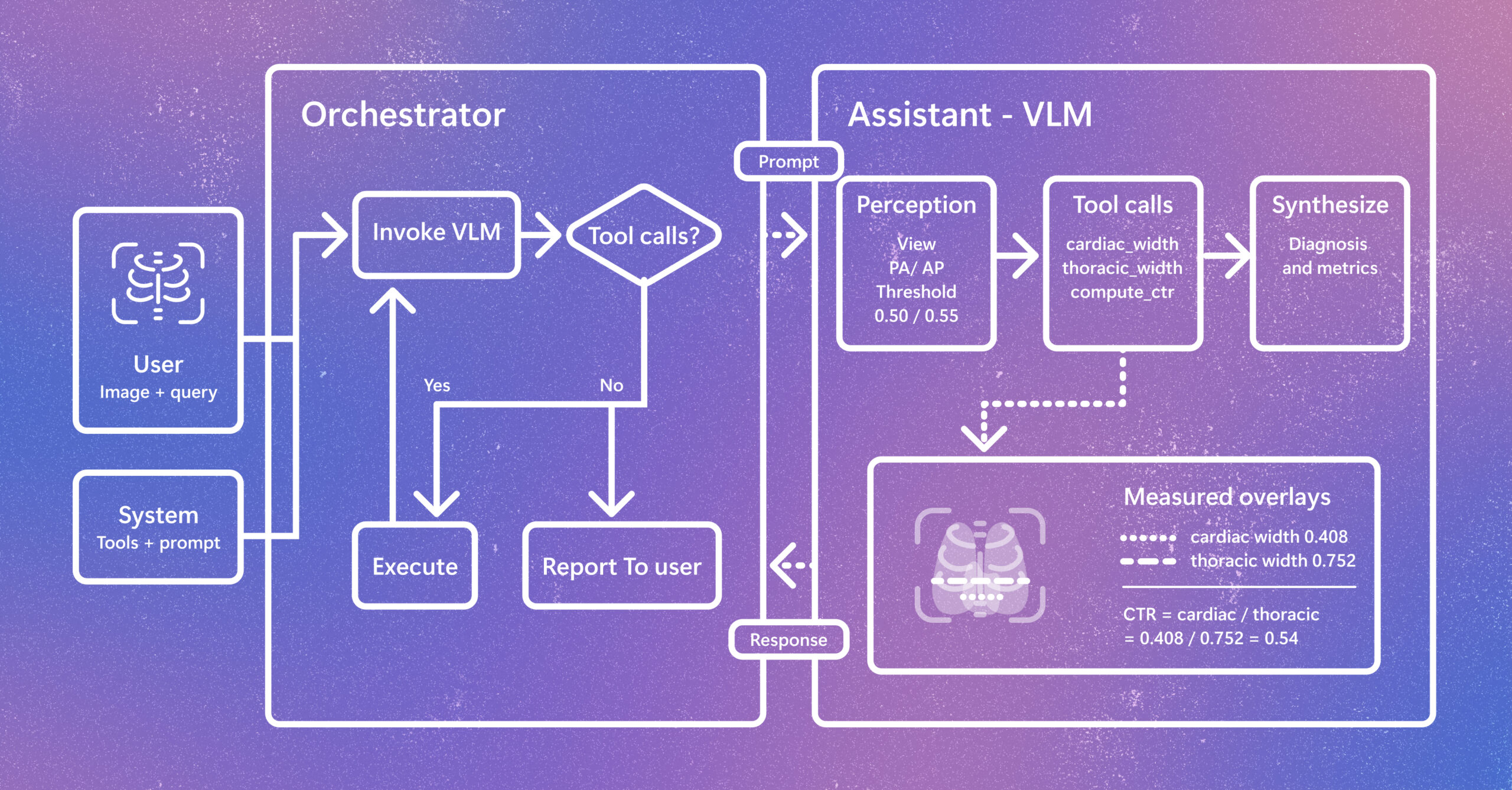
Introducing CARE-X: Towards Clinically Useful Radiology VLMs with Auxiliary Supervision, Reward-Aligned Learning, and Tool-Augmented Measurement

Radiology AI is evolving beyond report generation. CARE-X explores a unified approach that combines flexible reasoning, calibrated predictions, and measurement-based tools for chest X-ray interpretation. The post Introducing CARE-X: Towards Clinically Useful Radiology VLMs with Auxiliary Supervision, Reward-Aligned Learning, and Tool-Augmented Measurement appeared first on Microsoft Research.

We use cookies to run the site and, with your consent, for analytics and to show ads. See our Cookie Policy.