Skip to content
#machine learning #computer vision Preprint Open access

Physical Laws without Physics Loss? Probing Learned Dynamics in Video World Models through Forced Response

Yutao Li Chen Wang Wangmeng Zuo Hui Li
Nov 2026
Machine Learning Computer Vision

Abstract

Do video world models learn physical laws without a physics loss, or merely imitate motion? Overall motion and appearance scores cannot settle it. We investigate this through nonlinear forced response: an excitation shakes the support of a suspended object. We introduce dual visual-numeric conditioning and adapt six image-to-video backbones to predict this motion using only the flow-matching loss. Wan predicts motion accurately and generalizes to unseen excitations, objects, poses, and scenes. Counterfactual tests suggest capabilities beyond replaying training videos. But what laws have they learned? We design three tiers of tests using Taylor expansions of the dynamics and geometry. All six reproduce the linear response, including resonance; five capture higher-order dynamics, including nonlinear softening. Remarkably, softening is barely present in training: only 0.74% of the swing's squared displacement. Extensions to a double pendulum and a rocking block show sustained dynamics are learned more faithfully than brief impacts. Yet learned dynamics may fail to appear when state estimation or propagation goes wrong. We turn these tests and findings into strategies to improve video training and generation.


View source

Similar papers

#artificial intelligence Preprint Jul 2024

The Llama 3 Herd of Models

It is found that Llama 3 delivers comparable quality to leading language models such as GPT-4 on a plethora of tasks, and performs competitively with the state-of-the-art on image, video, and speech recognition tasks.

Aaron Grattafiori, Abhimanyu Dubey, Abhinav Jauhri et al. · 21,082 citations · ⚡3,832
#artificial intelligence Conference Open access Jun 2018

Gibson Env: Real-World Perception for Embodied Agents

This paper investigates developing real-world perception for active agents, proposes Gibson Environment for this purpose, and showcases a set of perceptual tasks learned therein.

F. Xia, Amir Zamir, Zhi-Yang He et al. · 1,069 citations · ⚡112
#computer vision Review Sep 2017

Agile Software Development Methods: Review and Analysis

This publication proposes a definition and a classification of agile software development approaches and analyses ten software development methods that can be characterized as being "agile" against the defined criterion.

P. Abrahamsson, O. Salo, Jussi Ronkainen et al. · 727 citations · ⚡54
#computer vision Jun 2008

The impact of agile practices on communication in software development

The study shows that agile practices improve both informal and formal communication, but indicates that, in larger development situations involving multiple external stakeholders, a mismatch of adequate communication mechanisms can sometimes even hinder the communication.

M. Pikkarainen, Jukka Haikara, O. Salo et al. · 401 citations · ⚡48
#machine learning Review Open access Oct 2014

Software development in startup companies: A systematic mapping study

The results indicate that software engineering work practices are chosen opportunistically, adapted and configured to provide value under the constrains imposed by the startup context.

Nicolò Paternoster, Carmine Giardino, M. Unterkalmsteiner et al. · 394 citations · ⚡54

Related blog posts

MIT News · Artificial Intelligence Oct 28, 2026

Making machines that can listen

Professor Paris Smaragdis develops computers with superhuman hearing for applications like speech recognition, music understanding, and environmental monitoring.

Microsoft Research Blog Aug 11, 2026

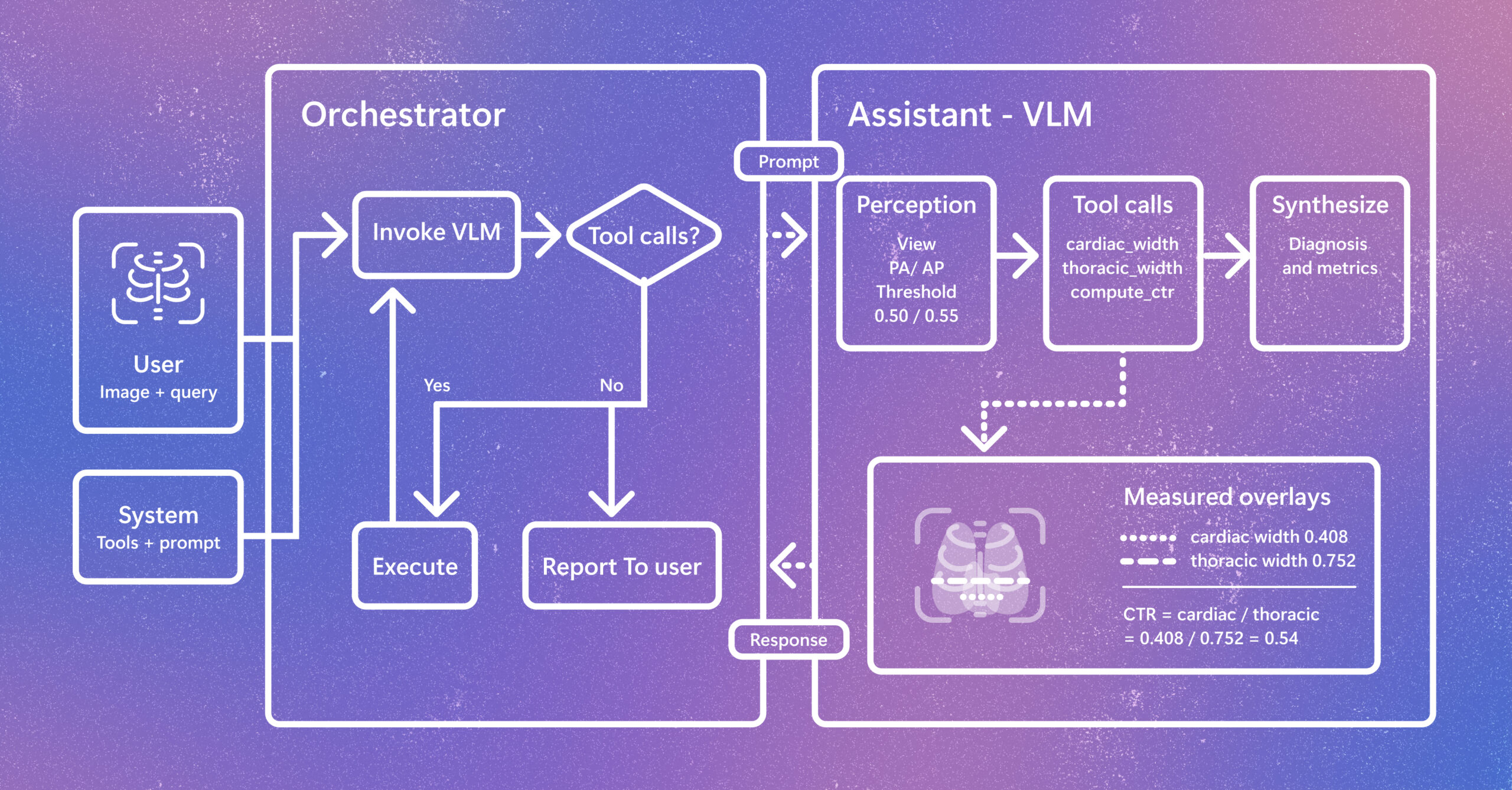
Introducing CARE-X: Towards Clinically Useful Radiology VLMs with Auxiliary Supervision, Reward-Aligned Learning, and Tool-Augmented Measurement

Radiology AI is evolving beyond report generation. CARE-X explores a unified approach that combines flexible reasoning, calibrated predictions, and measurement-based tools for chest X-ray interpretation. The post Introducing CARE-X: Towards Clinically Useful Radiology VLMs with Auxiliary Supervision, Reward-Aligned Learning, and Tool-Augmented Measurement appeared first on Microsoft Research.

We use cookies to run the site and, with your consent, for analytics and to show ads. See our Cookie Policy.