Learn, Freeze, and Transfer an Activation Function Across Architectures
Arun Prakash A
Nov 2026
Machine LearningComputer Vision
Abstract
Transfer learning typically reuses knowledge acquired by a source network through its learned weights. We investigate whether a learned activation function can also be transferred and remain useful in networks trained from scratch. We study this complementary form of transfer through a learn-freeze-transfer protocol, in which the activation is optimized jointly with a source network in a single training run, and is then frozen and reused in target networks trained from scratch. A pointwise activation with globally shared parameters is independent of layer dimensions and can therefore be incorporated into networks of different architectures trained from scratch. We instantiate this protocol with FAct, a five-parameter activation represented by a two-harmonic truncated Fourier series, initialized from a Fourier approximation of GELU and learned in a Vision Transformer (ViT) on ImageNet-1K. When reused in a ViT of the same architecture trained from scratch on ImageNet-1K, the frozen activation (Frozen FAct) improves top-1 accuracy by 1.46 percentage points over GELU. Across four smaller target architectures (standard ViT, Swin Transformer, linear-attention ViT, and MLP-Mixer) and four image-classification datasets, it achieves the highest mean accuracy among eleven activation functions in 15 of 16 settings under a common training configuration, with improvements of up to 1.71 percentage points over the best conventional activation. When the learning rate and weight decay are tuned separately for each activation under the same search budget, Frozen FAct still ranks first in 11 of the 16 settings, second in four, and fourth in one. These results provide empirical evidence that a learned activation function can retain its usefulness when transferred across vision architectures, independently of the weights with which it was learned.

It is found that Llama 3 delivers comparable quality to leading language models such as GPT-4 on a plethora of tasks, and performs competitively with the state-of-the-art on image, video, and speech recognition tasks.
This paper investigates developing real-world perception for active agents, proposes Gibson Environment for this purpose, and showcases a set of perceptual tasks learned therein.
F. Xia, Amir Zamir, Zhi-Yang He et al.· 2018 IEEE/CVF Conference on...· 1,069 citations· ⚡112
This publication proposes a definition and a classification of agile software development approaches and analyses ten software development methods that can be characterized as being "agile" against the defined criterion.
P. Abrahamsson, O. Salo, Jussi Ronkainen et al.· arXiv.org· 727 citations· ⚡54
The study shows that agile practices improve both informal and formal communication, but indicates that, in larger development situations involving multiple external stakeholders, a mismatch of adequate communication mechanisms can sometimes even hinder the communication.
M. Pikkarainen, Jukka Haikara, O. Salo et al.· Empirical Software Engineeri...· 401 citations· ⚡48
The results indicate that software engineering work practices are chosen opportunistically, adapted and configured to provide value under the constrains imposed by the startup context.
Nicolò Paternoster, Carmine Giardino, M. Unterkalmsteiner et al.· Information and Software Tec...· 394 citations· ⚡54
Related blog posts
MIT News · Artificial Intelligence· news.mit.eduOct 28, 2026
Professor Paris Smaragdis develops computers with superhuman hearing for applications like speech recognition, music understanding, and environmental monitoring.
Exploring how generative AI could make machine vision more accessible to businesses. The post GenEye in a Box: Making Machine Vision Something You Can Just Ask For appeared first on GPT-Lab.
Microsoft Research Blog· microsoft.comAug 11, 2026
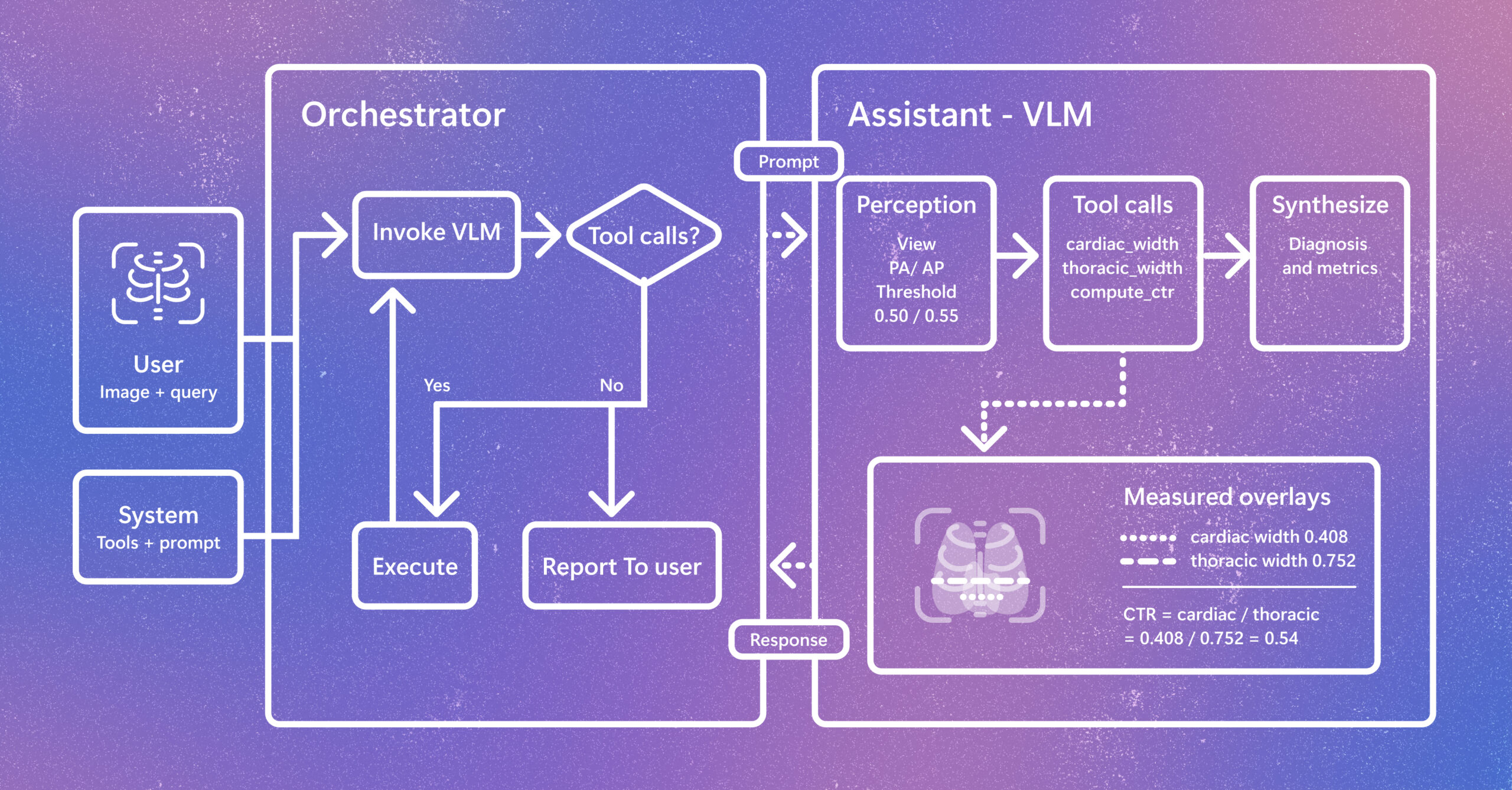
Radiology AI is evolving beyond report generation. CARE-X explores a unified approach that combines flexible reasoning, calibrated predictions, and measurement-based tools for chest X-ray interpretation. The post Introducing CARE-X: Towards Clinically Useful Radiology VLMs with Auxiliary Supervision, Reward-Aligned Learning, and Tool-Augmented Measurement appeared first on Microsoft Research.