FastRoverVLA: Fast Vision-Language-Action Execution for Off-Road Autonomous Driving
Changtao ZhaoYingxue GuanLi WangShijie ZhaoYuhang ZhangShengkai ZhangQing WangZiying Song
Nov 2026
Artificial IntelligenceRobotics
Abstract
Off-road vision-language-action (VLA) models generate scene-conditioned plans, but frequent trajectory updates can repeatedly invoke expensive multimodal inference. Reusing a prediction reduces this demand while leaving its commands exposed to changes in vehicle motion. FastRoverVLA addresses this mismatch by decoupling visual plan generation from motion-conditioned execution. Its training-free interface maintains decoded plans between visual predictions. A speed-curvature action buffer is aligned with measured motion at each update, integrated into a local trajectory, and advanced by consuming the current action. The corrected remainder is written back to the buffer, preserving motion corrections across successive updates. A bounded refresh rule normalizes speed and curvature variations within a newly decoded plan and assigns a short or long reuse budget according to the resulting plan-roughness score. The interface requires neither backbone features nor an additional learned driving policy. Over a 3 s horizon, independent real-request evaluation achieves average displacement error (ADE) and final displacement error (FDE) of 0.328/0.596 m on ORAD-3D and 0.266/0.526 m on RELLIS-3D, reducing FDE by 18.0% and 36.7% at request rates of 6.0% and 4.8%, respectively. These runs retain lower errors across four backbones and both datasets and reduce Qwen3-VL request-processing cost by factors of 16.6 and 20.8 under serial replay, while mechanism and motion-only controls identify persistent state correction as the main source of the observed accuracy benefit. The source code and evaluation materials are publicly available at https://github.com/ADEPT-ORG/FastRoverVLA.

It is found that Llama 3 delivers comparable quality to leading language models such as GPT-4 on a plethora of tasks, and performs competitively with the state-of-the-art on image, video, and speech recognition tasks.
This paper investigates developing real-world perception for active agents, proposes Gibson Environment for this purpose, and showcases a set of perceptual tasks learned therein.
F. Xia, Amir Zamir, Zhi-Yang He et al.· 2018 IEEE/CVF Conference on...· 1,069 citations· ⚡112
GAOKAO-Bench is introduced, an intuitive benchmark that employs questions from the Chinese GAOKAO examination as test samples, including both subjective and objective questions that contribute a robust evaluation benchmark for future large language models and offers valuable insights into the advantages and limitations...
Xiaotian Zhang, Chun-yan Li, Yi Zong et al.· arXiv.org· 216 citations· ⚡17
An algorithm is proposed which leverages disentangled semantic factors to generate adversarial perturbation by altering controlled semantic attributes to fool the learner towards various "adversarial" targets.
Haonan Qiu, Chaowei Xiao, Lei Yang et al.· arXiv.org· 208 citations· ⚡17
This work proposes a HALO that directly maximizes the utility of generations instead of maximizing the log-likelihood of preferences, and suggests that the best loss depends on the inductive biases most appropriate for a given setting, an oft-overlooked consideration.
This work investigates the possibilities of using LLMs in a resume screening setting via a document retrieval framework that simulates job candidate selection and finds that the MTEs are biased, significantly favoring White-associated names in 85% of cases and female-associated names in only 11.1% of cases.
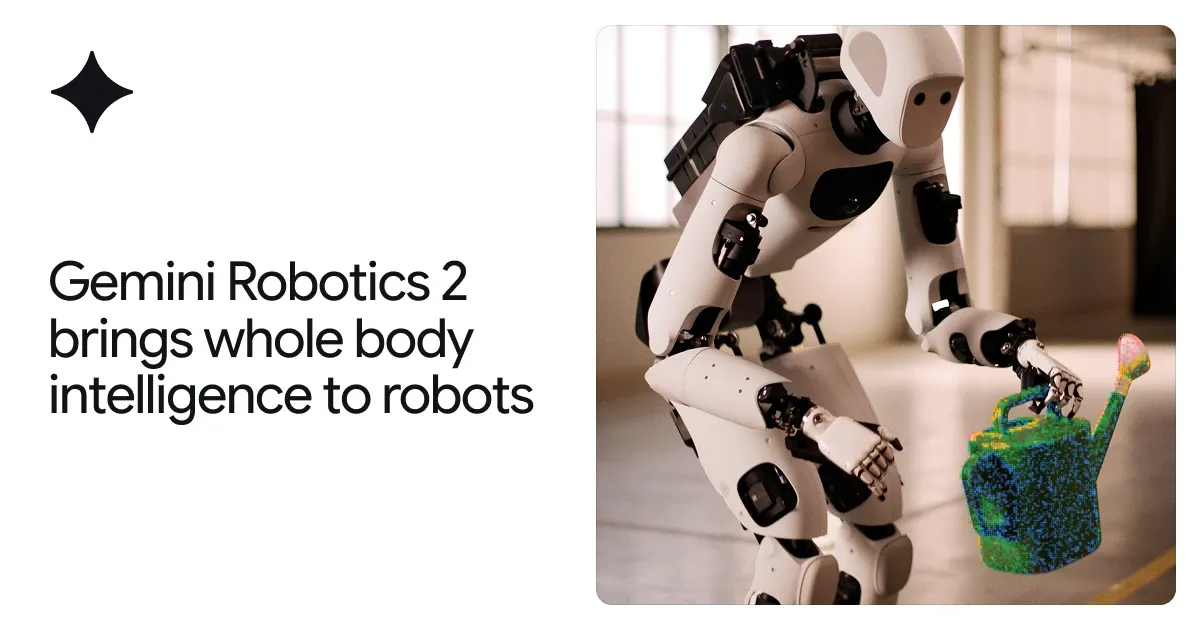
From feet to fingertips — we are teaching robots intelligent whole-body control, fine dexterity, and teamwork to complete a broad range of complex tasks.