Skip to content
#machine learning #computer vision Preprint Open access

Mix-Opt: Mixed Optimization for Memory-Efficient Personalization of Text-to-Image Diffusion Models

Seokeon Choi Sunghyun Park Hyoungwoo Park Jeongho Kim Sungrack Yun
Nov 2026
Machine Learning Computer Vision

Abstract

Memory-efficient personalization is essential for adapting text-to-image diffusion models while preserving user privacy and operating within the limited computational resources of edge devices. To this end, we propose Mix-Opt, a novel mixed optimization framework that adaptively chooses between backpropagation on low-resolution images (BP-low) and zeroth-order optimization on high-resolution images (ZO-high), guided by the characteristics of the diffusion process. As observed in our experiments, BP-low efficiently adapts the model to target-specific features but suffers from structural distortions due to resolution mismatch. Conversely, ZO-high refines high-resolution details with minimal memory overhead but faces slow convergence when applied without prior adaptation. By complementing both methods, our framework leverages BP-low for effective personalization while using ZO-high to maintain structural consistency, achieving memory-efficient and high-quality fine-tuning. To maximize the efficacy of both BP-low and ZO-high, we introduce a timestep-aware probabilistic function that dynamically selects the appropriate optimization strategy during training. This function mitigates overfitting from BP-low at high timesteps, where structural information is critical, while ensuring that ZO-high is applied more effectively as training progresses. Experimental results across both U-Net- and DiT-based diffusion models demonstrate that Mix-Opt achieves competitive personalization performance while significantly reducing memory consumption. Mix-Opt enables scalable, high-quality personalization without modifying the inference process or increasing inference latency.


View source

Similar papers

#artificial intelligence Preprint Jul 2024

The Llama 3 Herd of Models

It is found that Llama 3 delivers comparable quality to leading language models such as GPT-4 on a plethora of tasks, and performs competitively with the state-of-the-art on image, video, and speech recognition tasks.

Aaron Grattafiori, Abhimanyu Dubey, Abhinav Jauhri et al. · 21,082 citations · ⚡3,832
#artificial intelligence Conference Open access Jun 2018

Gibson Env: Real-World Perception for Embodied Agents

This paper investigates developing real-world perception for active agents, proposes Gibson Environment for this purpose, and showcases a set of perceptual tasks learned therein.

F. Xia, Amir Zamir, Zhi-Yang He et al. · 1,069 citations · ⚡112
#computer vision Review Sep 2017

Agile Software Development Methods: Review and Analysis

This publication proposes a definition and a classification of agile software development approaches and analyses ten software development methods that can be characterized as being "agile" against the defined criterion.

P. Abrahamsson, O. Salo, Jussi Ronkainen et al. · 727 citations · ⚡54
#computer vision Jun 2008

The impact of agile practices on communication in software development

The study shows that agile practices improve both informal and formal communication, but indicates that, in larger development situations involving multiple external stakeholders, a mismatch of adequate communication mechanisms can sometimes even hinder the communication.

M. Pikkarainen, Jukka Haikara, O. Salo et al. · 401 citations · ⚡48
#machine learning Review Open access Oct 2014

Software development in startup companies: A systematic mapping study

The results indicate that software engineering work practices are chosen opportunistically, adapted and configured to provide value under the constrains imposed by the startup context.

Nicolò Paternoster, Carmine Giardino, M. Unterkalmsteiner et al. · 394 citations · ⚡54

Related blog posts

MIT News · Artificial Intelligence Oct 28, 2026

Making machines that can listen

Professor Paris Smaragdis develops computers with superhuman hearing for applications like speech recognition, music understanding, and environmental monitoring.

Microsoft Research Blog Aug 11, 2026

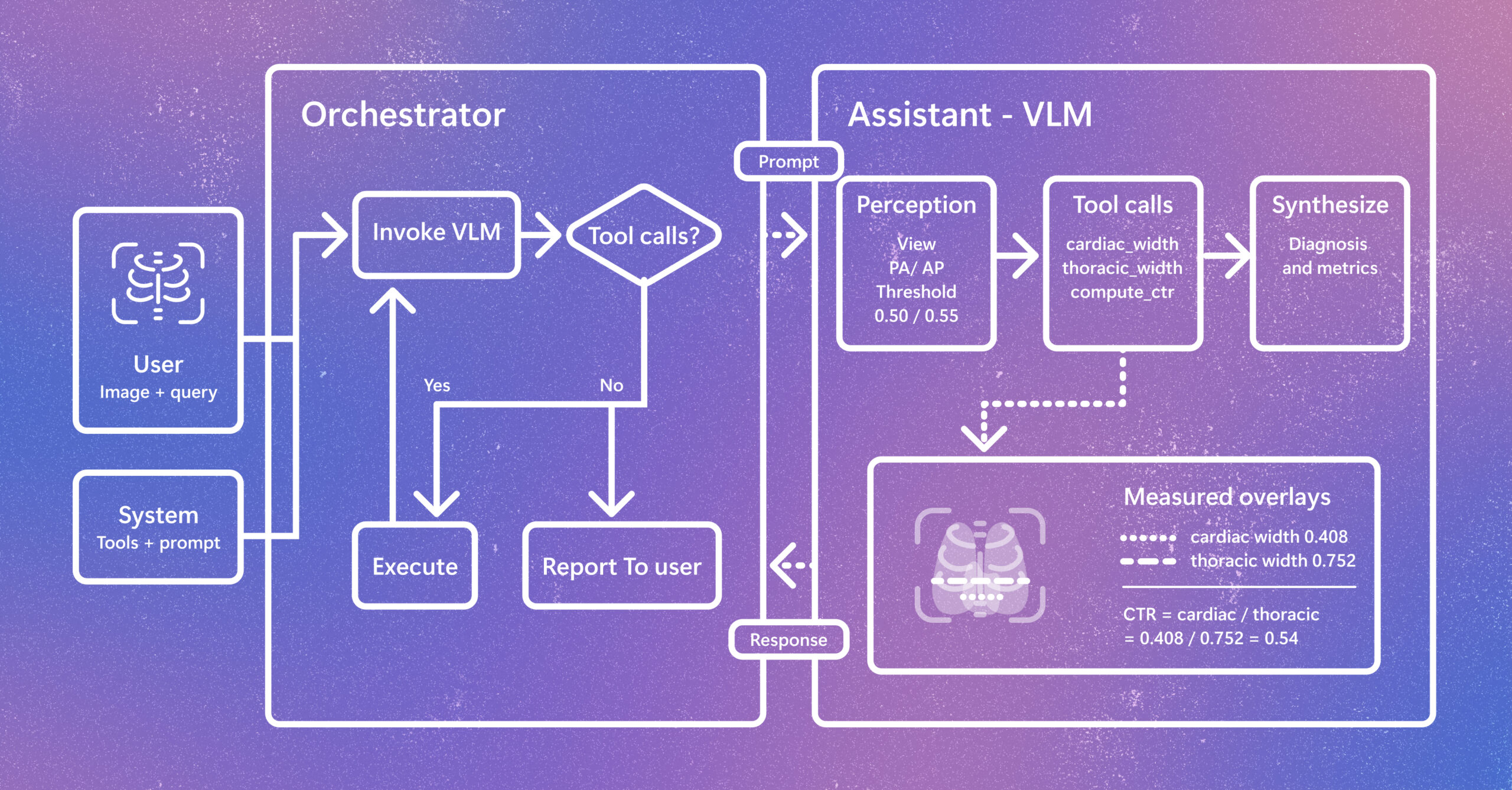
Introducing CARE-X: Towards Clinically Useful Radiology VLMs with Auxiliary Supervision, Reward-Aligned Learning, and Tool-Augmented Measurement

Radiology AI is evolving beyond report generation. CARE-X explores a unified approach that combines flexible reasoning, calibrated predictions, and measurement-based tools for chest X-ray interpretation. The post Introducing CARE-X: Towards Clinically Useful Radiology VLMs with Auxiliary Supervision, Reward-Aligned Learning, and Tool-Augmented Measurement appeared first on Microsoft Research.

We use cookies to run the site and, with your consent, for analytics and to show ads. See our Cookie Policy.