D\'ej\`a View: A Shared Working-Memory Model for Visual Tasks
Mranmay ShettyGabriel Kreiman
Nov 2026
Machine LearningComputer VisionNeuroscience
Abstract
A working-memory model must remember stimuli and use its memory flexibly to perform different tasks. Here we introduce a model of working memory for images that combines dynamic activity with temporary associations between image features. We train the model on five tasks, including remembering a sample while other images are presented, categorizing distractor images while remembering the sample, and determining whether an image is new or has been presented before. The same trained model performs all tasks, guided by explicit cues about which response is required. We use this flexible memory model to ask how delay, distraction, and image history affect performance. Delays have little effect on sample-memory performance for the delays we tested, while seeing more images leads to more false alarms even when the target image appeared equally recently in all cases. On the sample-memory-plus-categorization task, the probability of correct responses on all questions decreases as more questions are asked, despite robust sample-memory performance. Finally, the model maintains stable performance across 40 brief trials of each task under the tested conditions. Together, these results demonstrate how a single working-memory system can be flexibly used to perform different tasks, and how its errors depend on both previous images and task demands.

It is found that Llama 3 delivers comparable quality to leading language models such as GPT-4 on a plethora of tasks, and performs competitively with the state-of-the-art on image, video, and speech recognition tasks.
This paper investigates developing real-world perception for active agents, proposes Gibson Environment for this purpose, and showcases a set of perceptual tasks learned therein.
F. Xia, Amir Zamir, Zhi-Yang He et al.· 2018 IEEE/CVF Conference on...· 1,069 citations· ⚡112
This publication proposes a definition and a classification of agile software development approaches and analyses ten software development methods that can be characterized as being "agile" against the defined criterion.
P. Abrahamsson, O. Salo, Jussi Ronkainen et al.· arXiv.org· 727 citations· ⚡54
The study shows that agile practices improve both informal and formal communication, but indicates that, in larger development situations involving multiple external stakeholders, a mismatch of adequate communication mechanisms can sometimes even hinder the communication.
M. Pikkarainen, Jukka Haikara, O. Salo et al.· Empirical Software Engineeri...· 401 citations· ⚡48
The results indicate that software engineering work practices are chosen opportunistically, adapted and configured to provide value under the constrains imposed by the startup context.
Nicolò Paternoster, Carmine Giardino, M. Unterkalmsteiner et al.· Information and Software Tec...· 394 citations· ⚡54
Related blog posts
MIT News · Artificial Intelligence· news.mit.eduOct 28, 2026
Professor Paris Smaragdis develops computers with superhuman hearing for applications like speech recognition, music understanding, and environmental monitoring.
Exploring how generative AI could make machine vision more accessible to businesses. The post GenEye in a Box: Making Machine Vision Something You Can Just Ask For appeared first on GPT-Lab.
Microsoft Research Blog· microsoft.comAug 11, 2026
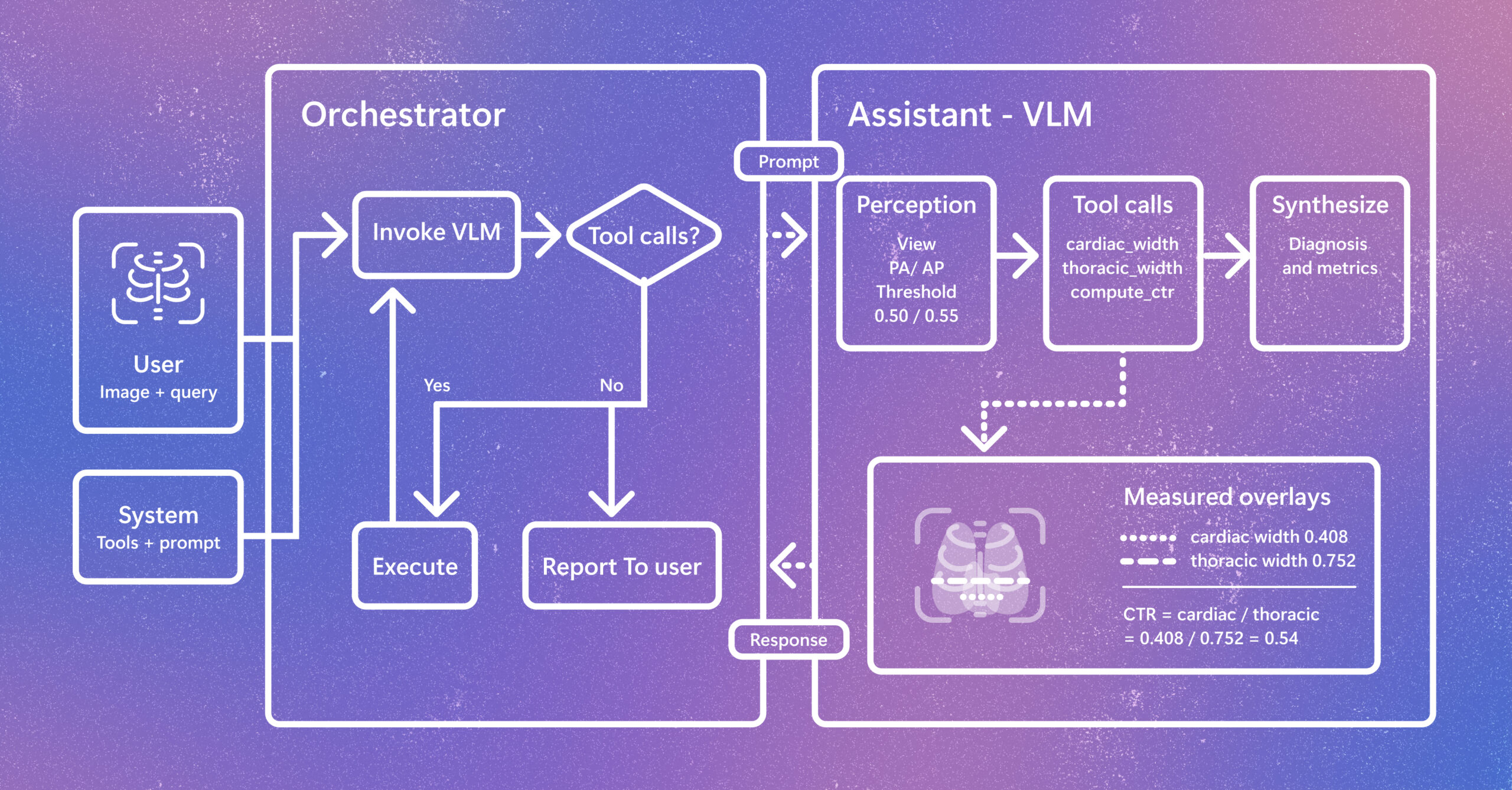
Radiology AI is evolving beyond report generation. CARE-X explores a unified approach that combines flexible reasoning, calibrated predictions, and measurement-based tools for chest X-ray interpretation. The post Introducing CARE-X: Towards Clinically Useful Radiology VLMs with Auxiliary Supervision, Reward-Aligned Learning, and Tool-Augmented Measurement appeared first on Microsoft Research.