Uncovering the Invisible in Routine Radiology: Cross-Modal Detection of MRI-Verified Soft-Tissue Pathologies from CBCT via Physics-Guided 3D Self-Supervised Learning
Evgeny Alves Limarenko
Nov 2026
Machine LearningComputer Vision
Abstract
Routine X-ray modalities like cone-beam computed tomography (CBCT) are optimized for high-contrast mineralized tissues, leaving soft-tissue abnormalities buried beneath photon noise and below human visual perception. Thus, detecting non-calcified pathologies requires secondary magnetic resonance imaging (MRI). We demonstrate that sub-visual radiographic signatures of soft-tissue pathology are physically preserved within routine CBCT scans and can be extracted for opportunistic screening using a targeted, physics-guided deep learning pipeline, even under extreme paired-data scarcity. Using the temporomandibular joint (TMJ) as a model system (N = 212 paired CBCT-MRI joints), we address the severe overfitting of high-capacity 3D networks through a two-stage framework. First, we employ a frozen full-grid 3D masked autoencoder (BertsWin) pre-trained on 6,550 unlabeled CBCT volumes via the GradientConductor (GCond) optimizer and an anatomy-aware objective (PhysLoss) redirecting gradient flow into the [-300, 300] HU soft-tissue window. Second, automated localization of the condylar zenith drives a deterministic 3D cropping that eliminates 81% of background osseous variance. Evaluated via a patient-isolated 3x10-fold stratified cross-validation protocol, a statistically robust sub-visual signal for MRI-verified synovial effusion (ROC AUC = 0.793) emerges exclusively from representations pre-trained with the PhysLoss and GCond regime. Crucially, only this setup captures true 3D anatomical chirality (p < 0.001) and high intra-patient structural consistency (0.791) over inter-patient noise; conversely, identical architectures pre-trained with standard L2 loss or unmasked variance decomposition (MVC) collapse to random guessing. These findings establish a generalizable paradigm for repurposing routine, low-contrast radiographic scans into opportunistic screening tools for occult soft-tissue disease.

It is found that Llama 3 delivers comparable quality to leading language models such as GPT-4 on a plethora of tasks, and performs competitively with the state-of-the-art on image, video, and speech recognition tasks.
This paper investigates developing real-world perception for active agents, proposes Gibson Environment for this purpose, and showcases a set of perceptual tasks learned therein.
F. Xia, Amir Zamir, Zhi-Yang He et al.· 2018 IEEE/CVF Conference on...· 1,069 citations· ⚡112
This publication proposes a definition and a classification of agile software development approaches and analyses ten software development methods that can be characterized as being "agile" against the defined criterion.
P. Abrahamsson, O. Salo, Jussi Ronkainen et al.· arXiv.org· 727 citations· ⚡54
The study shows that agile practices improve both informal and formal communication, but indicates that, in larger development situations involving multiple external stakeholders, a mismatch of adequate communication mechanisms can sometimes even hinder the communication.
M. Pikkarainen, Jukka Haikara, O. Salo et al.· Empirical Software Engineeri...· 401 citations· ⚡48
The results indicate that software engineering work practices are chosen opportunistically, adapted and configured to provide value under the constrains imposed by the startup context.
Nicolò Paternoster, Carmine Giardino, M. Unterkalmsteiner et al.· Information and Software Tec...· 394 citations· ⚡54
Related blog posts
MIT News · Artificial Intelligence· news.mit.eduOct 28, 2026
Professor Paris Smaragdis develops computers with superhuman hearing for applications like speech recognition, music understanding, and environmental monitoring.
Exploring how generative AI could make machine vision more accessible to businesses. The post GenEye in a Box: Making Machine Vision Something You Can Just Ask For appeared first on GPT-Lab.
Microsoft Research Blog· microsoft.comAug 11, 2026
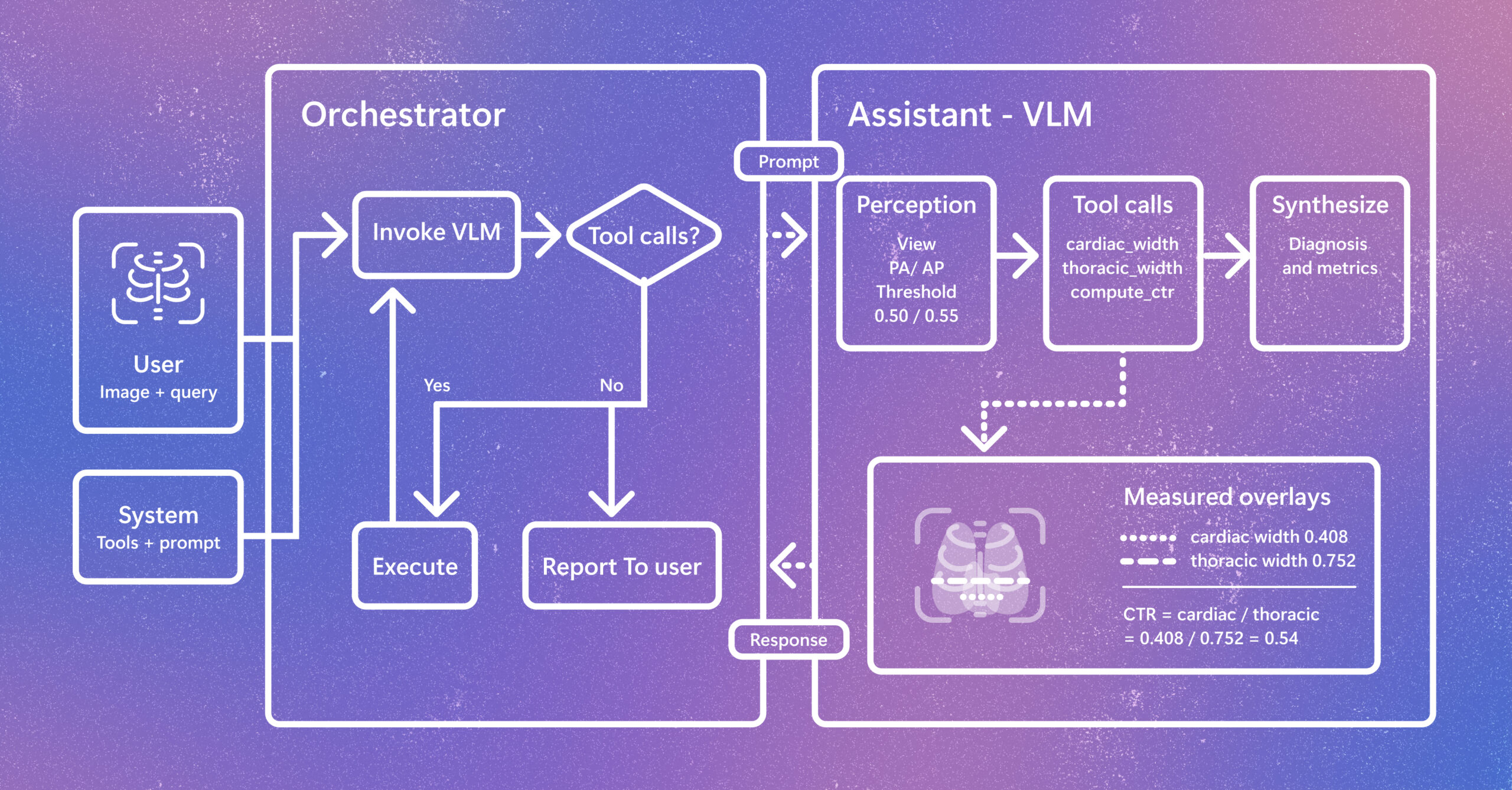
Radiology AI is evolving beyond report generation. CARE-X explores a unified approach that combines flexible reasoning, calibrated predictions, and measurement-based tools for chest X-ray interpretation. The post Introducing CARE-X: Towards Clinically Useful Radiology VLMs with Auxiliary Supervision, Reward-Aligned Learning, and Tool-Augmented Measurement appeared first on Microsoft Research.