Skip to content
#machine learning #computer vision Preprint Open access

When Anchors Shift the Target: Advantage-Gated Adaptation for Diffusion Reinforcement Learning

Pu Cao Min Zhou Ying Shu Tiezheng Ge Qing Song Lu Yang
Nov 2026
Machine Learning Computer Vision

Abstract

Forward-process reinforcement learning adapts diffusion and flow-matching models by re-noising rewarded generations into regression targets. Because negative advantages induce concave updates with unbounded repulsive gradients, existing methods stabilize training using cached predictions from a moving policy copy, yet these anchors also alter what positive feedback teaches the model to fit. We formalize this conflict as anchor coupling: after separating frozen-reference regularizers, affine moving-anchor rules cannot eliminate negative curvature while preserving every positive regression target. We propose Advantage-Gated Adaptation (AGA) to decouple these roles. Positive samples retain standard target fitting, whose self-limiting update vanishes at the observed target independently of the moving anchor. Negative samples instead use the first-order tangent of the concave objective at the moving-policy prediction, preserving the local repulsion direction with a prediction-independent gradient. Within the quadratic-anchor family, these requirements uniquely determine the parameter-free gate $\omega(a)=\max(-a,0)$. Because the moving copy provides local linearization rather than retention, AGA assigns long-horizon behavior preservation to a frozen pretrained reference regularized at its operating classifier-free guidance scale, interpreted through an implicit-reward lens. Across compositional generation, text rendering, and preference alignment, our experiments show that displacing positive targets degrades visual quality and heightens sensitivity to policy-copy schedules, whereas AGA consistently improves the reward--quality trade-off.


View source

Similar papers

#artificial intelligence Preprint Jul 2024

The Llama 3 Herd of Models

It is found that Llama 3 delivers comparable quality to leading language models such as GPT-4 on a plethora of tasks, and performs competitively with the state-of-the-art on image, video, and speech recognition tasks.

Aaron Grattafiori, Abhimanyu Dubey, Abhinav Jauhri et al. · 21,082 citations · ⚡3,832
#artificial intelligence Conference Open access Jun 2018

Gibson Env: Real-World Perception for Embodied Agents

This paper investigates developing real-world perception for active agents, proposes Gibson Environment for this purpose, and showcases a set of perceptual tasks learned therein.

F. Xia, Amir Zamir, Zhi-Yang He et al. · 1,069 citations · ⚡112
#computer vision Review Sep 2017

Agile Software Development Methods: Review and Analysis

This publication proposes a definition and a classification of agile software development approaches and analyses ten software development methods that can be characterized as being "agile" against the defined criterion.

P. Abrahamsson, O. Salo, Jussi Ronkainen et al. · 727 citations · ⚡54
#computer vision Jun 2008

The impact of agile practices on communication in software development

The study shows that agile practices improve both informal and formal communication, but indicates that, in larger development situations involving multiple external stakeholders, a mismatch of adequate communication mechanisms can sometimes even hinder the communication.

M. Pikkarainen, Jukka Haikara, O. Salo et al. · 401 citations · ⚡48
#machine learning Review Open access Oct 2014

Software development in startup companies: A systematic mapping study

The results indicate that software engineering work practices are chosen opportunistically, adapted and configured to provide value under the constrains imposed by the startup context.

Nicolò Paternoster, Carmine Giardino, M. Unterkalmsteiner et al. · 394 citations · ⚡54

Related blog posts

MIT News · Artificial Intelligence Oct 28, 2026

Making machines that can listen

Professor Paris Smaragdis develops computers with superhuman hearing for applications like speech recognition, music understanding, and environmental monitoring.

Microsoft Research Blog Aug 11, 2026

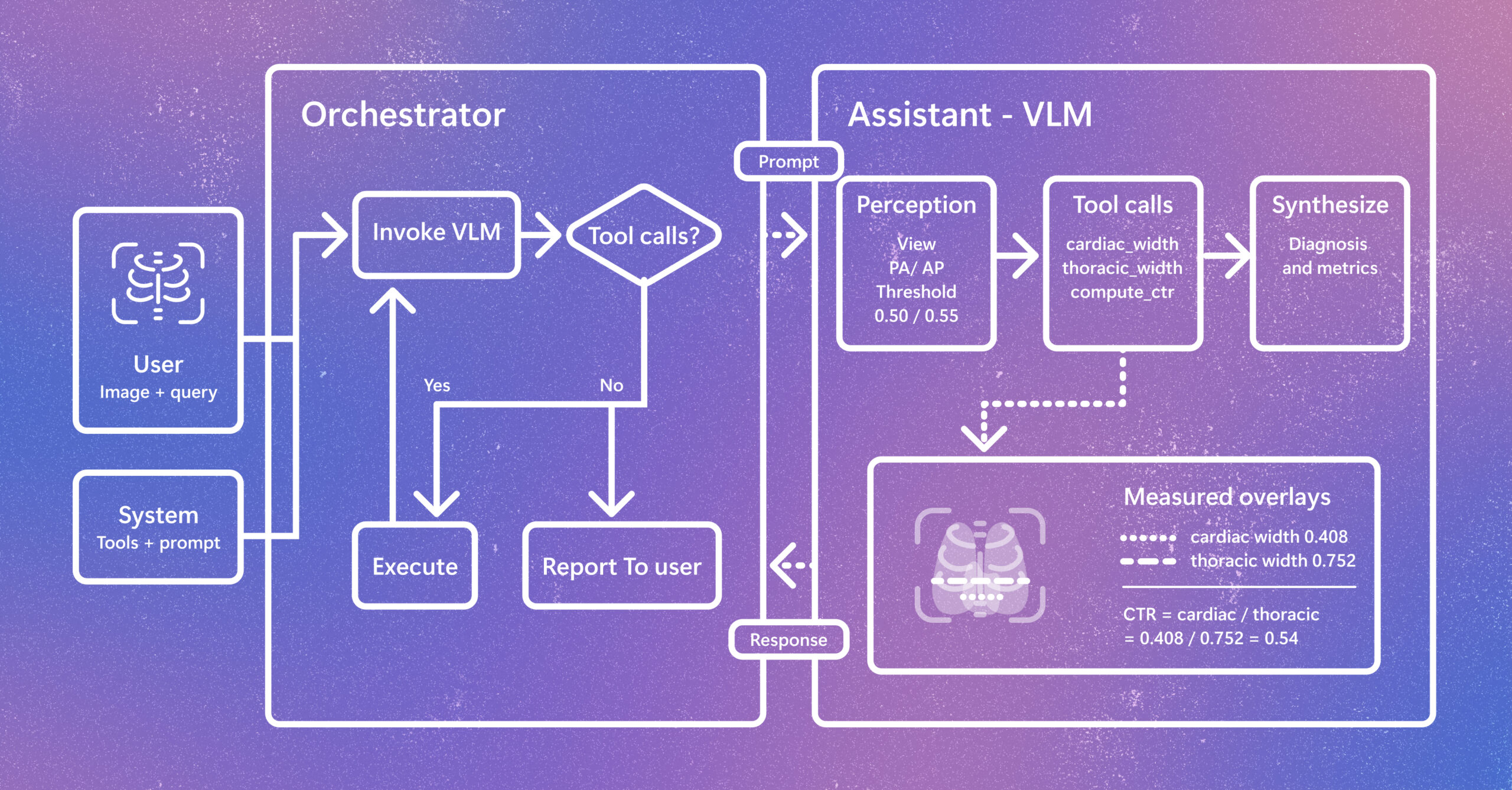
Introducing CARE-X: Towards Clinically Useful Radiology VLMs with Auxiliary Supervision, Reward-Aligned Learning, and Tool-Augmented Measurement

Radiology AI is evolving beyond report generation. CARE-X explores a unified approach that combines flexible reasoning, calibrated predictions, and measurement-based tools for chest X-ray interpretation. The post Introducing CARE-X: Towards Clinically Useful Radiology VLMs with Auxiliary Supervision, Reward-Aligned Learning, and Tool-Augmented Measurement appeared first on Microsoft Research.

We use cookies to run the site and, with your consent, for analytics and to show ads. See our Cookie Policy.