Is model self-assessment enough for diverse LVLM ensembles?
Michael SmithFrank P. Ferrie
Nov 2026
Machine LearningComputer Vision
Abstract
Ensembles of diverse Large Vision Language Models have demonstrated performance beyond that of single models across multiple datasets and tasks. However, the necessary aggregation process usually relies on training, parameter fitting, or complex task-specific pipelines. Furthermore, evaluation is limited, making a fair comparison difficult. We create a unified pipeline where we perform candidate response selection: we build an ensemble by selecting the best answer from a set provided by different models. We comprehensively evaluate across 34 different means of confidence estimation, 24 ensemble configurations, 20 datasets, and two prompt specifications. We show that simple training and parameter-free approaches can be sufficient, even for ensembles of different architectures. These simple self-assessment approaches rely solely on each constituent model's confidence, without explicit calibration, yet are able to perform better than said constituent models. They are also competitive with more involved alternatives on standard metrics such as accuracy, including on open-ended problems. However, we also discover that dataset, ensemble composition, and prompt wording are key confounding variables insufficiently explored by prior work that significantly affect ensemble performance, such that the ensemble can perform worse than its best constituent model. These must be optimized for to get the most out of ensembles, at the cost of limiting their generalizability. We recommend that practitioners consider training-free ensembles only if deployment conditions can be precisely characterized, with Best-of-N configurations of strong models being a good starting point.

It is found that Llama 3 delivers comparable quality to leading language models such as GPT-4 on a plethora of tasks, and performs competitively with the state-of-the-art on image, video, and speech recognition tasks.
This paper investigates developing real-world perception for active agents, proposes Gibson Environment for this purpose, and showcases a set of perceptual tasks learned therein.
F. Xia, Amir Zamir, Zhi-Yang He et al.· 2018 IEEE/CVF Conference on...· 1,069 citations· ⚡112
This publication proposes a definition and a classification of agile software development approaches and analyses ten software development methods that can be characterized as being "agile" against the defined criterion.
P. Abrahamsson, O. Salo, Jussi Ronkainen et al.· arXiv.org· 727 citations· ⚡54
The study shows that agile practices improve both informal and formal communication, but indicates that, in larger development situations involving multiple external stakeholders, a mismatch of adequate communication mechanisms can sometimes even hinder the communication.
M. Pikkarainen, Jukka Haikara, O. Salo et al.· Empirical Software Engineeri...· 401 citations· ⚡48
The results indicate that software engineering work practices are chosen opportunistically, adapted and configured to provide value under the constrains imposed by the startup context.
Nicolò Paternoster, Carmine Giardino, M. Unterkalmsteiner et al.· Information and Software Tec...· 394 citations· ⚡54
Related blog posts
MIT News · Artificial Intelligence· news.mit.eduOct 28, 2026
Professor Paris Smaragdis develops computers with superhuman hearing for applications like speech recognition, music understanding, and environmental monitoring.
Exploring how generative AI could make machine vision more accessible to businesses. The post GenEye in a Box: Making Machine Vision Something You Can Just Ask For appeared first on GPT-Lab.
Microsoft Research Blog· microsoft.comAug 11, 2026
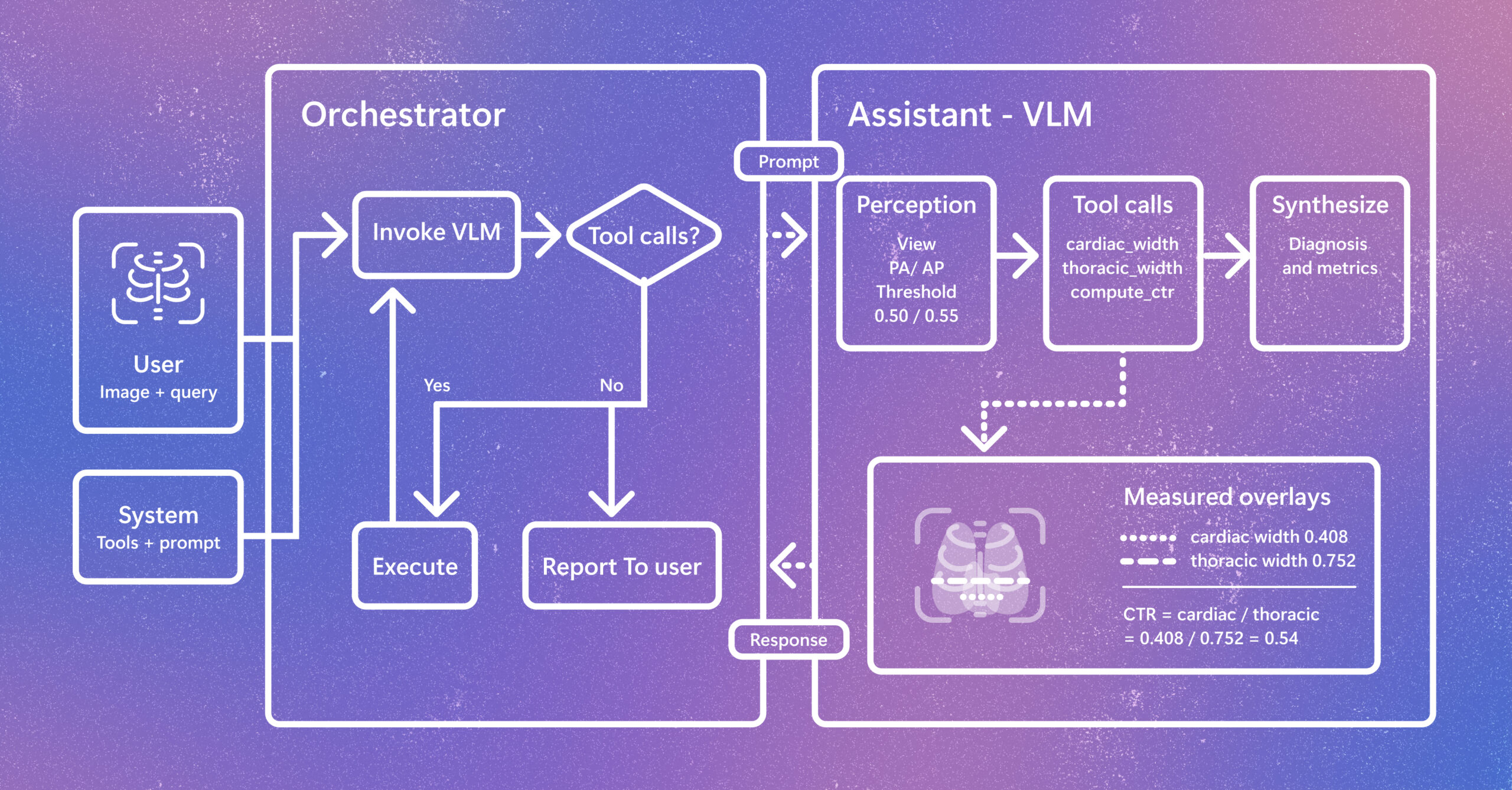
Radiology AI is evolving beyond report generation. CARE-X explores a unified approach that combines flexible reasoning, calibrated predictions, and measurement-based tools for chest X-ray interpretation. The post Introducing CARE-X: Towards Clinically Useful Radiology VLMs with Auxiliary Supervision, Reward-Aligned Learning, and Tool-Augmented Measurement appeared first on Microsoft Research.