Sub-Meter Canopy Height Synthesis from Sentinel-2 via Anchored Residual Flow
Kiarie NdegwaTony ChangAndreas GrosVincent A. LandauDavid D. DiazLuke ZachmannNathan E. RutenbeckGuy C Bayes
Nov 2026
Machine LearningComputer Vision
Abstract
Canopy height models (CHMs) - per-pixel maps of vegetation top height - are essential for forest carbon accounting, wildfire fuel mapping, and tree-level ecology, yet sub-meter CHMs require airborne LiDAR refreshed on multi-year national cycles. We produce 0.5 m CHMs from free 10 m Sentinel-2 imagery, a 20$\times$ cross-modal super-resolution task where optical reflectance must predict geometric height it does not directly observe. Motivated by the perception-distortion trade-off, we derive two operating points with shared conditioning. A deterministic regressor (Anchor) targets low distortion; a conditional flow matching model, trained on the Anchor's residual in a learned CHM latent space (AR-flow), targets perceptual fidelity. Trained on 197k LiDAR-paired tiles spanning 69 ecoregions across the contiguous United States and evaluated on 2,530 held-out tiles against eight baselines, the Anchor achieves 2.83 m MAE using only free satellite input. The AR-flow reduces sliced Wasserstein distance from the Anchor's 1.13 to 0.208, at a higher MAE of 3.68 m. Crown-scale statistics improve, but strict individual-tree detection remains weak: generated sub-pixel detail represents plausible structure rather than measured individual trees. Quarterly continental refresh becomes tractable, letting satellite monitoring inform timing and extent for more expensive data acquisitions.

It is found that Llama 3 delivers comparable quality to leading language models such as GPT-4 on a plethora of tasks, and performs competitively with the state-of-the-art on image, video, and speech recognition tasks.
This paper investigates developing real-world perception for active agents, proposes Gibson Environment for this purpose, and showcases a set of perceptual tasks learned therein.
F. Xia, Amir Zamir, Zhi-Yang He et al.· 2018 IEEE/CVF Conference on...· 1,069 citations· ⚡112
This publication proposes a definition and a classification of agile software development approaches and analyses ten software development methods that can be characterized as being "agile" against the defined criterion.
P. Abrahamsson, O. Salo, Jussi Ronkainen et al.· arXiv.org· 727 citations· ⚡54
The study shows that agile practices improve both informal and formal communication, but indicates that, in larger development situations involving multiple external stakeholders, a mismatch of adequate communication mechanisms can sometimes even hinder the communication.
M. Pikkarainen, Jukka Haikara, O. Salo et al.· Empirical Software Engineeri...· 401 citations· ⚡48
The results indicate that software engineering work practices are chosen opportunistically, adapted and configured to provide value under the constrains imposed by the startup context.
Nicolò Paternoster, Carmine Giardino, M. Unterkalmsteiner et al.· Information and Software Tec...· 394 citations· ⚡54
Related blog posts
MIT News · Artificial Intelligence· news.mit.eduOct 28, 2026
Professor Paris Smaragdis develops computers with superhuman hearing for applications like speech recognition, music understanding, and environmental monitoring.
Exploring how generative AI could make machine vision more accessible to businesses. The post GenEye in a Box: Making Machine Vision Something You Can Just Ask For appeared first on GPT-Lab.
Microsoft Research Blog· microsoft.comAug 11, 2026
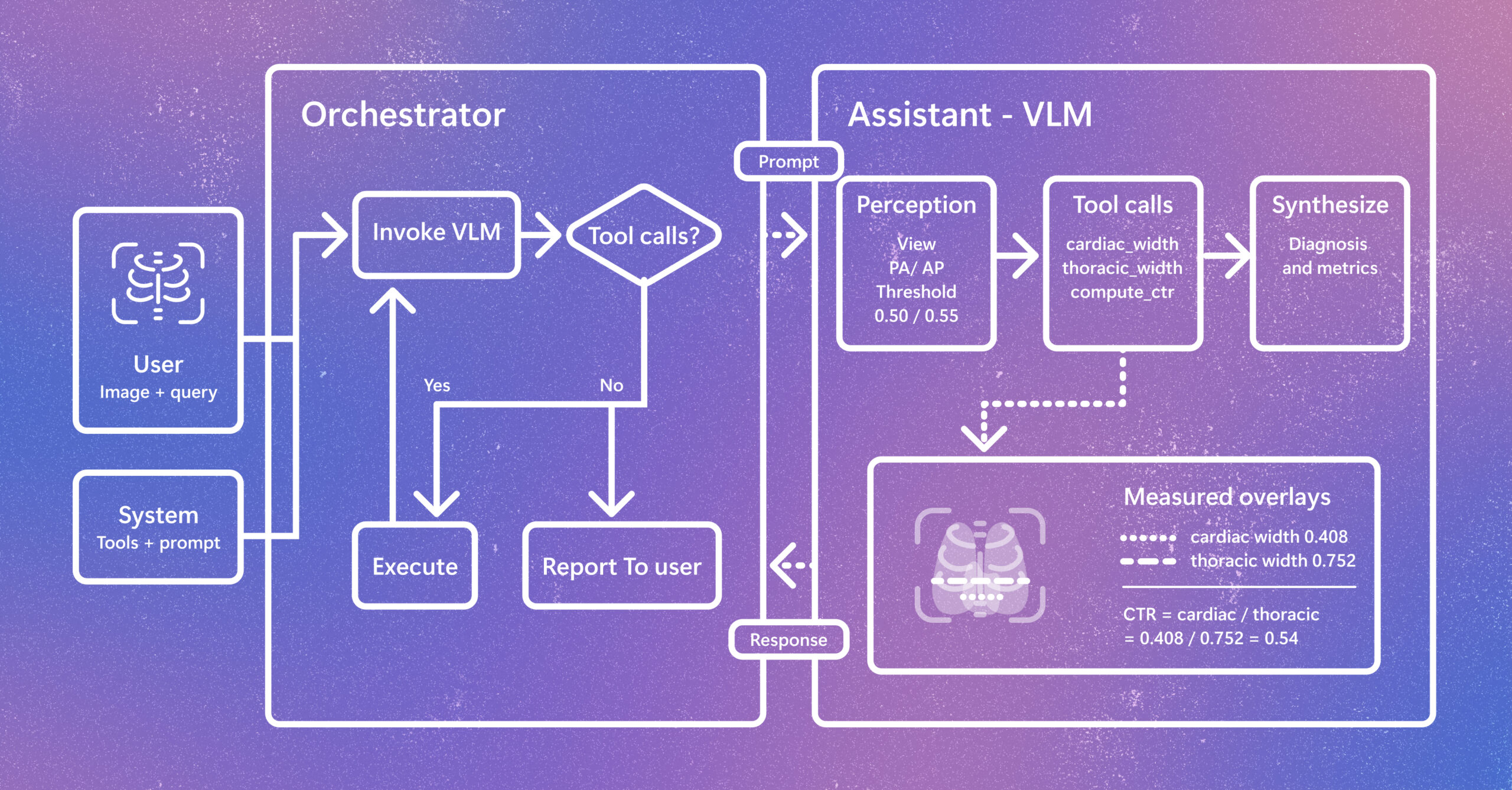
Radiology AI is evolving beyond report generation. CARE-X explores a unified approach that combines flexible reasoning, calibrated predictions, and measurement-based tools for chest X-ray interpretation. The post Introducing CARE-X: Towards Clinically Useful Radiology VLMs with Auxiliary Supervision, Reward-Aligned Learning, and Tool-Augmented Measurement appeared first on Microsoft Research.