Centroid Spectral Coupling: Implicit Alignment and Representation Diversity in Self-Supervised Learning
M. Hadi SepanjBenyamin GhojoghSaed MoradiPaul Fieguth
Nov 2026
Machine LearningComputer VisionData Science
Abstract
Self-Supervised Learning (SSL) aims to align augmented views while preserving representation diversity and preventing collapse. Existing non-contrastive methods often address these goals using multiple weighted loss terms. We introduce Centroid Spectral Coupling (CSC), a single-term SSL objective that implicitly couples view alignment, representation diversity, and collapse resistance. CSC constructs centroids from independently normalized augmented-view pairs and applies a ridge-based spectral objective to their uncentered second-moment matrix. Preserving centroid magnitudes encodes view agreement while encouraging balanced representation energy across spectral directions. We establish an exact decomposition into nonnegative alignment and spectral-imbalance components, characterize the geometry of global optima, and derive finite-loss guarantees for alignment and diversity. We also show that complete constant-output collapse is a strict saddle in normalized representation space. Experiments on CIFAR-10, CIFAR-100, and Imagenette show that CSC achieves the highest linear Top-1 accuracy among the evaluated non-contrastive methods on all three benchmarks, and the highest kNN Top-1 accuracy on both CIFAR datasets. A ridge-parameter sensitivity study reveals an empirical alignment--diversity trade-off: increasing $\kappa$ strengthens view alignment but reduces representation effective rank. These results show that a unified spectral objective yields competitive visual representations without explicit contrastive negatives or separately weighted alignment and diversity penalties.
It is found that Llama 3 delivers comparable quality to leading language models such as GPT-4 on a plethora of tasks, and performs competitively with the state-of-the-art on image, video, and speech recognition tasks.
This paper investigates developing real-world perception for active agents, proposes Gibson Environment for this purpose, and showcases a set of perceptual tasks learned therein.
F. Xia, Amir Zamir, Zhi-Yang He et al.· 2018 IEEE/CVF Conference on...· 1,069 citations· ⚡112
This publication proposes a definition and a classification of agile software development approaches and analyses ten software development methods that can be characterized as being "agile" against the defined criterion.
P. Abrahamsson, O. Salo, Jussi Ronkainen et al.· arXiv.org· 727 citations· ⚡54
The study shows that agile practices improve both informal and formal communication, but indicates that, in larger development situations involving multiple external stakeholders, a mismatch of adequate communication mechanisms can sometimes even hinder the communication.
M. Pikkarainen, Jukka Haikara, O. Salo et al.· Empirical Software Engineeri...· 401 citations· ⚡48
The results indicate that software engineering work practices are chosen opportunistically, adapted and configured to provide value under the constrains imposed by the startup context.
Nicolò Paternoster, Carmine Giardino, M. Unterkalmsteiner et al.· Information and Software Tec...· 394 citations· ⚡54
Related blog posts
MIT News · Artificial Intelligence· news.mit.eduNov 6, 2026
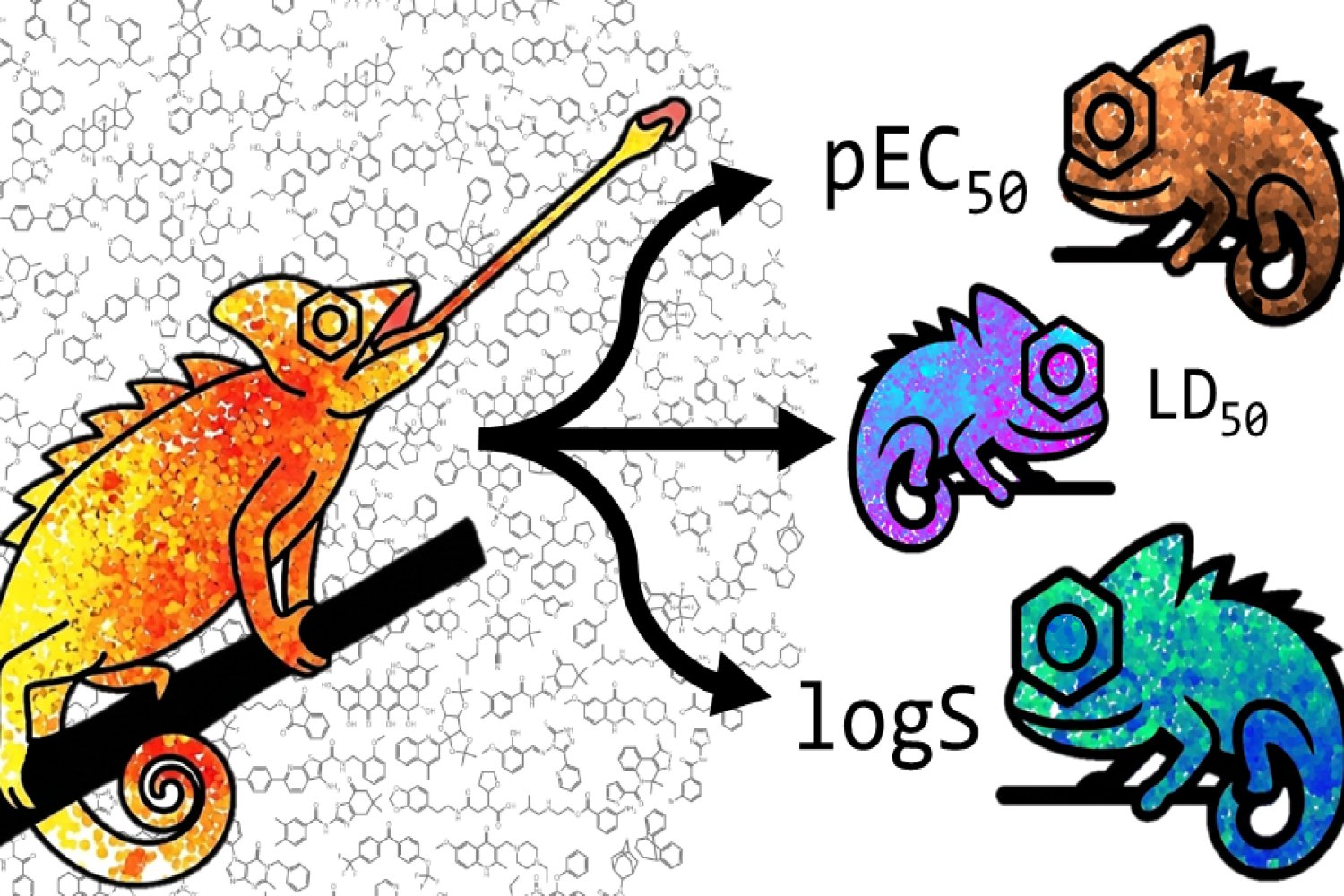
A machine-learning approach called CheMeleon provides a practical way to develop new drugs or other molecules with much less detailed, expensive experimentation.
MIT News · Artificial Intelligence· news.mit.eduOct 28, 2026
Professor Paris Smaragdis develops computers with superhuman hearing for applications like speech recognition, music understanding, and environmental monitoring.
Learn how Google DeepMind and GovTech Singapore uses lightweight on-device Gemma models to intercept conversational scams in private chats with zero cloud data egress.
We use cookies to run the site and, with your consent, for analytics and to show ads.
See our Cookie Policy.