A provably distortion-free semantic watermarking algorithm that requires only black-box sampling access to a generative model and black-box access to a semantic embedding, and which demonstrates the effectiveness of the watermark scheme on both open-source and closed models.
Abstract
We present a provably distortion-free semantic watermarking algorithm that requires only black-box sampling access to a generative model and black-box access to a semantic embedding. A watermark is called distortion-free if, averaged over its secret detection key, it leaves the generator's output distribution unchanged; this provides a formal guarantee that watermarking does not reduce output quality. Conventional such watermarks are often brittle to transformations. This is especially problematic for images, where benign operations such as compression, cropping, or resizing change the entire pixel representation. Semantic watermarks therefore require detection to be robust to content-preserving transformations. Previous methods combining these properties rely heavily on specific white-box properties of the underlying model: either to autoregressive text generation or to diffusion-specific access, such as control of the initial noise or diffusion inversion. In contrast, our construction is fully generic: It only interacts with the generative model and the semantic embedding, a function that determines the notion of"preserving content"under which detection should be robust, via sample and query access. We then instantiate this framework for image generation. We characterize the two competing properties required of the semantic embedding: it should remain stable under transformations that preserve an image's content, but should distinguish independent generations from the same prompt. We train an image encoder directly for this tradeoff. The resulting encoder improves separation while maintaining stability over off-the-shelf alternatives and enables strong aggregate detection while remaining robust to various transformations. We demonstrate the effectiveness of our watermark scheme on both open-source and closed models, which is possible only due to restriction to black-box access.
The proliferation of high-fidelity generative editing models has made it possible to inject violent or sexual content into otherwise ordinary images while preserving visual plausibility, with concrete consequences for public discourse and vulnerable populations. We propose a robust semantic watermarking framework that...
Yoonseo Kim, S. Baek, Jun-Yong Park· arXiv.org· 0 citations
Audio watermarking protects digital speech by embedding imperceptible signals for ownership verification and misuse tracing. However, the security of learning-based watermarking remains insufficiently understood under realistic adversarial removal, where attackers cannot access or query the watermark encoder, decoder,...
Deep neural networks have been widely deployed in numerous real-world applications, making trained models valuable intellectual property. However, embedded watermarks remain vulnerable to removal attacks, particularly when an adversary has only limited clean unlabeled data and the original watermark information is unav...
FeatMark is introduced, a watermarking framework that shifts from pixel-level, energy-starved perturbations to inconspicuous semantic features: small, scene-consistent micro- features that remain natural to humans while providing a stronger, machine-verifiable provenance signal.
Hao-Yang Li, Ruo-Xi Sun, Qing-Qing Ye et al.· arXiv.org· 0 citations
Invisible image watermark removal has received growing attention. Despite substantial progress, existing attacks face a tension between practicality and specificity. Attacks exploiting detector outputs, decoder responses, or paired images can be tailored to the watermark decision boundary, but require information rarel...
Jun Yao, Chao Wang, Yu-Peng Qiu et al.· 0 citations
Speech watermarking is becoming a key defense for digital copyright and content authentication. Existing attacks treat evasion as a removal problem: they erase the watermark, relying on detector access or on speech data that is hard to collect, such as paired clean-watermarked or clean target speaker speech. Commercial...
Bin-Hao Ma, Wei-Kang Ding, Han-Qing Guo et al.· 0 citations
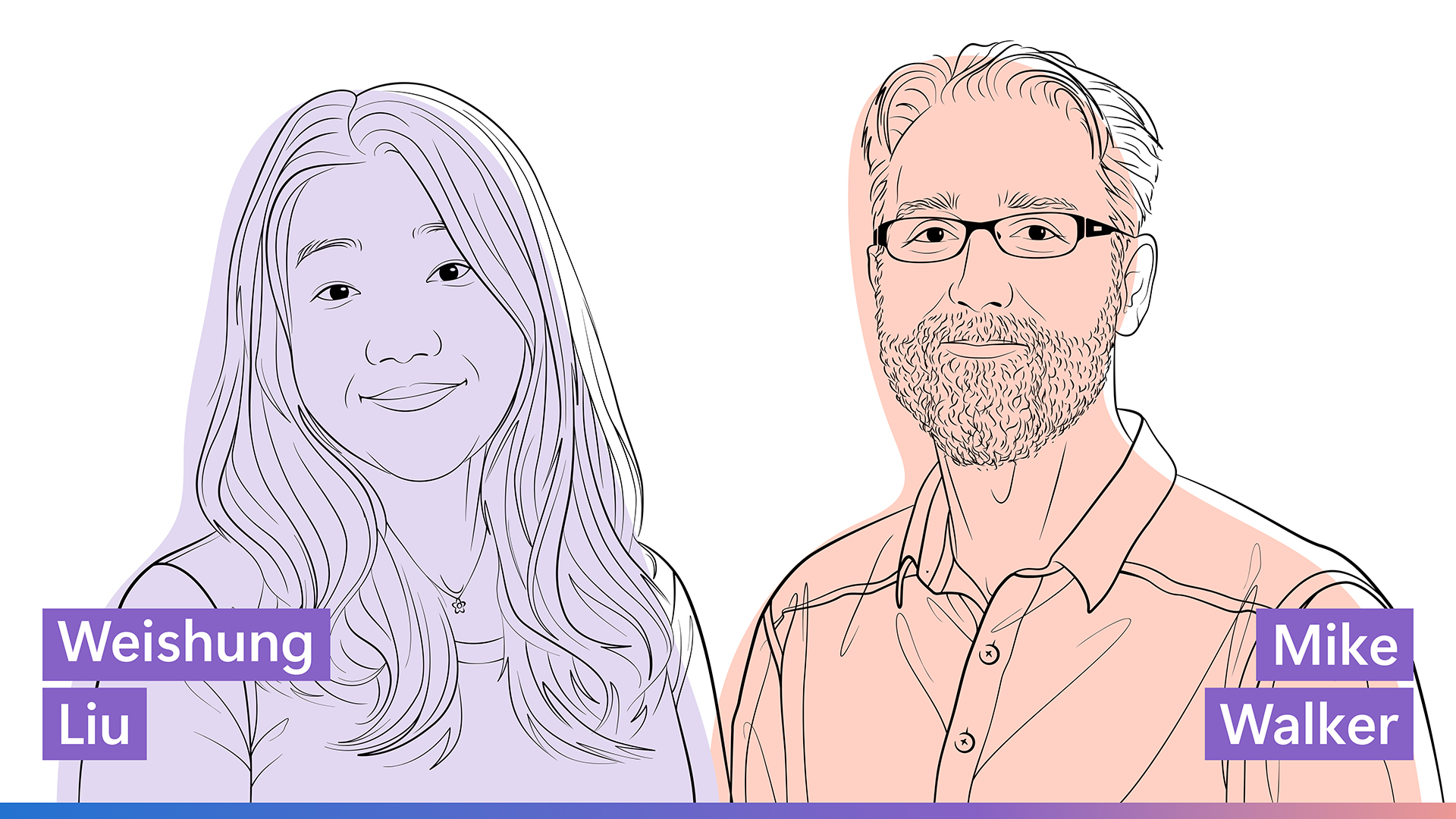
Research Manager Mike Walker reflects on a career spanning hacker culture, cybersecurity, and AI, sharing lessons about trust, teamwork, leadership, and why solving difficult problems requires curiosity, judgment, agility—and an understanding of the rules. The post Learn the rules: The hacker mindset appeared first on Microsoft Research.
MIT News · Artificial Intelligence· news.mit.eduOct 28, 2026
Professor Paris Smaragdis develops computers with superhuman hearing for applications like speech recognition, music understanding, and environmental monitoring.
Exploring how generative AI could make machine vision more accessible to businesses. The post GenEye in a Box: Making Machine Vision Something You Can Just Ask For appeared first on GPT-Lab.
Microsoft Research Blog· microsoft.comAug 11, 2026
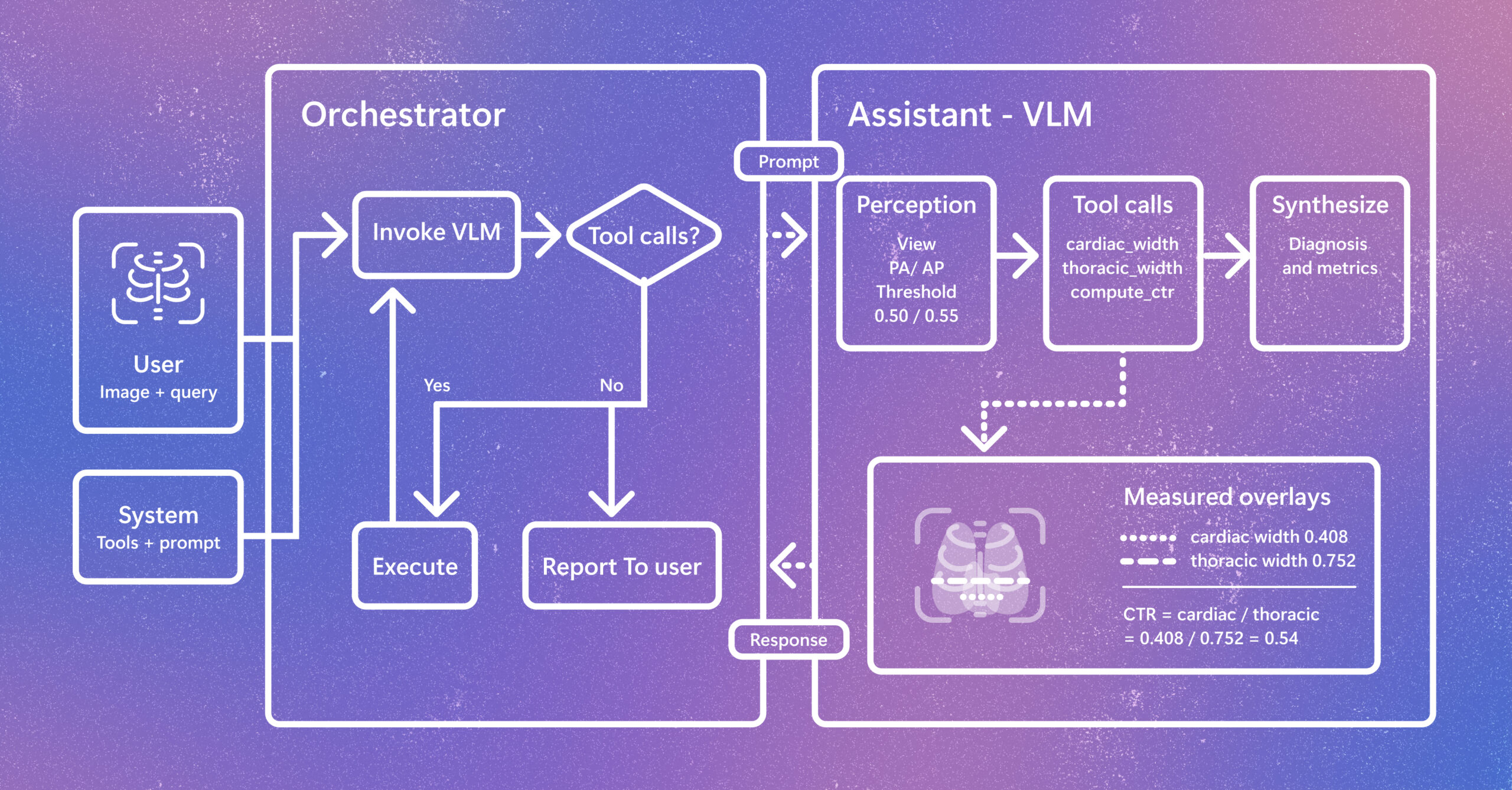
Radiology AI is evolving beyond report generation. CARE-X explores a unified approach that combines flexible reasoning, calibrated predictions, and measurement-based tools for chest X-ray interpretation. The post Introducing CARE-X: Towards Clinically Useful Radiology VLMs with Auxiliary Supervision, Reward-Aligned Learning, and Tool-Augmented Measurement appeared first on Microsoft Research.
We use cookies to run the site and, with your consent, for analytics and to show ads.
See our Cookie Policy.