RiDEx: Reward-Informed Directional Exploration for Diffusion Reinforcement Learning
Song YanChenfeng WangWei ZhaiXingchen WangTao ZhangYawen ShaoShi PanMin LiZheng-Jun Zha
Nov 2026
Machine LearningComputer Vision
Abstract
Reward-based diffusion post-training updates model parameters from task rewards. While existing approaches improve sampling and policy optimization, they still rely largely on isotropic random perturbations in a high-dimensional latent space for exploration. Such variation often spends the perturbation budget on changes with little influence on the target reward, making exploration inefficient. We study where diffusion models should explore and how to learn from that exploration. We introduce Reward-Informed Directional Exploration (RiDEx), which concentrates local exploration in reward-relevant subspaces of the denoising velocity field. Conditional residuals or differentiable reward gradients propose the subspace, and equal-and-opposite perturbations at the same generation state measure its terminal reward response. The reward difference supplies signed local supervision in the explored coordinates, while all generated images contribute to global DiffusionNFT learning. RiDEx thereby couples exploration-space selection with feedback about the changes it produces. On Stable Diffusion 3.5 Medium, RiDEx attains the highest peak rewards among the evaluated methods on four alignment and preference tasks. Its gradient-direction instantiation achieves 15x and 29x target-attainment speedups over DiffusionNFT on HPSv2 and PickScore, measured in H200 GPU hours. Controlled experiments confirm that reward-aligned directions elicit stronger responses at equal perturbation magnitude, and that applying their measured credit improves curve-average reward across all four tasks.

It is found that Llama 3 delivers comparable quality to leading language models such as GPT-4 on a plethora of tasks, and performs competitively with the state-of-the-art on image, video, and speech recognition tasks.
This paper investigates developing real-world perception for active agents, proposes Gibson Environment for this purpose, and showcases a set of perceptual tasks learned therein.
F. Xia, Amir Zamir, Zhi-Yang He et al.· 2018 IEEE/CVF Conference on...· 1,069 citations· ⚡112
This publication proposes a definition and a classification of agile software development approaches and analyses ten software development methods that can be characterized as being "agile" against the defined criterion.
P. Abrahamsson, O. Salo, Jussi Ronkainen et al.· arXiv.org· 727 citations· ⚡54
The study shows that agile practices improve both informal and formal communication, but indicates that, in larger development situations involving multiple external stakeholders, a mismatch of adequate communication mechanisms can sometimes even hinder the communication.
M. Pikkarainen, Jukka Haikara, O. Salo et al.· Empirical Software Engineeri...· 401 citations· ⚡48
The results indicate that software engineering work practices are chosen opportunistically, adapted and configured to provide value under the constrains imposed by the startup context.
Nicolò Paternoster, Carmine Giardino, M. Unterkalmsteiner et al.· Information and Software Tec...· 394 citations· ⚡54
Related blog posts
MIT News · Artificial Intelligence· news.mit.eduOct 28, 2026
Professor Paris Smaragdis develops computers with superhuman hearing for applications like speech recognition, music understanding, and environmental monitoring.
Exploring how generative AI could make machine vision more accessible to businesses. The post GenEye in a Box: Making Machine Vision Something You Can Just Ask For appeared first on GPT-Lab.
Microsoft Research Blog· microsoft.comAug 11, 2026
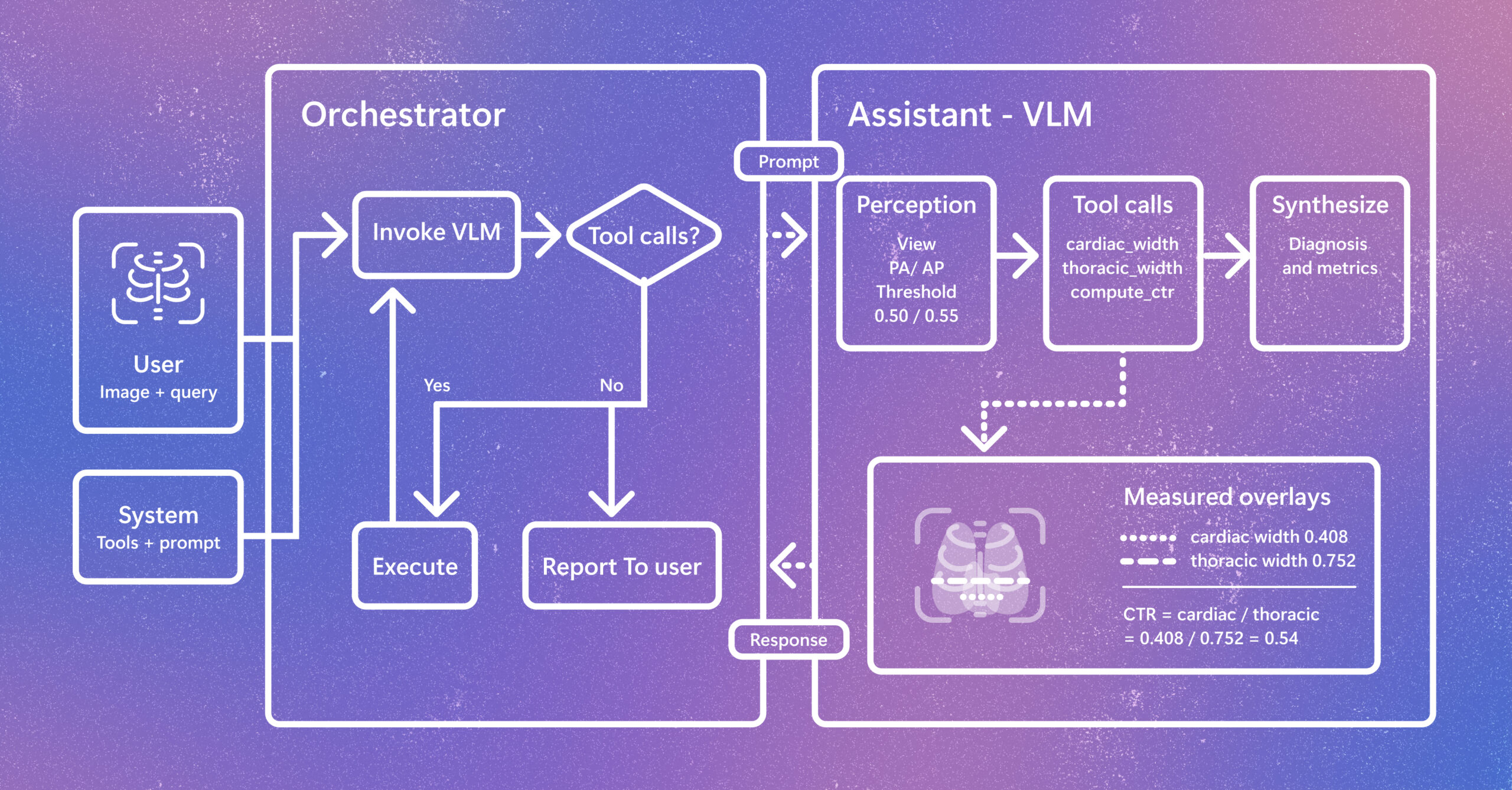
Radiology AI is evolving beyond report generation. CARE-X explores a unified approach that combines flexible reasoning, calibrated predictions, and measurement-based tools for chest X-ray interpretation. The post Introducing CARE-X: Towards Clinically Useful Radiology VLMs with Auxiliary Supervision, Reward-Aligned Learning, and Tool-Augmented Measurement appeared first on Microsoft Research.