Autonomous driving requires anticipating how traffic will evolve while responding quickly to new observations. Video foundation models offer the first ability, but repeated history encoding and iterative video generation make them costly to use for driving. We present AR-WAM, an efficient streaming world-action model that combines autoregressive temporal modeling with single-pass future conditioning. Because its video backbone is causal, AR-WAM updates its visual context incrementally, reusing past computation and conditioning future prediction on observed motion. We further hypothesize that future features computed from recent observations can improve generalization in dynamic traffic without iterative video generation. AR-WAM therefore obtains these features in one forward pass and uses them to condition trajectory generation, and reinforcement learning then improves the policy through direct optimization of driving rewards. With a single front camera, AR-WAM achieves 91.5 PDMS after supervised training and 94.0 after reinforcement learning on NAVSIM-v1, outperforming the compared strong end-to-end world-action models. In a dynamic setting of continuous driving, supervised AR-WAM keeps its visual history across decisions and outperforms strong world-action baselines.

It is found that Llama 3 delivers comparable quality to leading language models such as GPT-4 on a plethora of tasks, and performs competitively with the state-of-the-art on image, video, and speech recognition tasks.
This paper investigates developing real-world perception for active agents, proposes Gibson Environment for this purpose, and showcases a set of perceptual tasks learned therein.
F. Xia, Amir Zamir, Zhi-Yang He et al.· 2018 IEEE/CVF Conference on...· 1,069 citations· ⚡112
This publication proposes a definition and a classification of agile software development approaches and analyses ten software development methods that can be characterized as being "agile" against the defined criterion.
P. Abrahamsson, O. Salo, Jussi Ronkainen et al.· arXiv.org· 727 citations· ⚡54
The study shows that agile practices improve both informal and formal communication, but indicates that, in larger development situations involving multiple external stakeholders, a mismatch of adequate communication mechanisms can sometimes even hinder the communication.
M. Pikkarainen, Jukka Haikara, O. Salo et al.· Empirical Software Engineeri...· 401 citations· ⚡48
The results indicate that software engineering work practices are chosen opportunistically, adapted and configured to provide value under the constrains imposed by the startup context.
Nicolò Paternoster, Carmine Giardino, M. Unterkalmsteiner et al.· Information and Software Tec...· 394 citations· ⚡54
Related blog posts
MIT News · Artificial Intelligence· news.mit.eduNov 18, 2026
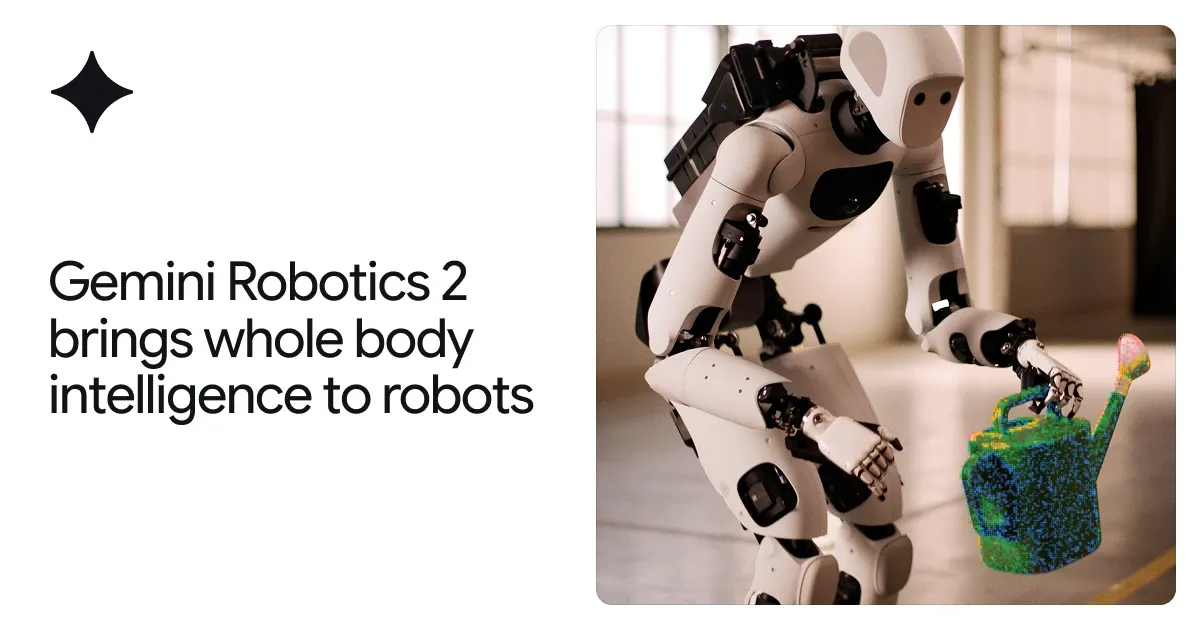
From feet to fingertips — we are teaching robots intelligent whole-body control, fine dexterity, and teamwork to complete a broad range of complex tasks.
We use cookies to run the site and, with your consent, for analytics and to show ads.
See our Cookie Policy.