AutoE2E: Don't speak - Language free end-to-end autonomy A Real-Time Driving Model for L2++ ADAS and L4 Robotaxis
Muhammad Zain KhawajaZaynab El MawasRyota YamadaGabriela CordovaArseni LysakIntisar ChowdhuryBharat JayaprakashApostolos GeorgiadisShri Harsha AdapalaJatin GautamChristoph BankAlejandra Solarte UscateguiAtanasko Boris MitrevHassan Ali AnsariNishad Sahu
Nov 2026
Artificial IntelligenceRobotics
Abstract
AutoE2E is an open-source end-to-end driving model developed by the Autoware Foundation Robotaxi Working Group. It introduces a temporal bird's-eye-view (BEV) architecture that combines multi-camera perception, HD-map information and route conditioning to predict future vehicle motion. The evaluated model uses a pretrained camera-BEV backbone, temporal feature fusion and a lightweight recurrent trajectory planner. It contains approximately 79.9 million parameters, of which approximately 1.45 million are trainable in the evaluated configuration. The v1.0 release provides model checkpoints, training and evaluation code, and DataModelConsole, a dashboard for visualizing and inspecting model experiments. On the KITScenes validation benchmark, the fine-tuned checkpoint achieves an average displacement error (ADE) of 0.745 m and a final displacement error (FDE) of 2.020 m at a three-second prediction horizon. The paper also reports preliminary real-vehicle research conducted with the Technical University of Munich's EDGAR platform, alongside ongoing collaboration with the Karlsruhe Institute of Technology. AutoE2E v1.0 is an early open research release. Its quantitative evaluation is open-loop, and the model has not yet demonstrated validated closed-loop autonomous driving. The release is intended to provide the autonomous-driving community with an inspectable baseline for further research, experimentation and collaborative development.
It is found that Llama 3 delivers comparable quality to leading language models such as GPT-4 on a plethora of tasks, and performs competitively with the state-of-the-art on image, video, and speech recognition tasks.
This paper investigates developing real-world perception for active agents, proposes Gibson Environment for this purpose, and showcases a set of perceptual tasks learned therein.
F. Xia, Amir Zamir, Zhi-Yang He et al.· 2018 IEEE/CVF Conference on...· 1,069 citations· ⚡112
GAOKAO-Bench is introduced, an intuitive benchmark that employs questions from the Chinese GAOKAO examination as test samples, including both subjective and objective questions that contribute a robust evaluation benchmark for future large language models and offers valuable insights into the advantages and limitations...
Xiaotian Zhang, Chun-yan Li, Yi Zong et al.· arXiv.org· 216 citations· ⚡17
An algorithm is proposed which leverages disentangled semantic factors to generate adversarial perturbation by altering controlled semantic attributes to fool the learner towards various "adversarial" targets.
Haonan Qiu, Chaowei Xiao, Lei Yang et al.· arXiv.org· 208 citations· ⚡17
This work proposes a HALO that directly maximizes the utility of generations instead of maximizing the log-likelihood of preferences, and suggests that the best loss depends on the inductive biases most appropriate for a given setting, an oft-overlooked consideration.
This work investigates the possibilities of using LLMs in a resume screening setting via a document retrieval framework that simulates job candidate selection and finds that the MTEs are biased, significantly favoring White-associated names in 85% of cases and female-associated names in only 11.1% of cases.
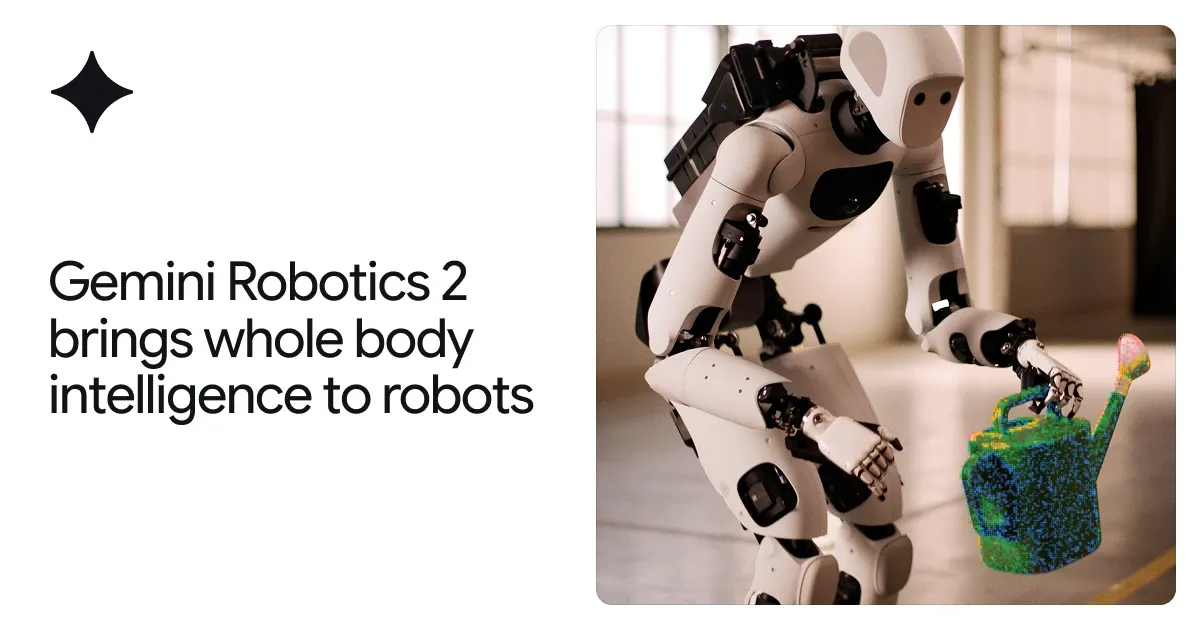
From feet to fingertips — we are teaching robots intelligent whole-body control, fine dexterity, and teamwork to complete a broad range of complex tasks.