Skip to content

A thorough review on Deep Learning approaches to 2D-to-3D Registration in Medical Imaging

Nov 2026 · 0 citations
Engineering Computer Science Physics

TL;DR

The absence of per-case uncertainty estimation and the strong neglect of temporal or sequential modelling are identified as the two methodological gaps most consequential for clinical readiness, and state-space models are discussed as a way to add temporal memory within intraoperative latency budgets.

Abstract

2D-to-3D image registration is a key component for several medical imaging purposes such as intraoperative guidance, enabling the alignment between preoperative 3D volumes and real-time 2D images. While conventional optimisation-based methods often struggle with non-convex objectives, sensitivity to initialisation, and high computational demands, deep learning (DL) has emerged as a promising alternative, offering improved alignment robustness and the potential for real-time performance. This review provides a comprehensive analysis of DL frameworks developed to address the challenges inherent in 2D-to-3D registration. We first outline how core concepts of DL are adapted to the registration problem. We then examine recent methodological advancements from multiple perspectives, including pipeline design, architectural innovations, and domain adaptation strategies. Particular attention is given to quantitative metrics, highlighting how performance is defined and measured across studies. Across the 41 included studies, we find that direct regression is the most common pipeline (23 studies, against 18 iterative ones), that hybrid CNN-attention architectures are gaining ground, and that research remains heavily concentrated on X-ray-to-CT registration. We conclude by identifying the absence of per-case uncertainty estimation and the strong neglect of temporal or sequential modelling as the two methodological gaps most consequential for clinical readiness, and discuss state-space models as a way to add temporal memory within intraoperative latency budgets. Further opportunities lie in more principled domain adaptation and in the integration of foundation models for representation learning.


View source

Similar papers

#artificial intelligence Preprint Jul 2024

The Llama 3 Herd of Models

It is found that Llama 3 delivers comparable quality to leading language models such as GPT-4 on a plethora of tasks, and performs competitively with the state-of-the-art on image, video, and speech recognition tasks.

Aaron Grattafiori, Abhimanyu Dubey, Abhinav Jauhri et al. · 21,082 citations · ⚡3,832
#artificial intelligence Conference Open access Jun 2018

Gibson Env: Real-World Perception for Embodied Agents

This paper investigates developing real-world perception for active agents, proposes Gibson Environment for this purpose, and showcases a set of perceptual tasks learned therein.

F. Xia, Amir Zamir, Zhi-Yang He et al. · 1,069 citations · ⚡112
#computer vision Review Sep 2017

Agile Software Development Methods: Review and Analysis

This publication proposes a definition and a classification of agile software development approaches and analyses ten software development methods that can be characterized as being "agile" against the defined criterion.

P. Abrahamsson, O. Salo, Jussi Ronkainen et al. · 727 citations · ⚡54
#computer vision Jun 2008

The impact of agile practices on communication in software development

The study shows that agile practices improve both informal and formal communication, but indicates that, in larger development situations involving multiple external stakeholders, a mismatch of adequate communication mechanisms can sometimes even hinder the communication.

M. Pikkarainen, Jukka Haikara, O. Salo et al. · 401 citations · ⚡48
#machine learning Review Open access Oct 2014

Software development in startup companies: A systematic mapping study

The results indicate that software engineering work practices are chosen opportunistically, adapted and configured to provide value under the constrains imposed by the startup context.

Nicolò Paternoster, Carmine Giardino, M. Unterkalmsteiner et al. · 394 citations · ⚡54

Related blog posts

MIT News · Artificial Intelligence Oct 28, 2026

Making machines that can listen

Professor Paris Smaragdis develops computers with superhuman hearing for applications like speech recognition, music understanding, and environmental monitoring.

Microsoft Research Blog Aug 11, 2026

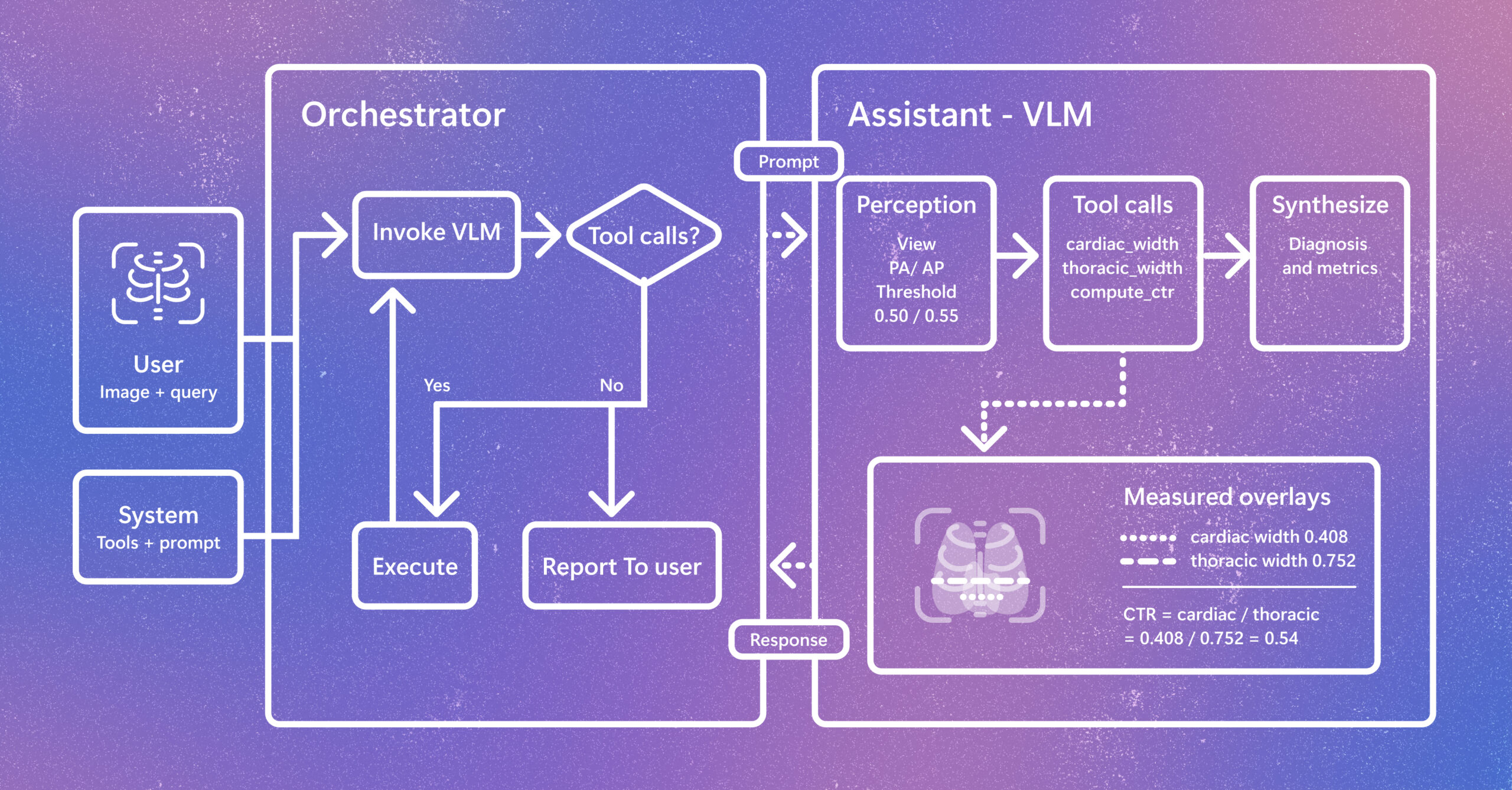
Introducing CARE-X: Towards Clinically Useful Radiology VLMs with Auxiliary Supervision, Reward-Aligned Learning, and Tool-Augmented Measurement

Radiology AI is evolving beyond report generation. CARE-X explores a unified approach that combines flexible reasoning, calibrated predictions, and measurement-based tools for chest X-ray interpretation. The post Introducing CARE-X: Towards Clinically Useful Radiology VLMs with Auxiliary Supervision, Reward-Aligned Learning, and Tool-Augmented Measurement appeared first on Microsoft Research.

We use cookies to run the site and, with your consent, for analytics and to show ads. See our Cookie Policy.