Skip to content
#robotics #human-computer interaction Preprint Open access

Who Taught the Robot That? Removing One User's Corrections from a Robot Policy That Learns Online

Eshika Pathak Leela Krishna
Nov 2026
Robotics Human-computer Interaction

Abstract

A robot that keeps learning after deployment is corrected by several people in turn, and one of them may later ask to be removed. We show that whether the robot can forget that person depends on how people correct it. The goal of removal is the robot that would exist if the person had never been there, which we compute exactly in two simulated tasks with scripted users. When users correct the robot by taking over control, an ordered log of training updates is enough: retraining on the remaining sessions in their original order gives a robot as close to the goal as training noise allows. Deleting the person's data and retraining in one pass does not, even when the other users' corrections do not depend on the removed person, because it loses the order of training. When users only nudge the robot's action, the other users' corrections carry the removed person's influence, and no method we tested recovers the goal robot. Continuing to train without the person removes most of their habits, but not what their data in the training buffer keep alive. The log can identify one clearly harmful user, but not rank users by influence better than counting their corrections.

View source

Similar papers

#artificial intelligence Conference Open access Jun 2018

Gibson Env: Real-World Perception for Embodied Agents

This paper investigates developing real-world perception for active agents, proposes Gibson Environment for this purpose, and showcases a set of perceptual tasks learned therein.

F. Xia, Amir Zamir, Zhi-Yang He et al. · 1,069 citations · ⚡112
#computer vision Review Sep 2017

Agile Software Development Methods: Review and Analysis

This publication proposes a definition and a classification of agile software development approaches and analyses ten software development methods that can be characterized as being "agile" against the defined criterion.

P. Abrahamsson, O. Salo, Jussi Ronkainen et al. · 727 citations · ⚡54
#computer vision Jun 2008

The impact of agile practices on communication in software development

The study shows that agile practices improve both informal and formal communication, but indicates that, in larger development situations involving multiple external stakeholders, a mismatch of adequate communication mechanisms can sometimes even hinder the communication.

M. Pikkarainen, Jukka Haikara, O. Salo et al. · 401 citations · ⚡48
#machine learning Review Open access Oct 2014

Software development in startup companies: A systematic mapping study

The results indicate that software engineering work practices are chosen opportunistically, adapted and configured to provide value under the constrains imposed by the startup context.

Nicolò Paternoster, Carmine Giardino, M. Unterkalmsteiner et al. · 394 citations · ⚡54

Related blog posts

MIT News · Artificial Intelligence Nov 13, 2026

Helping robots fit into the human workplace

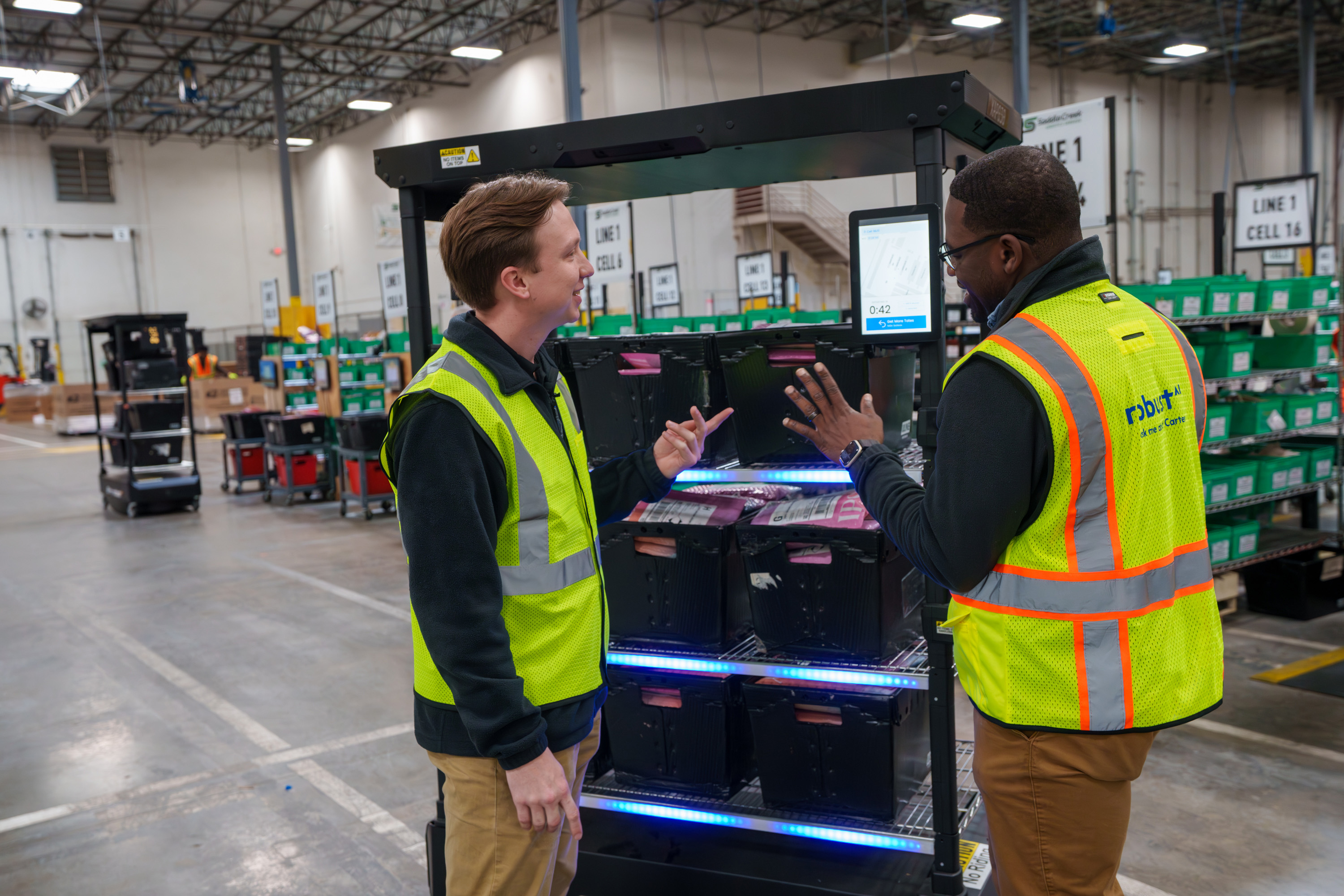
Founded by Anthony Jules ’92, SM ’92 and Professor Emeritus Rodney Brooks, Robust AI’s robots are designed to collaborate with humans in factories and warehouses.

We use cookies to run the site and, with your consent, for analytics and to show ads. See our Cookie Policy.

