Skip to content
#robotics #human-computer interaction Preprint Open access

Co-Creating Neurorehabilitation Technology Alongside Lived Experience Experts: A Participatory Design Workshop

Irene L. Y. Beck Salvatore L. Cucinella Johannes B. J. Bussmann Natacha L\'eon Jos\'e L\'opez-S\'anchez Francesca Lunardini Katherine L. Poggensee Cristina V\'azquez-Gonz\'alez Joost de Winter Laura Marchal-Crespo
Nov 2026
Robotics Human-computer Interaction

Abstract

Involving patients' lived experience (LE) early in neurorehabilitation technology design can improve the relevance and effectiveness of solutions, yet LE experts are often involved only when finished prototypes are tested. We present and evaluate a participatory design (PD) workshop for early LE involvement, examine how LE contributions influence design processes and outcomes, and provide recommendations for similar approaches. We conducted a PD workshop at the 6th International Conference on NeuroRehabilitation. Five people who have had a stroke (LE experts) and 18 workshop attendees (including the LE experts' caregivers) were organized into five groups. Following the Discover, Define, and Develop phases of the Double Diamond model, each group used Journey Maps and Data Collection Notebooks to co-create a solution for an objective specified by an LE expert. Journey Maps were thematically analyzed, and group audio transcripts underwent structured extraction using a large language model. LE input shifted discussions from discipline-based assumptions toward priorities grounded in lived experience, including fear, confidence, sensory discomfort, fatigue, aesthetics, and independence. Narrow objectives, such as opening a blister pack, produced task-specific solutions, whereas broader objectives generated device concepts, including sensory feedback for cycling and a stimulation-equipped cooking splint. Satisfaction was high among attendees and LE experts. All workshop tools and protocols are shared to support adoption. The workshop offers a practical foundation for involving LE experts early in neurorehabilitation technology development. Future iterations should better capture psychological and social dimensions, allow more reflection, and include the full range of relevant stakeholders through sustained transdisciplinary engagement between researchers and the LE community.

View source

Similar papers

#artificial intelligence Conference Open access Jun 2018

Gibson Env: Real-World Perception for Embodied Agents

This paper investigates developing real-world perception for active agents, proposes Gibson Environment for this purpose, and showcases a set of perceptual tasks learned therein.

F. Xia, Amir Zamir, Zhi-Yang He et al. · 1,069 citations · ⚡112
#computer vision Review Sep 2017

Agile Software Development Methods: Review and Analysis

This publication proposes a definition and a classification of agile software development approaches and analyses ten software development methods that can be characterized as being "agile" against the defined criterion.

P. Abrahamsson, O. Salo, Jussi Ronkainen et al. · 727 citations · ⚡54
#computer vision Jun 2008

The impact of agile practices on communication in software development

The study shows that agile practices improve both informal and formal communication, but indicates that, in larger development situations involving multiple external stakeholders, a mismatch of adequate communication mechanisms can sometimes even hinder the communication.

M. Pikkarainen, Jukka Haikara, O. Salo et al. · 401 citations · ⚡48
#machine learning Review Open access Oct 2014

Software development in startup companies: A systematic mapping study

The results indicate that software engineering work practices are chosen opportunistically, adapted and configured to provide value under the constrains imposed by the startup context.

Nicolò Paternoster, Carmine Giardino, M. Unterkalmsteiner et al. · 394 citations · ⚡54

Related blog posts

MIT News · Artificial Intelligence Nov 13, 2026

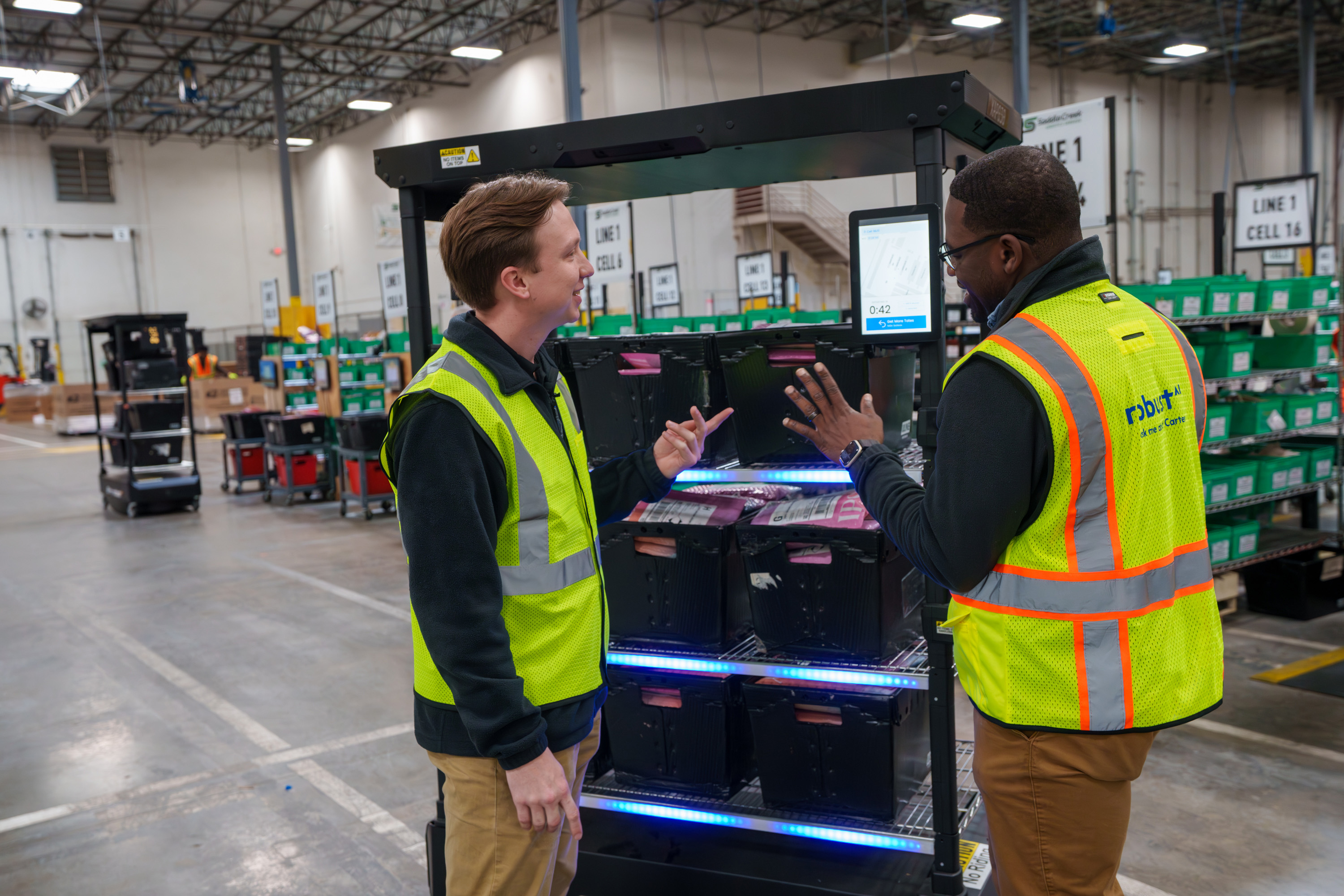
Helping robots fit into the human workplace

Founded by Anthony Jules ’92, SM ’92 and Professor Emeritus Rodney Brooks, Robust AI’s robots are designed to collaborate with humans in factories and warehouses.

We use cookies to run the site and, with your consent, for analytics and to show ads. See our Cookie Policy.

