Modern, neural-based ASR and TTS systems for speech communication are now very sophisticated, but they are frequently designed for average users in more idealized scenarios, which can underperform when interacting with users having specialized listening needs, or who speak in non-standard ways. Here we review recent TTS research, and note that industrial, production-level implementations of adaptive TTS systems are scarce. We describe how we implemented changes to TTS systems based on prior research, and then report qualitative results from two case studies, where adapted TTS techniques are applied to real-world HRI settings: First, in an older adult care home, and second, in an airport, where noise levels create comprehension problems. Results suggest promising directions using relatively simple modifications to pitch, duration, and intensity of the robot's speech, and offer a framework for larger, more formal studies of how TTS adaptations can improve HRI.

This paper investigates developing real-world perception for active agents, proposes Gibson Environment for this purpose, and showcases a set of perceptual tasks learned therein.
F. Xia, Amir Zamir, Zhi-Yang He et al.· 2018 IEEE/CVF Conference on...· 1,069 citations· ⚡112
This publication proposes a definition and a classification of agile software development approaches and analyses ten software development methods that can be characterized as being "agile" against the defined criterion.
P. Abrahamsson, O. Salo, Jussi Ronkainen et al.· arXiv.org· 727 citations· ⚡54
The study shows that agile practices improve both informal and formal communication, but indicates that, in larger development situations involving multiple external stakeholders, a mismatch of adequate communication mechanisms can sometimes even hinder the communication.
M. Pikkarainen, Jukka Haikara, O. Salo et al.· Empirical Software Engineeri...· 401 citations· ⚡48
The results indicate that software engineering work practices are chosen opportunistically, adapted and configured to provide value under the constrains imposed by the startup context.
Nicolò Paternoster, Carmine Giardino, M. Unterkalmsteiner et al.· Information and Software Tec...· 394 citations· ⚡54
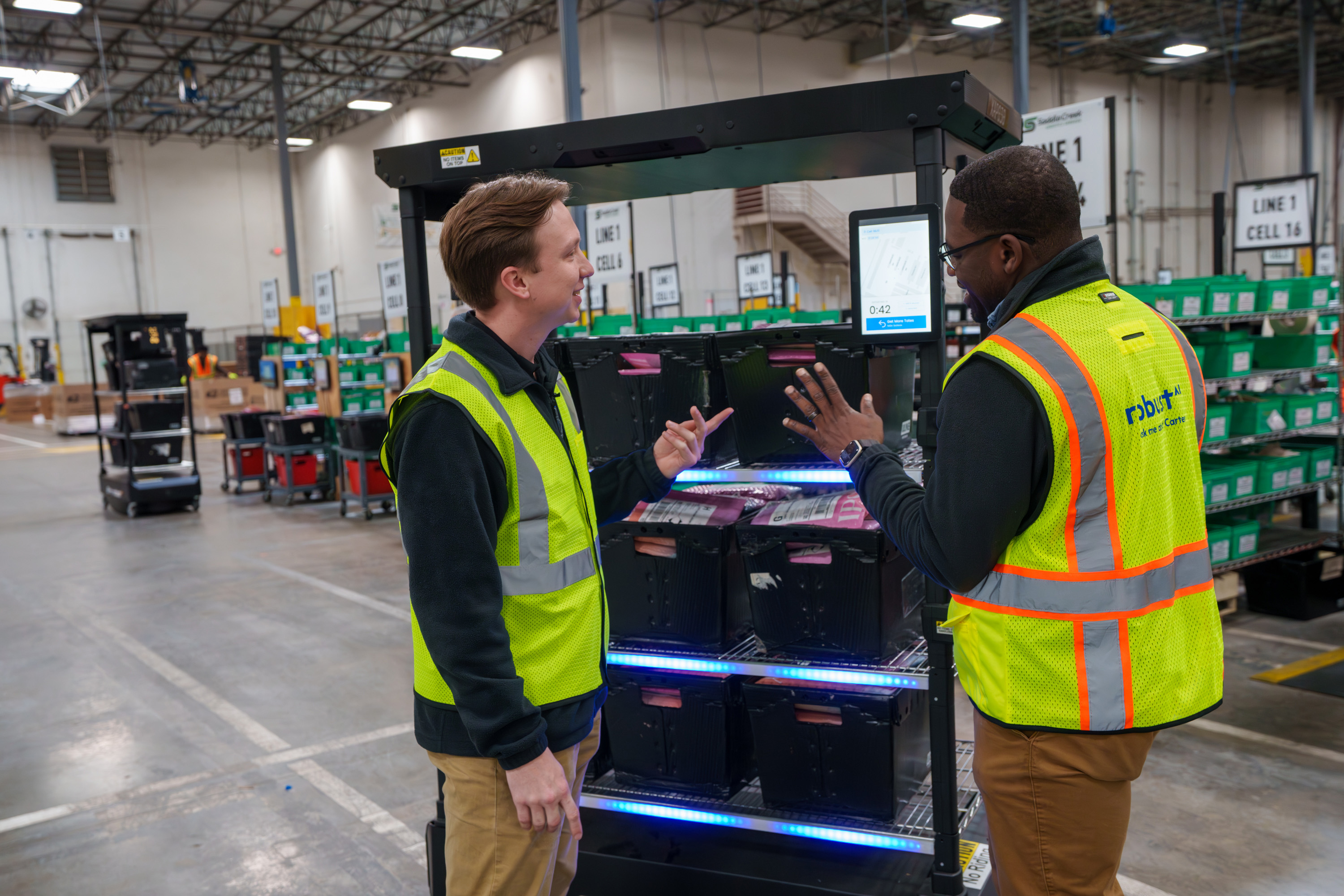
Founded by Anthony Jules ’92, SM ’92 and Professor Emeritus Rodney Brooks, Robust AI’s robots are designed to collaborate with humans in factories and warehouses.
MIT News · Artificial Intelligence· news.mit.eduNov 20, 2026
Senior Research Scientist Jim Glass discusses how his MIT-IBM Computing Research Lab collaboration connects perception and language, and addresses the shortcoming of current models.