Skip to content

KR A1: Design and Preliminary Evaluation of a Humanoid-Robot Interaction Prototype Integrating Personalized Voice Synthesis, Contextual Dialogue, and Emotion-Aware Response Generation

Mahek Aanthu Om Aanthu Aaryan AK Aanthu
Nov 2026
Natural Language Processing Robotics Human-computer Interaction

Abstract

This paper presents the design and preliminary evaluation of KR A1, a humanoid-robot interaction prototype that integrates personalized voice synthesis, contextual dialogue processing, and emotion-aware response generation for potential mental-healthcare applications. The system architecture combines a locally hosted large language model (Qwen2.5-3B-Instruct, served via Ollama) for natural-language understanding and response generation, OpenVoice v2 for zero-shot speaker-adaptive speech synthesis, and a two-tier emotion-processing pipeline comprising a keyword heuristic and LLM-based inference. Face recognition (InsightFace) and vector memory retrieval (FAISS with sentence-transformer embeddings) enable user-personalized interaction. The experimental evaluation reported here is limited to the voice-cloning component: cloned voices were evaluated against reference recordings using eight acoustic similarity measures - mel-frequency cepstral coefficients, pitch, spectral centroid, spectral contrast, spectral rolloff, zero-crossing rate, formants, and speaker-embedding cosine similarity - supplemented by a same-speaker versus cross-speaker baseline comparison. All tests were conducted on a small, informal development sample; no statistical significance testing against a held-out baseline was performed. The emotion-recognition accuracy, end-to-end response latency, and therapeutic or clinical impact of the integrated system have not yet been formally evaluated and are identified as directions for future work. All testing was informal and self-conducted by the development team; no patients or external human participants were involved, and the system has not been evaluated or deployed in a clinical setting.


View source

Similar papers

#artificial intelligence Preprint Jul 2024

The Llama 3 Herd of Models

It is found that Llama 3 delivers comparable quality to leading language models such as GPT-4 on a plethora of tasks, and performs competitively with the state-of-the-art on image, video, and speech recognition tasks.

Aaron Grattafiori, Abhimanyu Dubey, Abhinav Jauhri et al. · 21,082 citations · ⚡3,832
#artificial intelligence Conference Open access Jun 2018

Gibson Env: Real-World Perception for Embodied Agents

This paper investigates developing real-world perception for active agents, proposes Gibson Environment for this purpose, and showcases a set of perceptual tasks learned therein.

F. Xia, Amir Zamir, Zhi-Yang He et al. · 1,069 citations · ⚡112
#computer vision Review Sep 2017

Agile Software Development Methods: Review and Analysis

This publication proposes a definition and a classification of agile software development approaches and analyses ten software development methods that can be characterized as being "agile" against the defined criterion.

P. Abrahamsson, O. Salo, Jussi Ronkainen et al. · 727 citations · ⚡54
#computer vision Jun 2008

The impact of agile practices on communication in software development

The study shows that agile practices improve both informal and formal communication, but indicates that, in larger development situations involving multiple external stakeholders, a mismatch of adequate communication mechanisms can sometimes even hinder the communication.

M. Pikkarainen, Jukka Haikara, O. Salo et al. · 401 citations · ⚡48
#machine learning Review Open access Oct 2014

Software development in startup companies: A systematic mapping study

The results indicate that software engineering work practices are chosen opportunistically, adapted and configured to provide value under the constrains imposed by the startup context.

Nicolò Paternoster, Carmine Giardino, M. Unterkalmsteiner et al. · 394 citations · ⚡54

Related blog posts

MIT News · Artificial Intelligence Nov 17, 2026

Learning the language of machine learning

By studying the computational foundations of language learning, Associate Professor Jacob Andreas builds intelligent systems that can communicate effectively with humans.

MIT News · Artificial Intelligence Nov 13, 2026

Helping robots fit into the human workplace

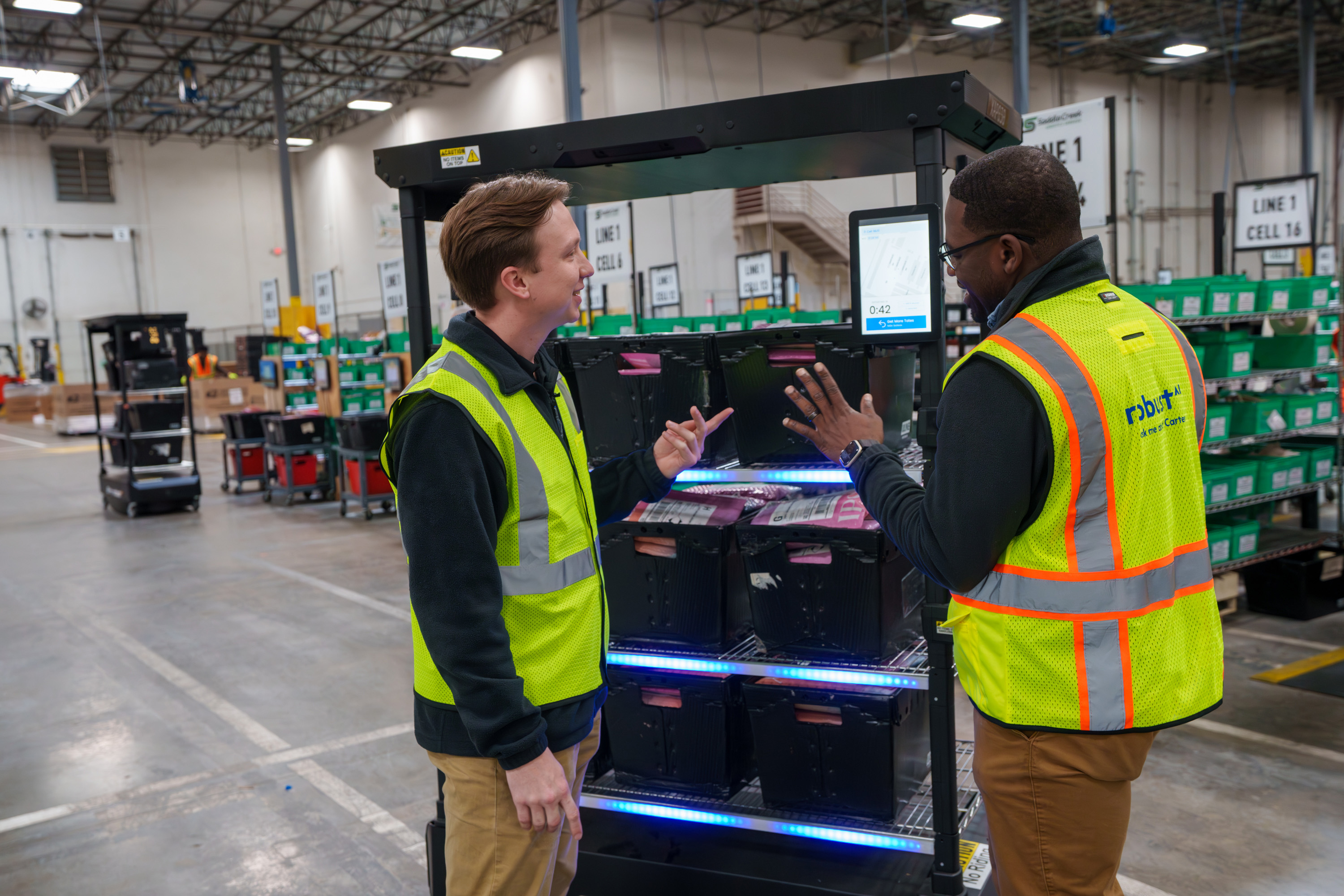
Founded by Anthony Jules ’92, SM ’92 and Professor Emeritus Rodney Brooks, Robust AI’s robots are designed to collaborate with humans in factories and warehouses.

We use cookies to run the site and, with your consent, for analytics and to show ads. See our Cookie Policy.