Skip to content

Diagnosing Prototype Estimation in Few-Shot Class-Incremental Learning: Training-Free Geometry Selection and Unlabeled-Query Prototype Rectification

Oct 2026 · 0 citations · 42 references
Computer Science

TL;DR

Query Prototype Rectification (QPR), a batch-transductive extension that uses gated unlabeled queries to update novel directions while preserving the selected geometry, is introduced, a batch-transductive extension that uses gated unlabeled queries to update novel directions while preserving the selected geometry.

Abstract

Frozen visual encoders make prototype heads competitive in few-shot class-incremental learning (FSCIL), but it remains unclear how much of the residual head gap is sensitive to noisy novel-class means rather than to the subsequent changes introduced by classifier refitting. On identical features, we construct a retrospective matched counterfactual: first replace each five-shot novel mean with its complete-data counterpart under fixed cosine scoring, then fit a linear probe. Across sixteen strong encoder dataset pairs, mean replacement accounts for the majority of this ordered gap. Shot and classwise diagnostics support a finite-sample mechanism, whereas a weaker base-only encoder does not satisfy the same criterion. This diagnosis motivates ShrinkSel, a support-only selector over prototype radius and covariance shrinkage whose family contains shared LDA as an exact fallback. Across sixteen evaluated pairs, it improves LDA on fifteen by 0.04-1.52 points and selects the exact LDA endpoint on Aircraft. We further introduce Query Prototype Rectification (QPR), a batch-transductive extension that uses gated unlabeled queries to update novel directions while preserving the selected geometry. On CLIP ViT-B/16, QPR adds 1.21-2.03 points; exact query-wise self-exclusion retains the benefit, showing that the gains do not require self-inclusion. The update repairs scarce novel prototypes at a measurable base-class cost and weakens with plentiful supports or very small cohorts. Thus, the evidence available for prototype estimation is a central constraint in frozen-feature FSCIL.


View source

Similar papers

Sep 2026

Training-Free Spectral Transductive Refinement for Cross-Domain Few-Shot Classification

Spectral Transductive Refinement (STR), a training-free transductive inference rule that exploits the geometry of the complete support-query episode, operating entirely at inference time, attains the highest 1-shot average among compared methods and remains competitive at 5-shot, rivalling approaches relying on heavy s...

F. Rahman, S. Rohan, Mahmound Sayed et al. · 0 citations
Preprint Oct 2026

LAMP: Layerwise Adaptive Mixing of Predictors for Training-Free Few-Shot Vision-Language Adaptation

Few-shot adaptation often relies on an encoder's final global representation, leaving complementary information in intermediate layers underused. Combining these features is challenging because their dimensions can differ and their usefulness varies across tasks. We propose LAMP, Layerwise Adaptive Mixing of Predictors...

Zhi-Peng Ye, Feng Jiang, Qiu-Feng Wang et al. · 0 citations
Preprint Oct 2026

Closing the Estimation Gap: Training-Free Transductive Inference for Cross-Domain Few-Shot Action Recognition

Cross-domain few-shot action recognition (CD-FSAR) aims to recognise unseen action classes in a target domain from a handful of labelled videos. Despite advances in representation learning, CD-FSAR inference still relies on prototypes estimated from extremely limited support examples. To assess this bottleneck, we perf...

Chang-Yi Li, Ze-Yu Yang, Yu Xiao · 0 citations
Review Open access Sep 2026

Mathematical Optimization and Advanced Algorithms for Few-Shot and Zero-Shot Visual Learning: An Optimization-Centered Review

A unified comparison of attribute-based ZSL, episodic meta-learning, metric and prototype estimators, graph and optimal-transport inference, generative any-shot models, and adaptation of vision–language models is analyzed.

Jie Li, Yu-Bo Sun, Xun Du et al. · 0 citations

Related blog posts

MIT News · Artificial Intelligence Oct 28, 2026

Making machines that can listen

Professor Paris Smaragdis develops computers with superhuman hearing for applications like speech recognition, music understanding, and environmental monitoring.

Microsoft Research Blog Aug 11, 2026

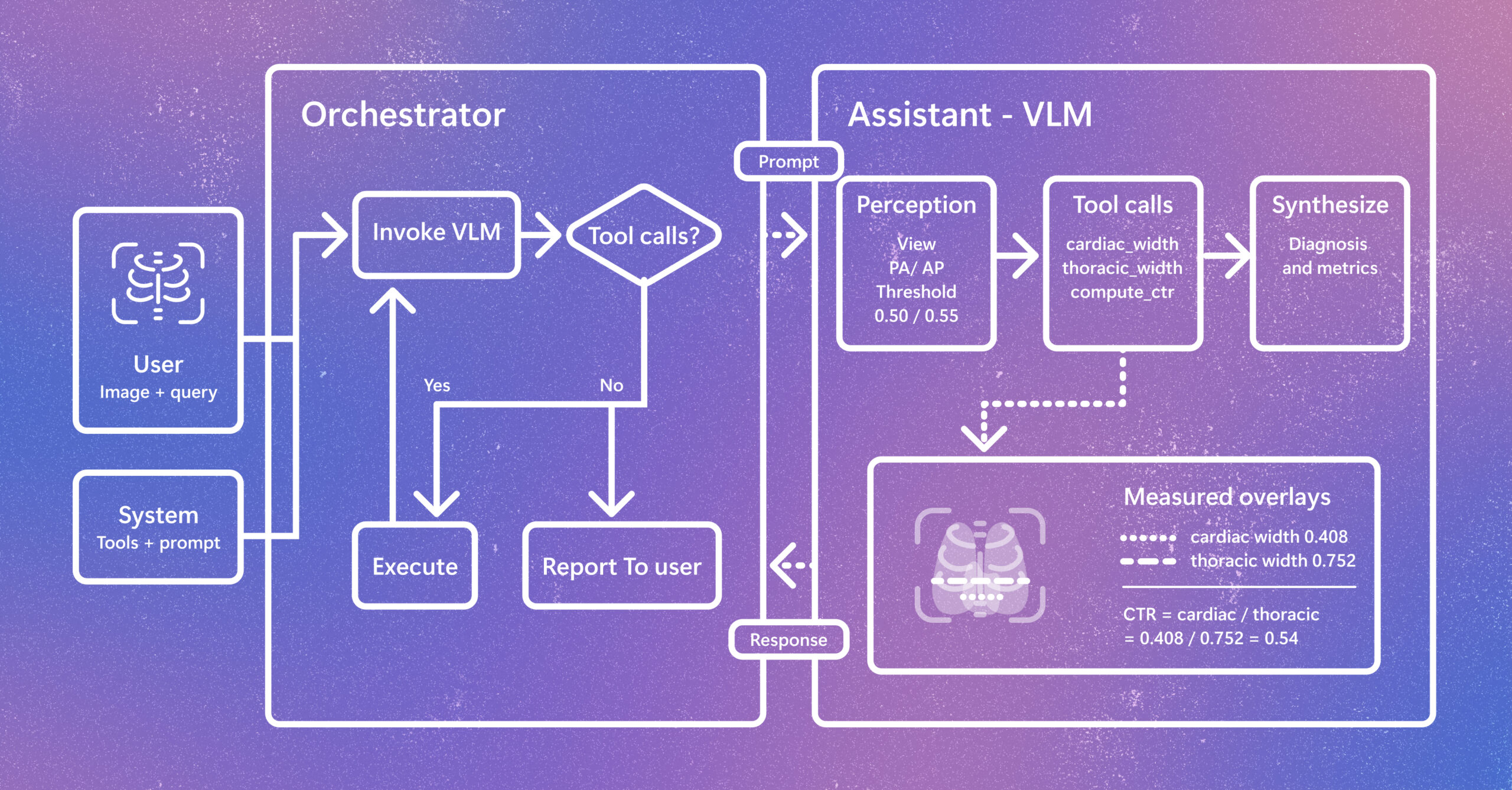
Introducing CARE-X: Towards Clinically Useful Radiology VLMs with Auxiliary Supervision, Reward-Aligned Learning, and Tool-Augmented Measurement

Radiology AI is evolving beyond report generation. CARE-X explores a unified approach that combines flexible reasoning, calibrated predictions, and measurement-based tools for chest X-ray interpretation. The post Introducing CARE-X: Towards Clinically Useful Radiology VLMs with Auxiliary Supervision, Reward-Aligned Learning, and Tool-Augmented Measurement appeared first on Microsoft Research.

We use cookies to run the site and, with your consent, for analytics and to show ads. See our Cookie Policy.