Historical decisions determine which outcomes are observed, potentially concealing a predictor's largest errors. Even unlimited data from the same observation process can therefore leave population tail risk unresolved. Here we derive sharp bounds on conditional value-at-risk, the average loss in a specified upper tail, for binary outcomes and bounded losses. These bounds span exactly the risks compatible with the observations and a stated limit on how outcome odds differ between observed and hidden cases at the same covariate values. Under stated regularity conditions, calibrated statistical certificates cover these ranges simultaneously across candidate predictors, supporting risk limits and model comparisons while separating statistical uncertainty from persistent ambiguity. For a fixed predictor and loss threshold, we derive a minimum-cost allocation for reducing excess-loss ambiguity by prioritizing hidden outcomes according to ambiguity removed per unit cost. This allocation treats audited population contributions as known and retains the original sensitivity bounds separately for audited and still-hidden outcomes. In controlled masking experiments with known loan repayments, recovering about 16% of hidden labels removes a median 61% of estimated fixed-threshold ambiguity, compared with 16% for random recovery. These results connect population tail-risk claims to the available evidence and identify where additional outcomes can sharpen their assessment.
It is found that Llama 3 delivers comparable quality to leading language models such as GPT-4 on a plethora of tasks, and performs competitively with the state-of-the-art on image, video, and speech recognition tasks.
This paper investigates developing real-world perception for active agents, proposes Gibson Environment for this purpose, and showcases a set of perceptual tasks learned therein.
F. Xia, Amir Zamir, Zhi-Yang He et al.· 2018 IEEE/CVF Conference on...· 1,069 citations· ⚡112
This publication proposes a definition and a classification of agile software development approaches and analyses ten software development methods that can be characterized as being "agile" against the defined criterion.
P. Abrahamsson, O. Salo, Jussi Ronkainen et al.· arXiv.org· 727 citations· ⚡54
The study shows that agile practices improve both informal and formal communication, but indicates that, in larger development situations involving multiple external stakeholders, a mismatch of adequate communication mechanisms can sometimes even hinder the communication.
M. Pikkarainen, Jukka Haikara, O. Salo et al.· Empirical Software Engineeri...· 401 citations· ⚡48
The results indicate that software engineering work practices are chosen opportunistically, adapted and configured to provide value under the constrains imposed by the startup context.
Nicolò Paternoster, Carmine Giardino, M. Unterkalmsteiner et al.· Information and Software Tec...· 394 citations· ⚡54
Related blog posts
MIT News · Artificial Intelligence· news.mit.eduNov 6, 2026
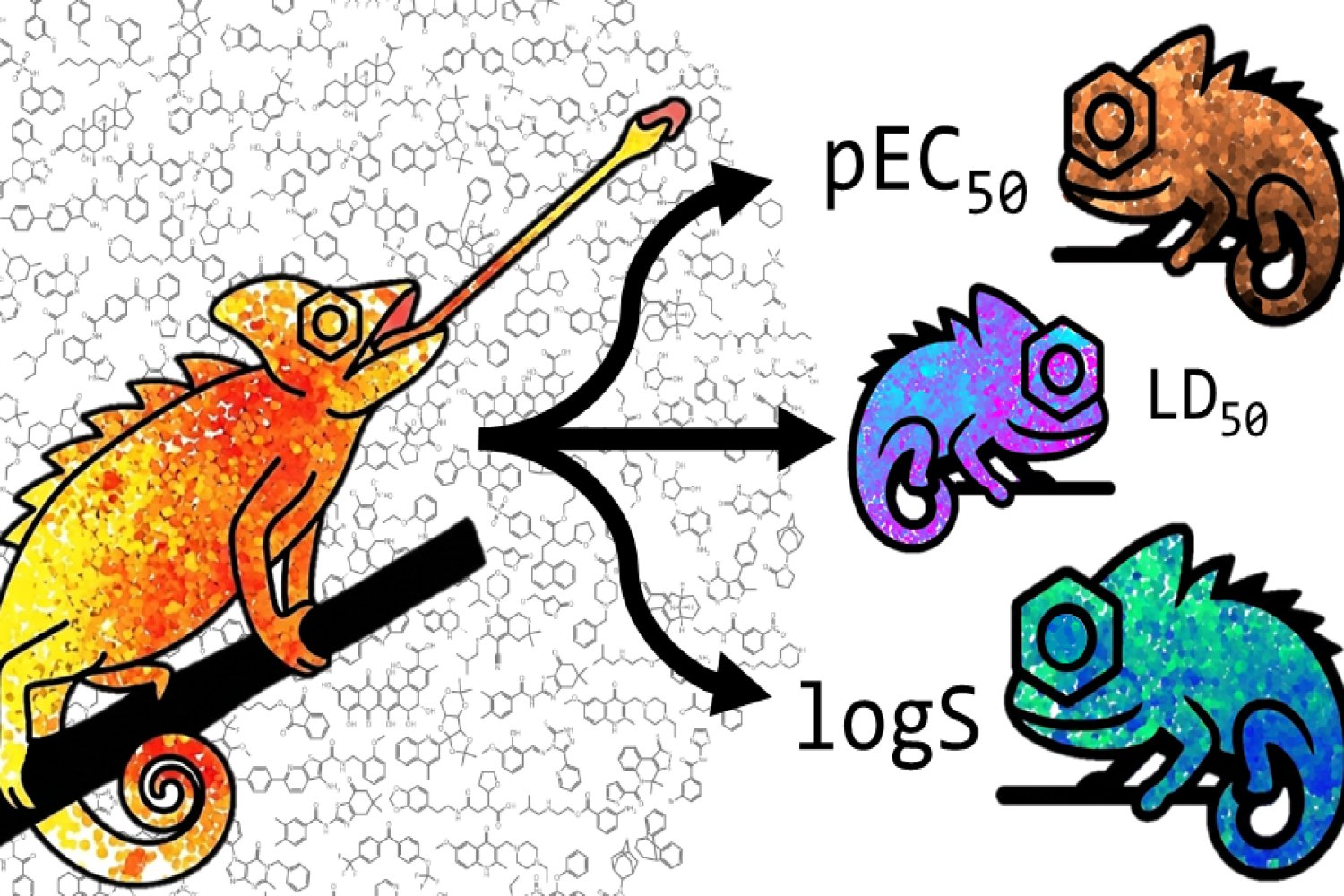
A machine-learning approach called CheMeleon provides a practical way to develop new drugs or other molecules with much less detailed, expensive experimentation.
Learn how Google DeepMind and GovTech Singapore uses lightweight on-device Gemma models to intercept conversational scams in private chats with zero cloud data egress.