Skip to content

Harnessing Vision-Language Models for Federated Unsupervised Visual Recognition

Nov 2026 · 0 citations · 96 references
Computer Science

Abstract

Federated learning (FL) is a promising research paradigm that enables collaborative model training across distributed clients without data sharing. To handle unlabeled data in local clients, existing unsupervised FL research has primarily focused on tasks like clustering and self-supervised representation learning, leaving the critical problem of unsupervised visual recognition largely unexplored. To bridge this gap, we introduce FedUR, the first framework designed for unsupervised recognition by leveraging the zero-shot capabilities of pre-trained vision-language models like CLIP. Specifically, FedUR addresses data heterogeneity through a pseudo-labeling mechanism with a class-aware data selection strategy. This strategy first estimates a global pseudo-label distribution, then allocates pseudo-labeled data to clients accordingly. To handle the uncertainty of conventional positive pseudo-labels, FedUR further incorporates class weights and a negative pseudo-labeling strategy. Furthermore, FedUR proposes a personalized prompt aggregation protocol where general visual prompts are aggregated on the server, and personalized text prompts encoding local knowledge are retained on clients. Extensive experiments demonstrate that FedUR consistently outperforms baseline methods under both label-level and feature-level distribution shifts. We believe this work paves the way for further advances in federated unsupervised recognition. Code will be available at {github.com/tim-learn/FedUR/}}.


View source

Similar papers

#artificial intelligence Preprint Jul 2024

The Llama 3 Herd of Models

It is found that Llama 3 delivers comparable quality to leading language models such as GPT-4 on a plethora of tasks, and performs competitively with the state-of-the-art on image, video, and speech recognition tasks.

Aaron Grattafiori, Abhimanyu Dubey, Abhinav Jauhri et al. · 21,082 citations · ⚡3,832
#artificial intelligence Conference Open access Jun 2018

Gibson Env: Real-World Perception for Embodied Agents

This paper investigates developing real-world perception for active agents, proposes Gibson Environment for this purpose, and showcases a set of perceptual tasks learned therein.

F. Xia, Amir Zamir, Zhi-Yang He et al. · 1,069 citations · ⚡112
#computer vision Review Sep 2017

Agile Software Development Methods: Review and Analysis

This publication proposes a definition and a classification of agile software development approaches and analyses ten software development methods that can be characterized as being "agile" against the defined criterion.

P. Abrahamsson, O. Salo, Jussi Ronkainen et al. · 727 citations · ⚡54
#computer vision Jun 2008

The impact of agile practices on communication in software development

The study shows that agile practices improve both informal and formal communication, but indicates that, in larger development situations involving multiple external stakeholders, a mismatch of adequate communication mechanisms can sometimes even hinder the communication.

M. Pikkarainen, Jukka Haikara, O. Salo et al. · 401 citations · ⚡48
#machine learning Review Open access Oct 2014

Software development in startup companies: A systematic mapping study

The results indicate that software engineering work practices are chosen opportunistically, adapted and configured to provide value under the constrains imposed by the startup context.

Nicolò Paternoster, Carmine Giardino, M. Unterkalmsteiner et al. · 394 citations · ⚡54

Related blog posts

MIT News · Artificial Intelligence Oct 28, 2026

Making machines that can listen

Professor Paris Smaragdis develops computers with superhuman hearing for applications like speech recognition, music understanding, and environmental monitoring.

Microsoft Research Blog Aug 11, 2026

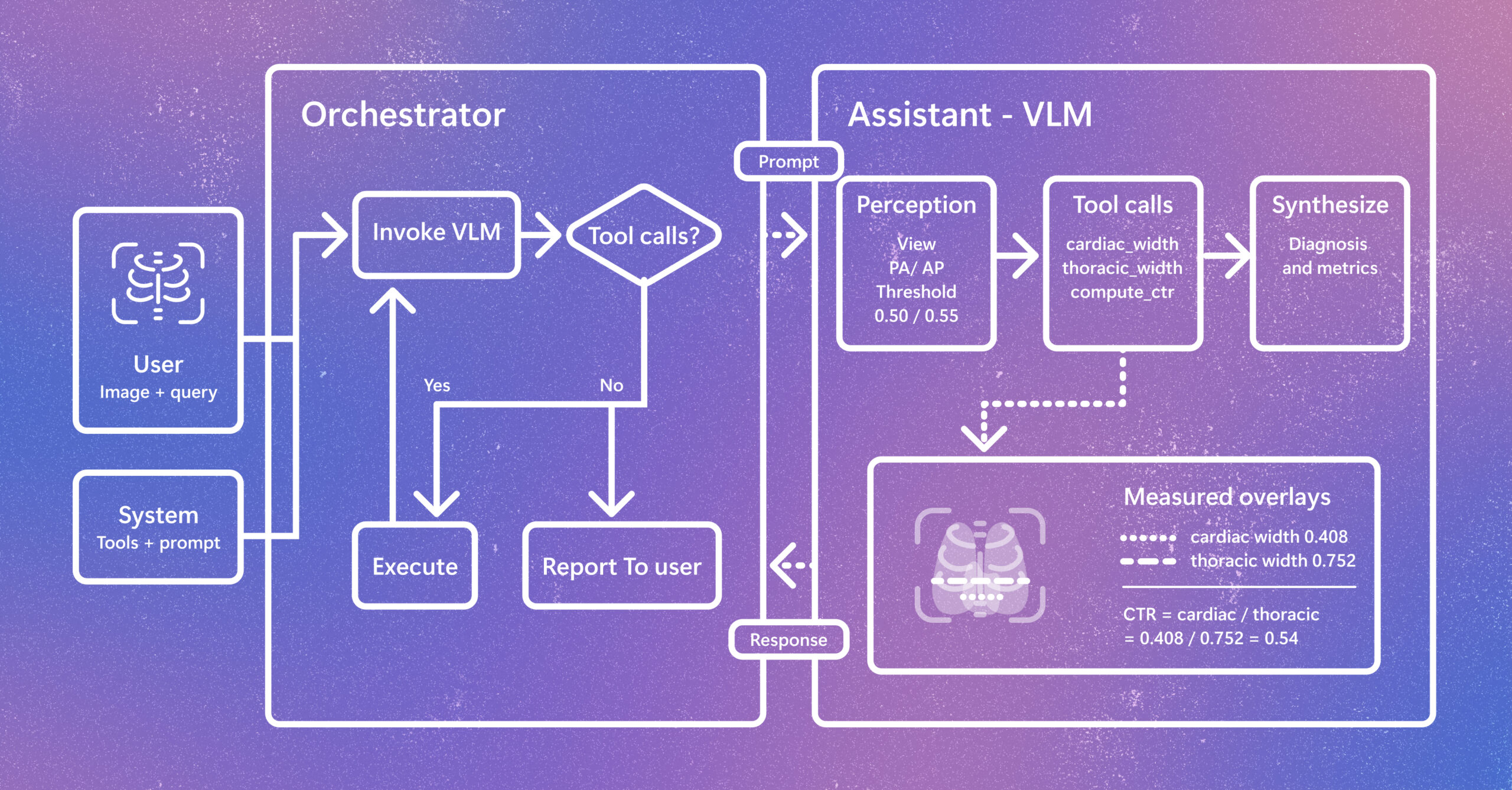
Introducing CARE-X: Towards Clinically Useful Radiology VLMs with Auxiliary Supervision, Reward-Aligned Learning, and Tool-Augmented Measurement

Radiology AI is evolving beyond report generation. CARE-X explores a unified approach that combines flexible reasoning, calibrated predictions, and measurement-based tools for chest X-ray interpretation. The post Introducing CARE-X: Towards Clinically Useful Radiology VLMs with Auxiliary Supervision, Reward-Aligned Learning, and Tool-Augmented Measurement appeared first on Microsoft Research.

We use cookies to run the site and, with your consent, for analytics and to show ads. See our Cookie Policy.