Grasp-Taxonomy Conditioning as a Mode Switch for Dexterous Grasping of Climbing Holds
Rumi LoghmaniAbraham GeorgeAmir Barati Farimani
Nov 2026
Artificial IntelligenceRobotics
Abstract
Dexterous grasping in robotics relies on distinct hand configurations depending on object geometry. We introduce BetaGrasp, a 3D diffusion policy that conditions a DP3-style point-cloud policy on a four-class grasp label (crimp, sloper, pinch, and jug), running on a Franka arm with a 16-DoF LEAP hand. We also introduce a climbing-hold benchmark: a spring testbed whose ratchet gives a slip-force reading in newtons. In our analysis the policy's point-cloud encoder did not separate the four holds, so the scan alone gave it little to choose a grasp from. Without the label (a DP3-style baseline), simulated rollouts from the robot's reset pose all end in a jug grasp, whatever the hold (25% correct grasp type, versus 94% for BetaGrasp). The label works as a switch for which grasp the policy performs. On 80 paired hardware trials, BetaGrasp raises average slip force from 9.6 N to 14.3 N, and grasps slipping fully off the hold drop from 44% of trials to 10%.
It is found that Llama 3 delivers comparable quality to leading language models such as GPT-4 on a plethora of tasks, and performs competitively with the state-of-the-art on image, video, and speech recognition tasks.
This paper investigates developing real-world perception for active agents, proposes Gibson Environment for this purpose, and showcases a set of perceptual tasks learned therein.
F. Xia, Amir Zamir, Zhi-Yang He et al.· 2018 IEEE/CVF Conference on...· 1,069 citations· ⚡112
GAOKAO-Bench is introduced, an intuitive benchmark that employs questions from the Chinese GAOKAO examination as test samples, including both subjective and objective questions that contribute a robust evaluation benchmark for future large language models and offers valuable insights into the advantages and limitations...
Xiaotian Zhang, Chun-yan Li, Yi Zong et al.· arXiv.org· 216 citations· ⚡17
An algorithm is proposed which leverages disentangled semantic factors to generate adversarial perturbation by altering controlled semantic attributes to fool the learner towards various "adversarial" targets.
Haonan Qiu, Chaowei Xiao, Lei Yang et al.· arXiv.org· 208 citations· ⚡17
This work proposes a HALO that directly maximizes the utility of generations instead of maximizing the log-likelihood of preferences, and suggests that the best loss depends on the inductive biases most appropriate for a given setting, an oft-overlooked consideration.
This work investigates the possibilities of using LLMs in a resume screening setting via a document retrieval framework that simulates job candidate selection and finds that the MTEs are biased, significantly favoring White-associated names in 85% of cases and female-associated names in only 11.1% of cases.
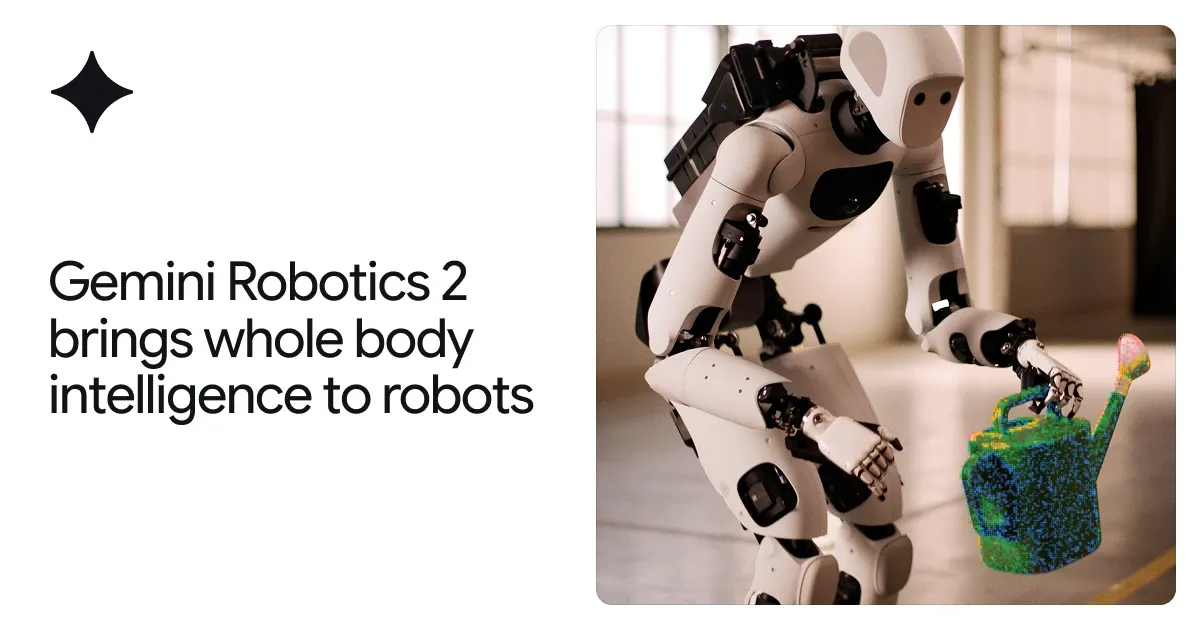
From feet to fingertips — we are teaching robots intelligent whole-body control, fine dexterity, and teamwork to complete a broad range of complex tasks.