Scaling vision-language foundation models has significantly advanced generalist robot manipulation, but the increased model scale introduces computational latency that degrades real-time physical reactivity. Existing Vision-Language-Action (VLA) architectures execute high-level semantic reasoning and action ex- ecution sequentially within the primary control loop, creating a fundamental tension between semantic-reasoning capability and robot agility. To address this, we propose Asynchronous Robot Policy (ARP), an architectural framework that decouples semantic reasoning from low-level action generation using asynchronous processes operating at independent frequencies. In ARP, a high-capacity Vision-Language Model (VLM) asynchronously updates a semantic memory at low fre- quency, while a lightweight Vision-Action Expert, conditioned on this semantic memory, generates robot actions at a much higher control frequency. Such a formulation, enables having a fast perception-action loop without compromising on the semantic capability. To overcome asynchronous memory staleness, ARP trains the vision-action expert on the semantic staleness and execution delay, with temporally mismatched observation across processes. On Franka manipulation tasks, ARP achieves an 18% higher success rate and 20% less time need for execution in quasi-static setups, while 3-5 times baseline performance in dynamic simulation environments. Furthermore, ARP enables operating the VLM at 10 times lower than its nominal frequency with no significant performance loss making it much more efficient than the baseline. These results highlight the architectural advantages of modeling robot policies as asynchronous processes, enabling real-world reactive deployment without sacrificing the scale of foundation models.
It is found that Llama 3 delivers comparable quality to leading language models such as GPT-4 on a plethora of tasks, and performs competitively with the state-of-the-art on image, video, and speech recognition tasks.
This paper investigates developing real-world perception for active agents, proposes Gibson Environment for this purpose, and showcases a set of perceptual tasks learned therein.
F. Xia, Amir Zamir, Zhi-Yang He et al.· 2018 IEEE/CVF Conference on...· 1,069 citations· ⚡112
GAOKAO-Bench is introduced, an intuitive benchmark that employs questions from the Chinese GAOKAO examination as test samples, including both subjective and objective questions that contribute a robust evaluation benchmark for future large language models and offers valuable insights into the advantages and limitations...
Xiaotian Zhang, Chun-yan Li, Yi Zong et al.· arXiv.org· 216 citations· ⚡17
An algorithm is proposed which leverages disentangled semantic factors to generate adversarial perturbation by altering controlled semantic attributes to fool the learner towards various "adversarial" targets.
Haonan Qiu, Chaowei Xiao, Lei Yang et al.· arXiv.org· 208 citations· ⚡17
This work proposes a HALO that directly maximizes the utility of generations instead of maximizing the log-likelihood of preferences, and suggests that the best loss depends on the inductive biases most appropriate for a given setting, an oft-overlooked consideration.
This work investigates the possibilities of using LLMs in a resume screening setting via a document retrieval framework that simulates job candidate selection and finds that the MTEs are biased, significantly favoring White-associated names in 85% of cases and female-associated names in only 11.1% of cases.
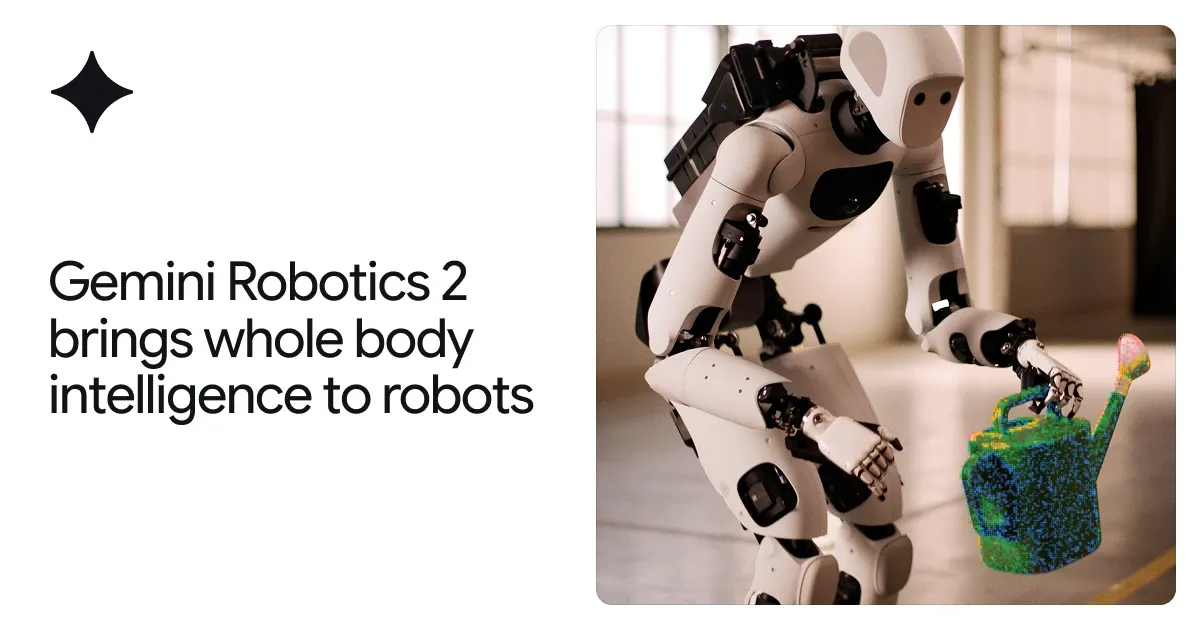
From feet to fingertips — we are teaching robots intelligent whole-body control, fine dexterity, and teamwork to complete a broad range of complex tasks.