Association of lipocalin-2 and low-density lipoprotein receptor-related protein-1 (LRP1) with biomarkers of environmental enteric dysfunction (EED) among under 2 children in Bangladesh: results from a community-based intervention study
Background Environmental enteric dysfunction (EED) is thought to occur from persistent intestinal inflammation. Studies also revealed the association of lipocalin-2 (LCN2) and low-density lipoprotein receptor-related protein-1 (LRP1) with intestinal inflammation. Therefore, we intended to explore the relationship of LCN2 and LRP1 with gut inflammation and biomarkers of EED in Bangladeshi malnourished children. Methods A total of 222 children (length-for-age z-score (LAZ) <-1) aged 12–18 months were enrolled in this study in a cross-sectional manner. Among the participants, 115 were stunted (LAZ <-2) and 107 were at risk of being stunted (LAZ −1 to −2) children. Plasma and faecal biomarkers were measured using ELISA. Spearman’s rank correlation was done to see the correlation among LCN2, LRP1 and biological biomarkers. Results LCN2 correlates positively with myeloperoxidase (r=0.19, p=0.005), neopterin (r=0.20, p=0.004), calprotectin (r=0.3, p=0.0001), Reg1B (r=0.20, p=0.003) and EED score (r=0.20, p=0.003). Whereas, LRP1 correlates negatively with myeloperoxidase (r = −0.18, p=0.006), neopterin (r = −0.30, p=0.0001), alpha-1-antitrypsin (r = −0.18, p=0.006), Reg1B (r=−0.2, p=0.003) and EED score (r = −0.29, p=0.0001). Conclusions Our findings imply that LCN2 might be a promising biomarker to predict gut inflammation and EED. Whereas, increased level of LRP1 may contribute to alleviating intestinal inflammation.

This publication proposes a definition and a classification of agile software development approaches and analyses ten software development methods that can be characterized as being "agile" against the defined criterion.
P. Abrahamsson, O. Salo, Jussi Ronkainen et al.· arXiv.org· 727 citations· ⚡54
The study shows that agile practices improve both informal and formal communication, but indicates that, in larger development situations involving multiple external stakeholders, a mismatch of adequate communication mechanisms can sometimes even hinder the communication.
M. Pikkarainen, Jukka Haikara, O. Salo et al.· Empirical Software Engineeri...· 401 citations· ⚡48
The results indicate that software engineering work practices are chosen opportunistically, adapted and configured to provide value under the constrains imposed by the startup context.
Nicolò Paternoster, Carmine Giardino, M. Unterkalmsteiner et al.· Information and Software Tec...· 394 citations· ⚡54
The results show that the embedded industry has been able to apply agile methods in its development processes and that the appreciation of the agile methods and their individual practices appears to increase once adopted and applied in practice.
O. Salo, P. Abrahamsson· IET Software· 238 citations· ⚡9
Consequences of happiness and unhappiness that are beneficial and detrimental for developers' mental well-being, the software development process, and the produced artifacts are found.
D. Graziotin, Fabian Fagerholm, Xiaofeng Wang et al.· Journal of Systems and Softw...· 236 citations· ⚡13
The Mobile-D approach is briefly outlined here and the experiences gained from four case studies are discussed, which helped develop an agile development approach for mobile application development.
P. Abrahamsson, Antti Hanhineva, H. Hulkko et al.· Conference on Object-Oriente...· 225 citations· ⚡18
Related blog posts
Microsoft Research Blog· microsoft.comOct 30, 2026
Evaluating Microsoft Copilot at enterprise scale requires test data that captures the full complexity of real organizations, yet real enterprise data contains sensitive information that cannot be used for evaluation under any circumstances. The post From synthetic enterprise data evaluations to real Microsoft Copilot AI confidence appeared first on Microsoft Research.
Microsoft Research Blog· microsoft.comOct 29, 2026
Host Sowbhagya Suresh shares some of the latest news and cutting-edge research from across Microsoft—from understanding the challenges facing coding agents to uncovering how people use AI at work and improving extended-range weather forecasting. The post Microsoft Research Focus – Edition #97 appeared first on Microsoft Research.
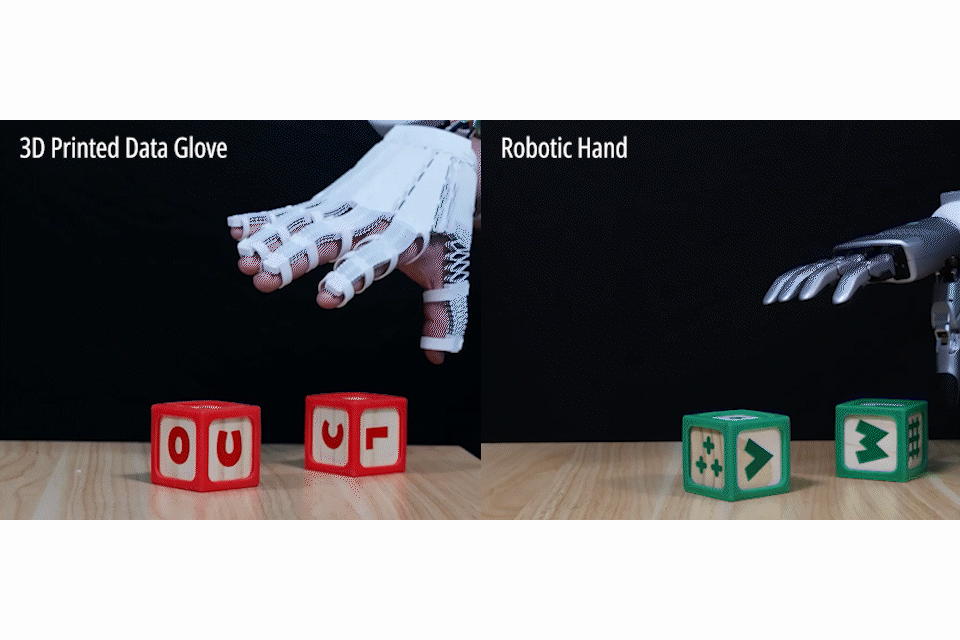
“X-Hinges” helps design and 3D print items like lamps and gloves with an interactive twist: automatically embedded sensors that perceive and adaptively respond to human contact.
We use cookies to run the site and, with your consent, for analytics and to show ads.
See our Cookie Policy.