Nov 2026· Discover Computing· Vol 29· 0 citations· 32 references
TL;DR
Findings indicate that the integration of stabilisation, directional filtering, and trimmed-mean aggregation improves empirical robustness under the evaluated adversarial settings, although the present study does not establish formal Byzantine fault-tolerance or convergence guarantees.
Federated learning (FL) has gained prominence in decentralized artificial intelligence applications; however, its susceptibility to adversarial attacks, particularly GAN-based poisoning, remains a critical challenge. This study proposes a decentralized, multi-layered security framework integrating blockchain-backed val...
Muthana R. Alsultan, Shivan A. Mohammed, Fidha Ezzaldin Aslan· Research on Engineering Stru...· 0 citations
RetFL is proposed, a CKKS-enabled robust aggregation framework for DFL that establishes a decentralized training workflow with VRF-based candidate selection and view change, and designs a weighted aggregation scheme that incorporates cosine similarity and a dynamic reputation mechanism to weight updates and suppress pe...
Yi-Cheng Huang, Zhou Zhou, You-Liang Tian et al.· Journal of King Saud Univers...· 0 citations
Federated Learning (FL) enables distributed model training without sharing raw data, making it particularly suitable for Internet of Things (IoT) environments. However, FL remains vulnerable to poisoning attacks, where malicious clients manipulate local updates to corrupt global model optimization. Existing defenses ma...
Jin Meng, S. Amitrano, Marzia Canzaniello et al.· ACM Interational Symposium o...· 0 citations
Federated learning (FL) enables multiple clients to collaboratively train machine learning models without sharing their raw data, making it a promising paradigm for privacy-sensitive generative applications. However, diffusion models trained in federated environments remain vulnerable to backdoor, evasion, and model-po...
Wen-Nan Wang, Tu-Li Chen, Fu Luo· Journal of engineering and a...· 0 citations
A theoretical analysis showing that, under bounded retained residuals, the aggregation error is controlled by the candidate-set Byzantine contamination, the magnitude of retained Byzantine residuals, and the stability of attention weights, achieves competitive or superior robustness compared with classical and recent r...
Shu-Juan Tian, Shu-Huan Xiang, Gang Liu et al.· IEEE Transactions on Neural...· 0 citations
With recent developments in Artificial Intelligence (AI), the adoption of distributed learning paradigms such as Federated Learning (FL) has emerged. In simple terms, FL enables multiple entities to collaboratively train AI models without sharing local data. The FL paradigm is particularly valuable in privacy-sensitive...
Maria Ivan, O. Ermis, Ruxandra F. Olimid· 0 citations
Related blog posts
Microsoft Research Blog· microsoft.comNov 16, 2026
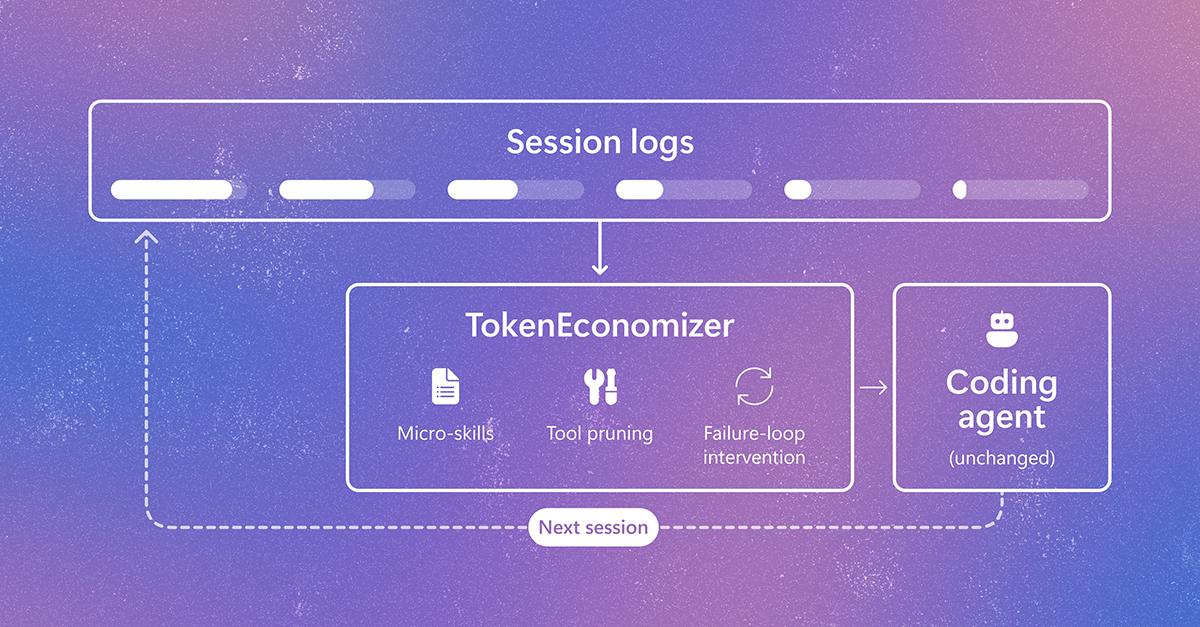
AI coding agents are increasingly help developers fix bugs and build features largely on their own, but every interaction with their models consumes tokens. In each session, an agent sends instructions, tool descriptions, and session history to its model. Most efforts to reduce this cost focus on individual tasks. Yet developers return to the same […] The post TokenEconomizer: Learning from Experience to Make AI Coding Agents More Efficient appeared first on Microsoft Research.
MIT News · Artificial Intelligence· news.mit.eduNov 9, 2026
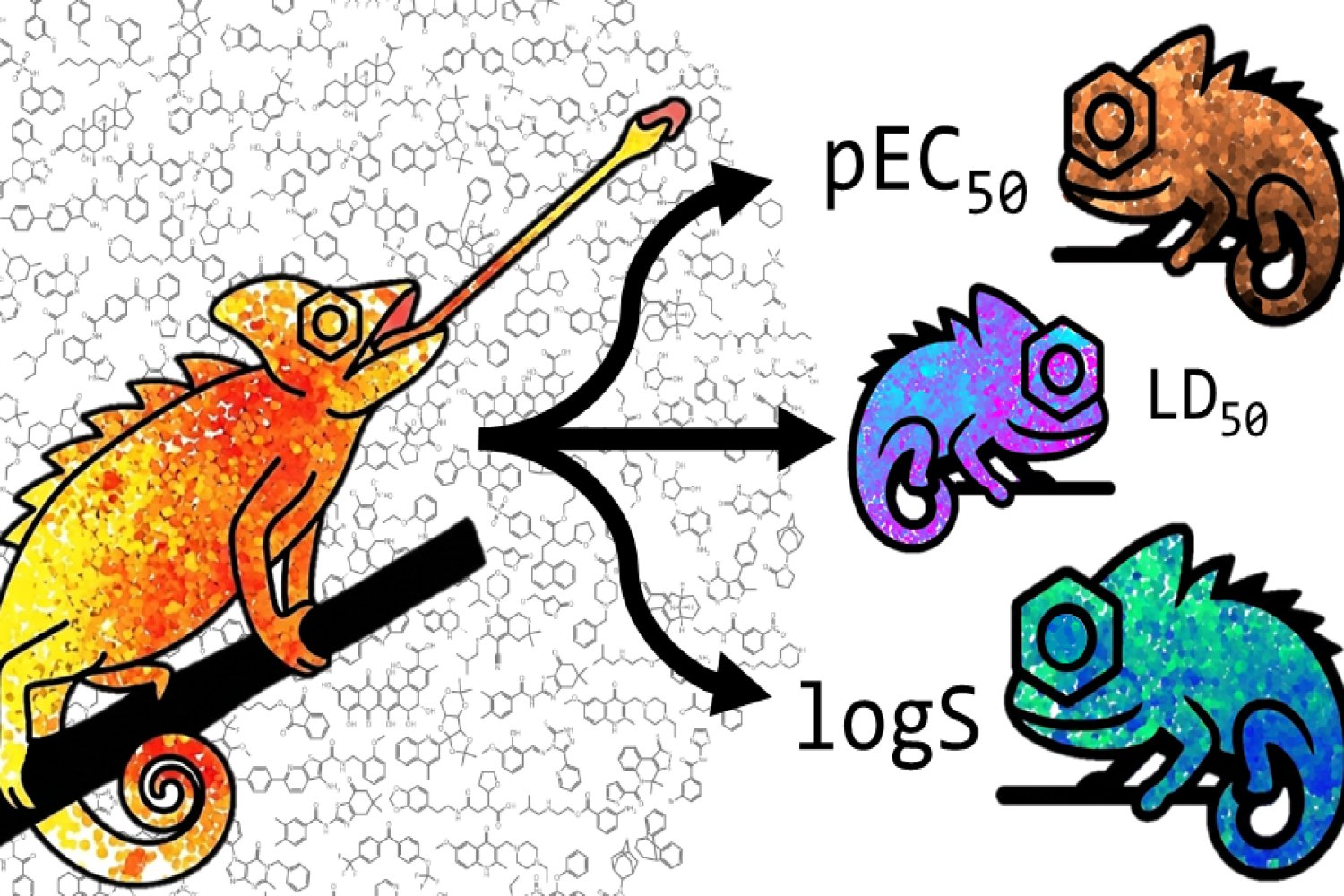
A machine-learning approach called CheMeleon provides a practical way to develop new drugs or other molecules with much less detailed, expensive experimentation.
We use cookies to run the site and, with your consent, for analytics and to show ads.
See our Cookie Policy.