Skip to content

Privacy Preference Controls for Agentic Systems

Oct 2026 · 0 citations · 102 references
Computer Science

TL;DR

A taxonomy of enforceable privacy preferences for agentic systems is developed, informed both by laws and empirical studies of existing privacy tools as well as an audit of 30 leading AI assistants and agent platforms.

Abstract

In response to vast and widespread online tracking, regulators and technologists alike have worked to develop laws and tools that allow people to express their privacy preferences. These measures seek to offer users greater control over the sale and sharing of personal information, putting agency in their hands to protect their privacy. However, the web is undergoing a seismic shift, away from strictly user-driven behavior towards agentic behavior, where AI agents take autonomous actions on behalf of users. In this study, we ask: What should privacy preference controls look like in the agentic web and agentic systems more generally? To answer this question, we develop a taxonomy of enforceable privacy preferences for agentic systems. Our taxonomy is informed both by laws and empirical studies of existing privacy tools as well as an audit of 30 leading AI assistants and agent platforms. To explore how our taxonomy can be implemented, we design and develop eight open-source prototypes that mirror real-world agentic applications and demonstrate how major aspects of our taxonomy can be structurally integrated in agentic protocols, such as the Model Control Protocol and Agent2Agent protocol. Ultimately, our study seeks to provide the groundwork for ensuring end-user privacy and autonomy is not lost in the newly arriving agentic world.

View source

Similar papers

#computer vision Review Sep 2017

Agile Software Development Methods: Review and Analysis

This publication proposes a definition and a classification of agile software development approaches and analyses ten software development methods that can be characterized as being "agile" against the defined criterion.

P. Abrahamsson, O. Salo, Jussi Ronkainen et al. · 727 citations · ⚡54
#computer vision Jun 2008

The impact of agile practices on communication in software development

The study shows that agile practices improve both informal and formal communication, but indicates that, in larger development situations involving multiple external stakeholders, a mismatch of adequate communication mechanisms can sometimes even hinder the communication.

M. Pikkarainen, Jukka Haikara, O. Salo et al. · 401 citations · ⚡48
#machine learning Review Open access Oct 2014

Software development in startup companies: A systematic mapping study

The results indicate that software engineering work practices are chosen opportunistically, adapted and configured to provide value under the constrains imposed by the startup context.

Nicolò Paternoster, Carmine Giardino, M. Unterkalmsteiner et al. · 394 citations · ⚡54

Related blog posts

Microsoft Research Blog Nov 16, 2026

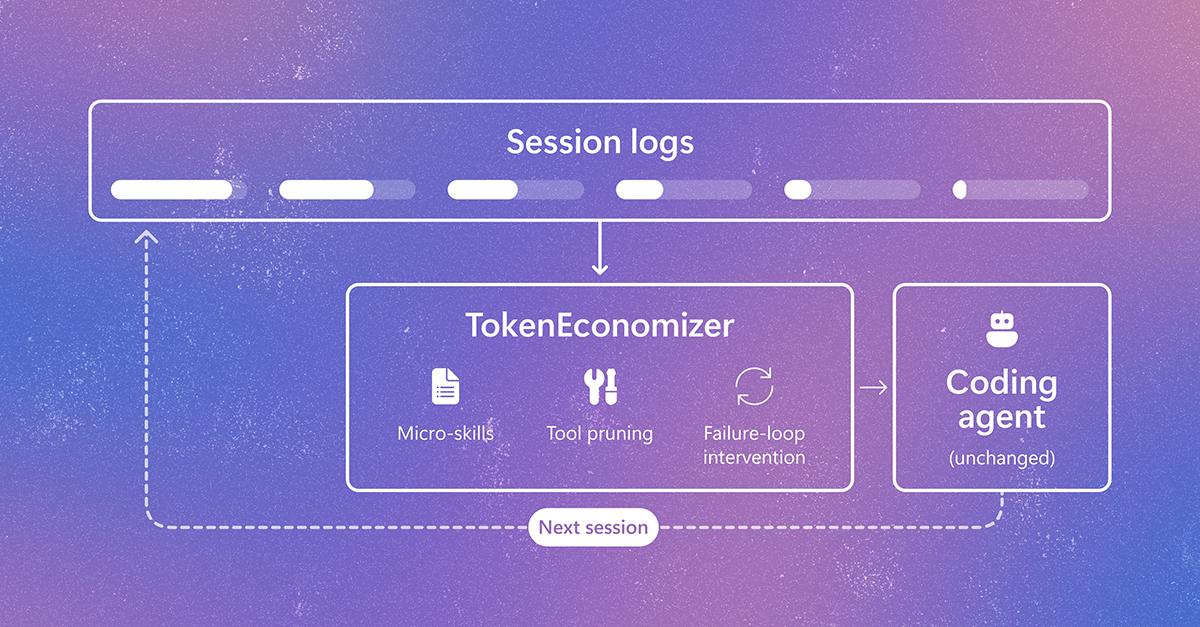
TokenEconomizer: Learning from Experience to Make AI Coding Agents More Efficient

AI coding agents are increasingly help developers fix bugs and build features largely on their own, but every interaction with their models consumes tokens. In each session, an agent sends instructions, tool descriptions, and session history to its model. Most efforts to reduce this cost focus on individual tasks. Yet developers return to the same […] The post TokenEconomizer: Learning from Experience to Make AI Coding Agents More Efficient appeared first on Microsoft Research.

MIT News · Artificial Intelligence Nov 13, 2026

Helping robots fit into the human workplace

Founded by Anthony Jules ’92, SM ’92 and Professor Emeritus Rodney Brooks, Robust AI’s robots are designed to collaborate with humans in factories and warehouses.

We use cookies to run the site and, with your consent, for analytics and to show ads. See our Cookie Policy.