One-shot landmark localization in volume scans with varying fields of view (FOVs) is challenging. While existing self-supervised learning methods have shown promising performance, they rely on contrastive learning built upon augmented views of the same image, which inherently limits their generalization in cross-modality scenarios. This motivates research on cross-modality embedding learning using paired multi-modality images. However, existing methods suffer from not only limited training data, but also the requirement of multi-stage iterative training. To address these limitations, we propose UNIVERS, an end-to-end trainable framework that learns UNIversal Voxel-wise Embedding via Randomized Synthesis. Our framework leverages diverse pseudo-data synthesized from organ shape templates, with randomization applied to semantic layout, visual appearance, FOV, and spatial pose. Coupled with cross-domain discriminative voxel-wise contrastive learning, this domain randomization strategy forces the network to disregard domain-specific biases and learn features that are robust against variations in imaging contrast, resolution, and spatial context. Consequently, the trained model enables one-shot landmark localization in multi-modality volume scans with arbitrary FOVs. In this study, the efficacy of the proposed method is demonstrated by applying it to the task of localizing the adrenal glands, which are paired, small, and irregular endocrine organs. In particular, comprehensive experiments are conducted on three challenging adrenal gland datasets. The experimental results demonstrate that UNIVERS consistently outperforms the state-of-the-art (SOTA) one-shot landmark localization approaches, with particularly prominent advantages in cross-modality scenarios. The source code is publicly available at https://github.com/Kendra9999/UNIVERS.

It is found that Llama 3 delivers comparable quality to leading language models such as GPT-4 on a plethora of tasks, and performs competitively with the state-of-the-art on image, video, and speech recognition tasks.
This paper investigates developing real-world perception for active agents, proposes Gibson Environment for this purpose, and showcases a set of perceptual tasks learned therein.
F. Xia, Amir Zamir, Zhi-Yang He et al.· 2018 IEEE/CVF Conference on...· 1,069 citations· ⚡112
This publication proposes a definition and a classification of agile software development approaches and analyses ten software development methods that can be characterized as being "agile" against the defined criterion.
P. Abrahamsson, O. Salo, Jussi Ronkainen et al.· arXiv.org· 727 citations· ⚡54
The study shows that agile practices improve both informal and formal communication, but indicates that, in larger development situations involving multiple external stakeholders, a mismatch of adequate communication mechanisms can sometimes even hinder the communication.
M. Pikkarainen, Jukka Haikara, O. Salo et al.· Empirical Software Engineeri...· 401 citations· ⚡48
The results indicate that software engineering work practices are chosen opportunistically, adapted and configured to provide value under the constrains imposed by the startup context.
Nicolò Paternoster, Carmine Giardino, M. Unterkalmsteiner et al.· Information and Software Tec...· 394 citations· ⚡54
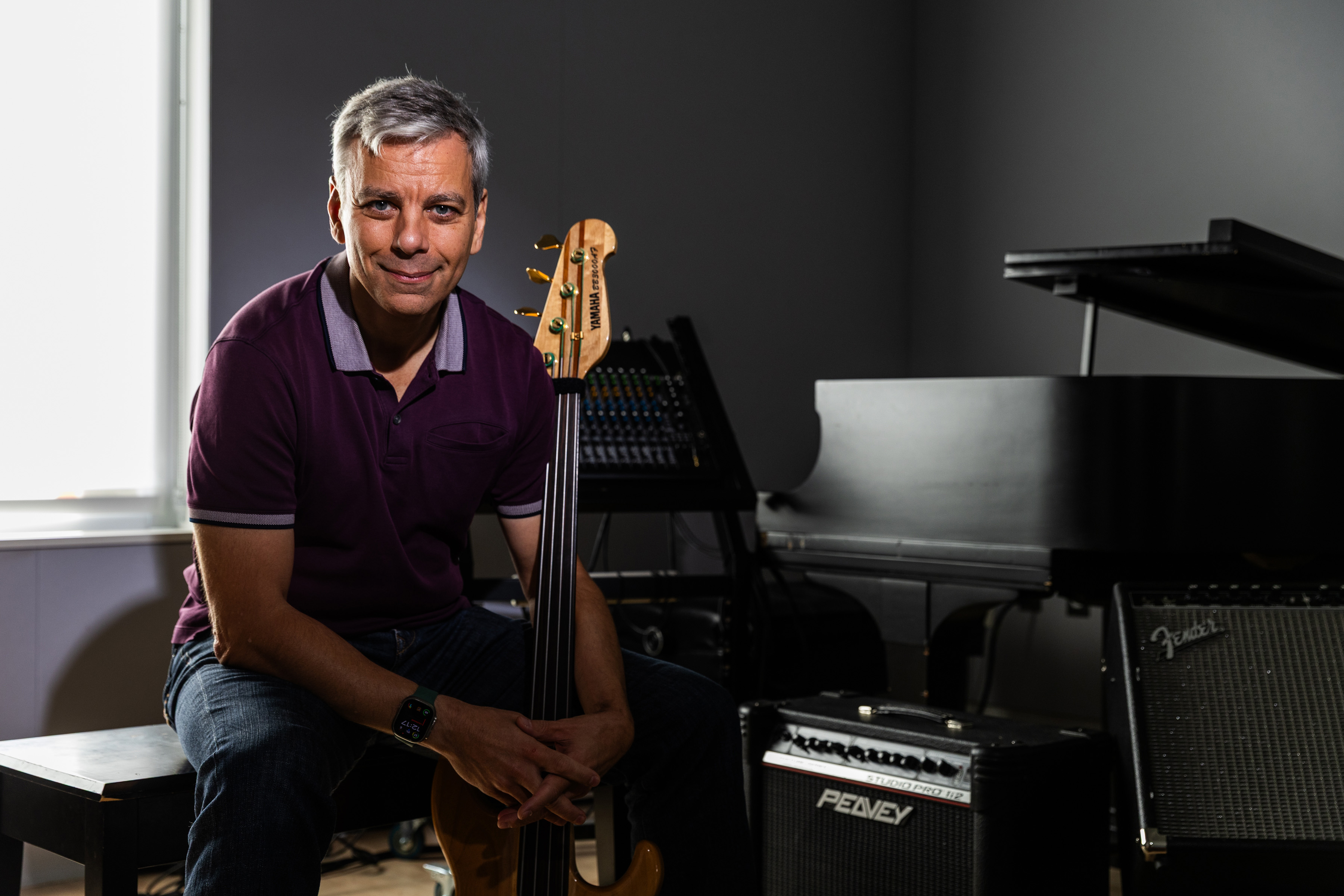
Professor Paris Smaragdis develops computers with superhuman hearing for applications like speech recognition, music understanding, and environmental monitoring.
Exploring how generative AI could make machine vision more accessible to businesses. The post GenEye in a Box: Making Machine Vision Something You Can Just Ask For appeared first on GPT-Lab.
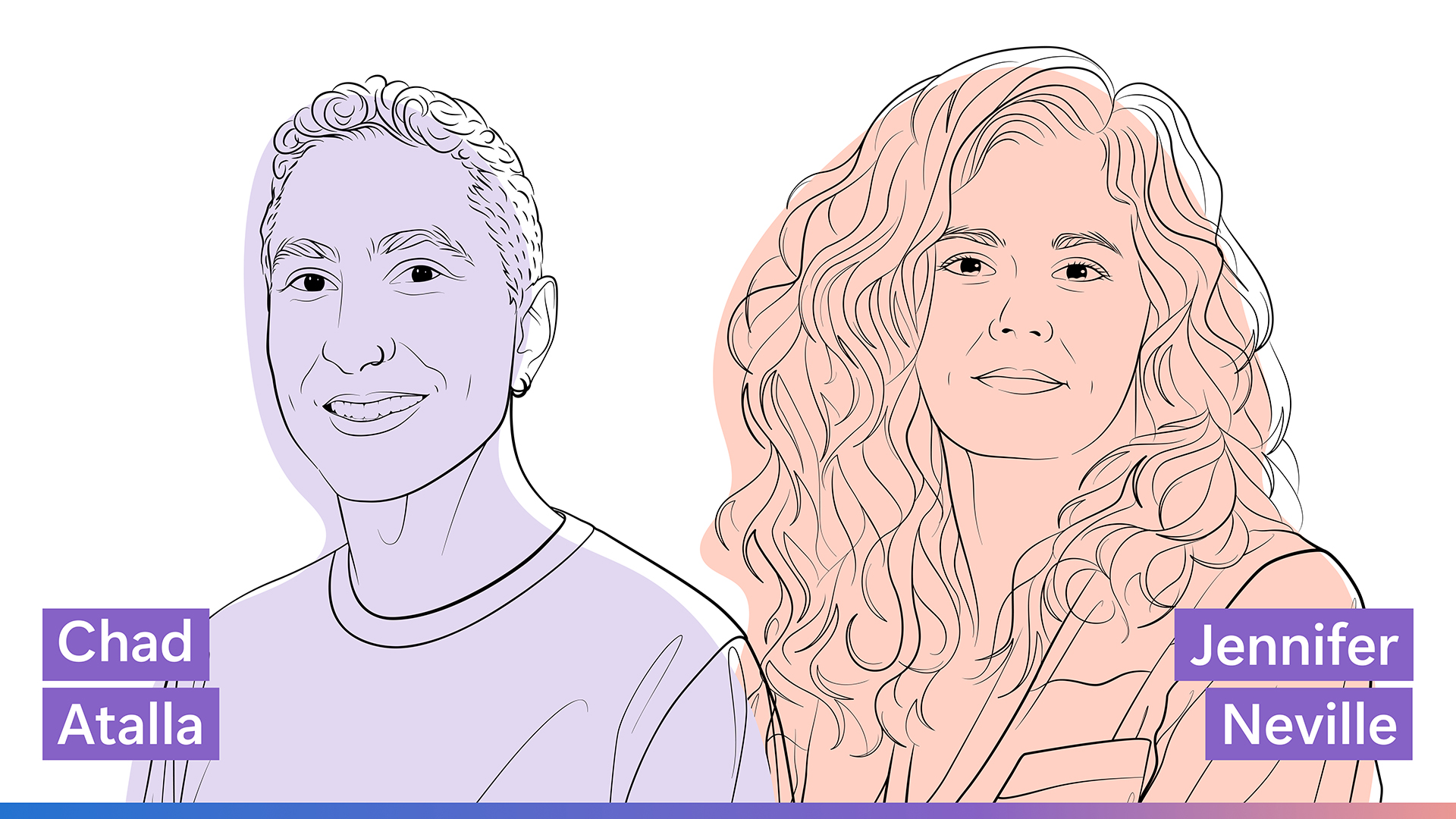
Jennifer Neville did not want to go into computer science—but that’s exactly where she landed. Neville discusses the starts and stops that led to her professional sweet spot and her work identifying “surprising failures” making it hard for AI to handle complexity. The post What AI gets wrong and what failure teaches us appeared first on Microsoft Research.
We use cookies to run the site and, with your consent, for analytics and to show ads.
See our Cookie Policy.