Skip to content
#generative ai Review Open access

Generative AI in clinical practice: how should rheumatologists evaluate and monitor emerging tools?

Oct 2026 · Arthritis care & research · 0 citations
Medicine

Abstract

Generative artificial intelligence (AI) is increasingly being used in rheumatology practice, to assist with tasks such as documentation, record summarization, and clinical decision support. Rheumatologists need a practical approach to determining what evidence and oversight each application requires. This narrative review proposes a framework based on two dimensions: contextual complexity and influence on patient care. Greater contextual complexity can make errors harder to detect, whereas greater influence on care increases the potential consequences of an undetected error. We examine evidence for workflow benefits and clinical effectiveness within this framework and consider safety, equity, privacy, governance, and implementation. Existing evidence on the benefits, accuracy and reliability of AI applications remains mixed. For example, studies of ambient AI scribes suggest reduced documentation burden, but evidence of improved patient outcomes from applications supporting clinical decisions is more limited. For applications with limited clinical influence, evaluation has initially focused on workflow, usability, and documentation quality. Tools that synthesize longitudinal information require additional assessment of completeness and source traceability. Those influencing diagnosis or treatment require prospective evaluation of clinical benefit and safety. Relevant vendor evidence should be assessed alongside proportionate local testing and ongoing monitoring. Safeguards should address risks such as hallucinations, automation bias, and propagating documentation errors, with attention to performance across patient groups. Changes in functionality or clinical use should prompt reassessment. The framework provides a structured basis for adoption decisions and identifies priorities for research on patient outcomes and feasible oversight in routine rheumatology care.
Read PDF

Similar papers

#artificial intelligence Conference Open access Apr 2020

ECCOLA - a Method for Implementing Ethically Aligned AI Systems

The method, ECCOLA, is presented, which aims at making the high-level AI ethics principles more practical, making it possible for developers to more easily implement them in practice.

Ville Vakkuri, Kai-Kristian Kemell, P. Abrahamsson · 64 citations · ⚡6
#computer vision Review Apr 2024

AI-powered Code Review with LLMs: Early Results

The goal is to not only refine the accuracy of the LLM-based tool but also to underscore its potential in streamlining the software development lifecycle through proactive code improvement and education.

Z. Rasheed, Malik Abdul Sami, Muhammad Waseem et al. · 62 citations · ⚡3
#computer vision Open access Mar 2024

LLM-based agents for automating the enhancement of user story quality: An early report

The use of large language models to automatically improve the user story quality in Austrian Post Group IT agile teams is explored, with a reference model for an Autonomous LLM-based Agent System developed and implemented at the company.

Zheying Zhang, M. Rayhan, Tomas Herda et al. · 48 citations · ⚡4
#computer vision Review Mar 2024

System for systematic literature review using multiple AI agents: Concept and an empirical evaluation

This paper introduces a novel multi-AI-agent system designed to fully automate SLRs, and demonstrates how it substantially reduces the time and effort traditionally required for SLRs while maintaining comprehensiveness and precision.

Abdul Malik Sami, Z. Rasheed, Kai-Kristian Kemell et al. · 44 citations · ⚡2
#computer vision Feb 2024

Can Large Language Models Serve as Data Analysts? A Multi-Agent Assisted Approach for Qualitative Data Analysis

The proposed LLM-based multi-agent system automates qualitative data analysis process, creating opportunities for researchers and practitioners, and future improvements focus on enhancing multilingual performance and integrating continuous expert feedback.

Z. Rasheed, Muhammad Waseem, Aakash Ahmad et al. · 41 citations

Related blog posts

Microsoft Research Blog Nov 16, 2026

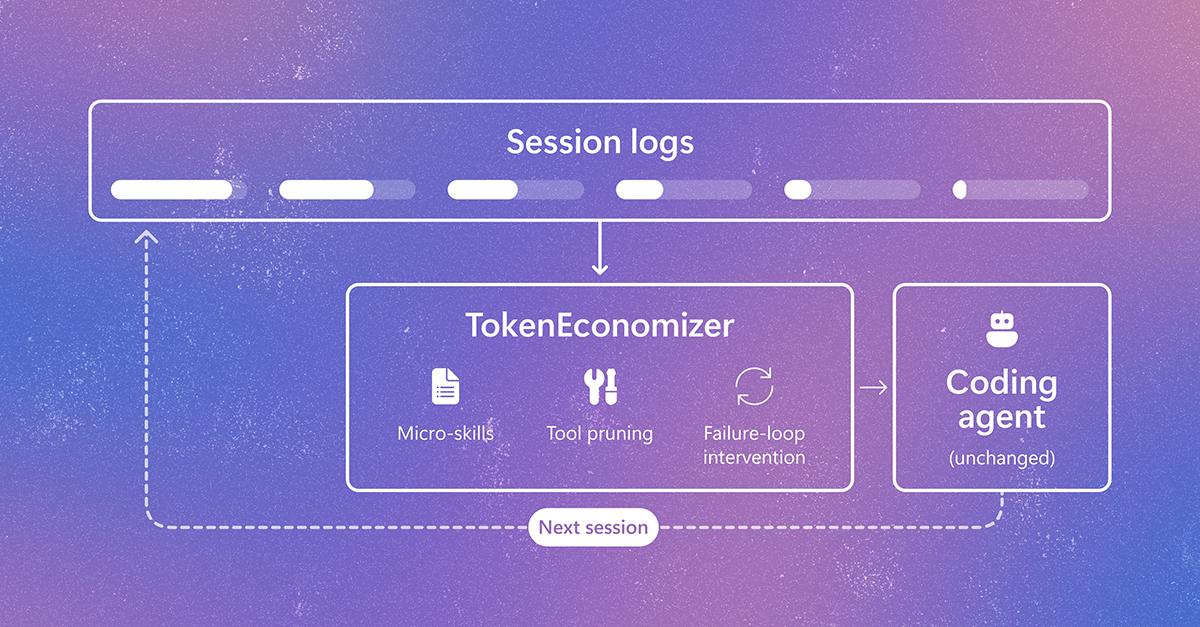
TokenEconomizer: Learning from Experience to Make AI Coding Agents More Efficient

AI coding agents are increasingly help developers fix bugs and build features largely on their own, but every interaction with their models consumes tokens. In each session, an agent sends instructions, tool descriptions, and session history to its model. Most efforts to reduce this cost focus on individual tasks. Yet developers return to the same […] The post TokenEconomizer: Learning from Experience to Make AI Coding Agents More Efficient appeared first on Microsoft Research.

GPT-Lab Nov 13, 2026

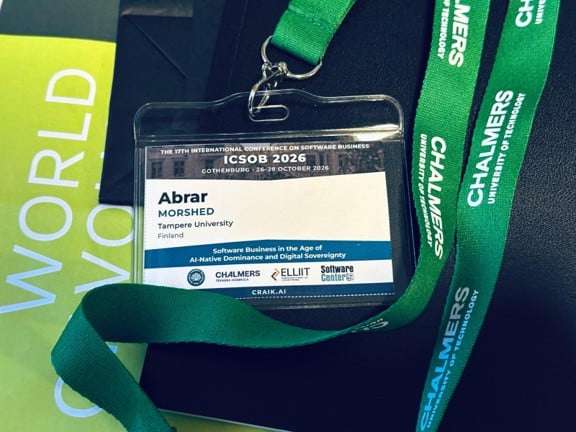
TenderIntell at ICSOB 2026: Three Days in Gothenburg

At ICSOB 2026 in Gothenburg, we presented TenderIntell, our work on multi-agent support for tendering. This post looks back at the conference, the idea behind a panel of three AI reviewers who score each proposal independently, and why evaluating agents reliably is the question we keep coming back to. The post TenderIntell at ICSOB 2026: Three Days in Gothenburg appeared first on GPT-Lab.

MIT News · Artificial Intelligence Nov 13, 2026

Helping robots fit into the human workplace

Founded by Anthony Jules ’92, SM ’92 and Professor Emeritus Rodney Brooks, Robust AI’s robots are designed to collaborate with humans in factories and warehouses.

We use cookies to run the site and, with your consent, for analytics and to show ads. See our Cookie Policy.