NeuralDMD: Interpretable Neural Representation of Dynamics from Sparse and Noisy Measurements
Ali SaraerToosiRenbo TuEsther Y. H. LinKamyar AzizzadenesheliAviad Levis
Oct 2026
Machine LearningComputer VisionClimate Science
Abstract
Many challenges in scientific imaging involve solving ill-posed inverse problems, where the goal is to recover spatio-temporal fields from indirect, noisy, and highly sparse measurements - often without access to ground truth data or reliable simulators. To address this challenging scenario, we present NeuralDMD, an interpretable, untrained (per-instance) reconstruction framework that combines neural implicit representations with Dynamic Mode Decomposition (DMD) to reconstruct continuous spatio-temporal dynamics directly from measurements. NeuralDMD parameterizes DMD modes as continuous neural fields, and imposes a low-rank linear dynamics prior with spectral time evolution to enforce temporal continuity. This formulation enables both forecasting under sparsity, and yields interpretable modes and spectra. We find that NeuralDMD outperforms baselines on a wide variety of tasks: from weather data assimilation from sparse station observations to interferometric (Fourier domain) observations of Sagittarius A, the black hole at the center of our galaxy. Moreover, NeuralDMD remains stable when extrapolating into the future. While this framework is most naturally suited to linear dynamics, we show that it can be applied to nonlinear regimes, though with extrapolation performance that degrades with increasing nonlinearity. Together, these results show that NeuralDMD enables interpretable reconstruction and forecasting of spatio-temporal dynamics directly from sparse and indirect measurements without relying on numerical simulators or training data.

It is found that Llama 3 delivers comparable quality to leading language models such as GPT-4 on a plethora of tasks, and performs competitively with the state-of-the-art on image, video, and speech recognition tasks.
This paper investigates developing real-world perception for active agents, proposes Gibson Environment for this purpose, and showcases a set of perceptual tasks learned therein.
F. Xia, Amir Zamir, Zhi-Yang He et al.· 2018 IEEE/CVF Conference on...· 1,069 citations· ⚡112
This publication proposes a definition and a classification of agile software development approaches and analyses ten software development methods that can be characterized as being "agile" against the defined criterion.
P. Abrahamsson, O. Salo, Jussi Ronkainen et al.· arXiv.org· 727 citations· ⚡54
The study shows that agile practices improve both informal and formal communication, but indicates that, in larger development situations involving multiple external stakeholders, a mismatch of adequate communication mechanisms can sometimes even hinder the communication.
M. Pikkarainen, Jukka Haikara, O. Salo et al.· Empirical Software Engineeri...· 401 citations· ⚡48
The results indicate that software engineering work practices are chosen opportunistically, adapted and configured to provide value under the constrains imposed by the startup context.
Nicolò Paternoster, Carmine Giardino, M. Unterkalmsteiner et al.· Information and Software Tec...· 394 citations· ⚡54
Related blog posts
MIT News · Artificial Intelligence· news.mit.eduOct 28, 2026
Professor Paris Smaragdis develops computers with superhuman hearing for applications like speech recognition, music understanding, and environmental monitoring.
Exploring how generative AI could make machine vision more accessible to businesses. The post GenEye in a Box: Making Machine Vision Something You Can Just Ask For appeared first on GPT-Lab.
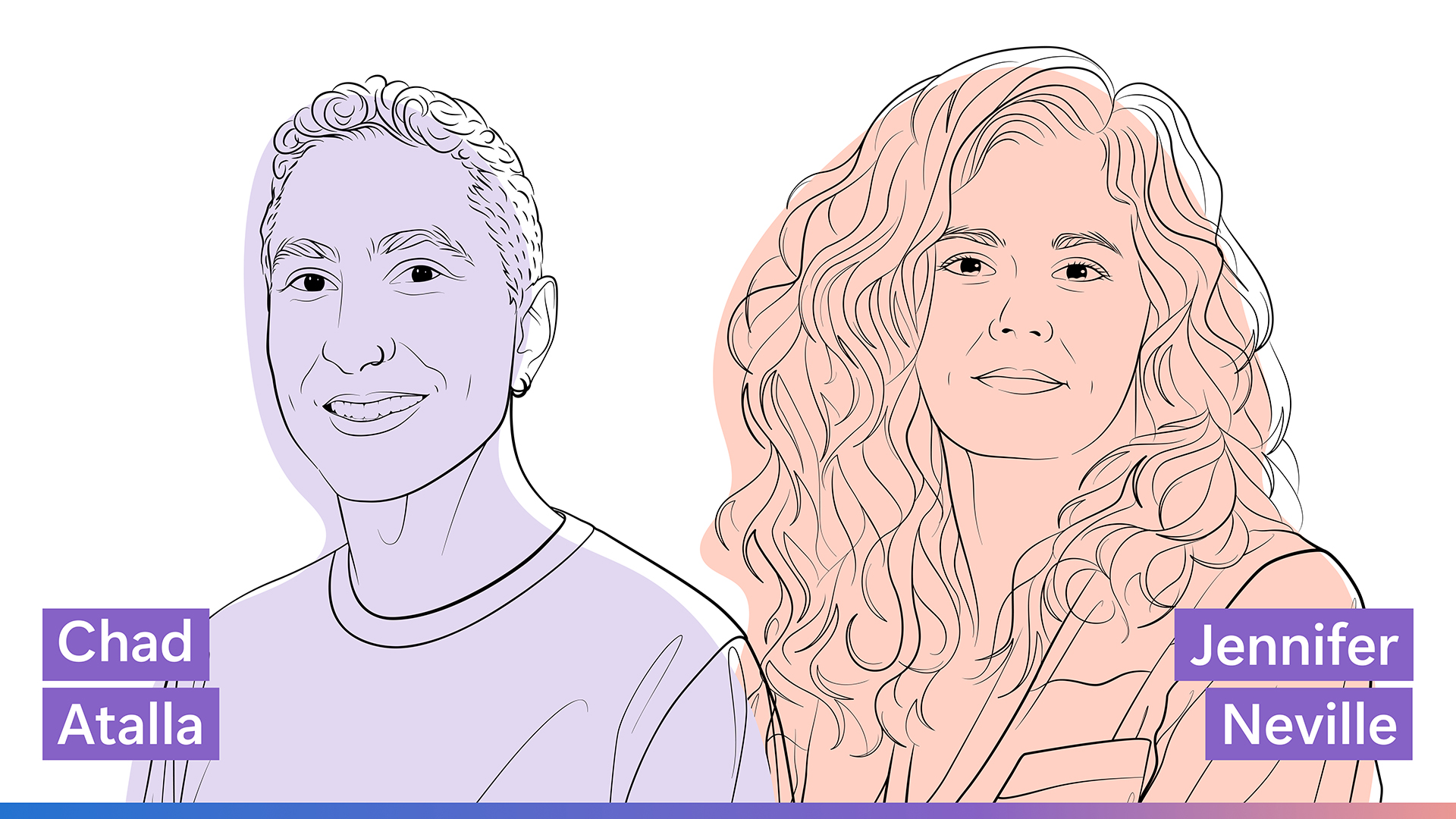
Jennifer Neville did not want to go into computer science—but that’s exactly where she landed. Neville discusses the starts and stops that led to her professional sweet spot and her work identifying “surprising failures” making it hard for AI to handle complexity. The post What AI gets wrong and what failure teaches us appeared first on Microsoft Research.