The linear representation hypothesis holds that pretrained vision models encode generative factors as linearly decodable directions in feature space, and comes with a standard methodology: train a linear probe, declare a factor represented if accuracy is high. We show this test is too permissive. Asymptotically, any sufficiently rich feature map, including a random one, admits a linear readout, so high probe accuracy is consistent with two very different geometries: a true linear world model, where the latent-aligned subspace dominates the representation, or a kernel machine, where the latents lie linearly inside a much larger curved manifold. This distinction matters because the curved structure orthogonal to the probe is relevant for out-of-distribution generalization, robustness, and compositional transfer. We propose three asymmetric diagnostics that distinguish the two cases: reverse predictivity, spectral concentration, and out-of-distribution generalization. We validate them in a fully observed simulation where ground truth is known. Applied to six pretrained vision transformers on SVG-World, our deterministic generative benchmark with paired visual styles, and to two of them on CelebA, they show pretraining produces structure beyond a random kernel but well short of a linear world model. On dSprites, 3D Shapes and MPI3D, forward decodability and latent-aligned variance dissociate. Thus, forward decoding alone does not show that the probed factors align with the dominant geometry of the representation. In summary, our work cautions about the success of linear probes as opposed to truly linear and low dimensional representations.
It is found that Llama 3 delivers comparable quality to leading language models such as GPT-4 on a plethora of tasks, and performs competitively with the state-of-the-art on image, video, and speech recognition tasks.
This paper investigates developing real-world perception for active agents, proposes Gibson Environment for this purpose, and showcases a set of perceptual tasks learned therein.
F. Xia, Amir Zamir, Zhi-Yang He et al.· 2018 IEEE/CVF Conference on...· 1,069 citations· ⚡112
This publication proposes a definition and a classification of agile software development approaches and analyses ten software development methods that can be characterized as being "agile" against the defined criterion.
P. Abrahamsson, O. Salo, Jussi Ronkainen et al.· arXiv.org· 727 citations· ⚡54
The study shows that agile practices improve both informal and formal communication, but indicates that, in larger development situations involving multiple external stakeholders, a mismatch of adequate communication mechanisms can sometimes even hinder the communication.
M. Pikkarainen, Jukka Haikara, O. Salo et al.· Empirical Software Engineeri...· 401 citations· ⚡48
The results indicate that software engineering work practices are chosen opportunistically, adapted and configured to provide value under the constrains imposed by the startup context.
Nicolò Paternoster, Carmine Giardino, M. Unterkalmsteiner et al.· Information and Software Tec...· 394 citations· ⚡54
Related blog posts
MIT News · Artificial Intelligence· news.mit.eduNov 6, 2026
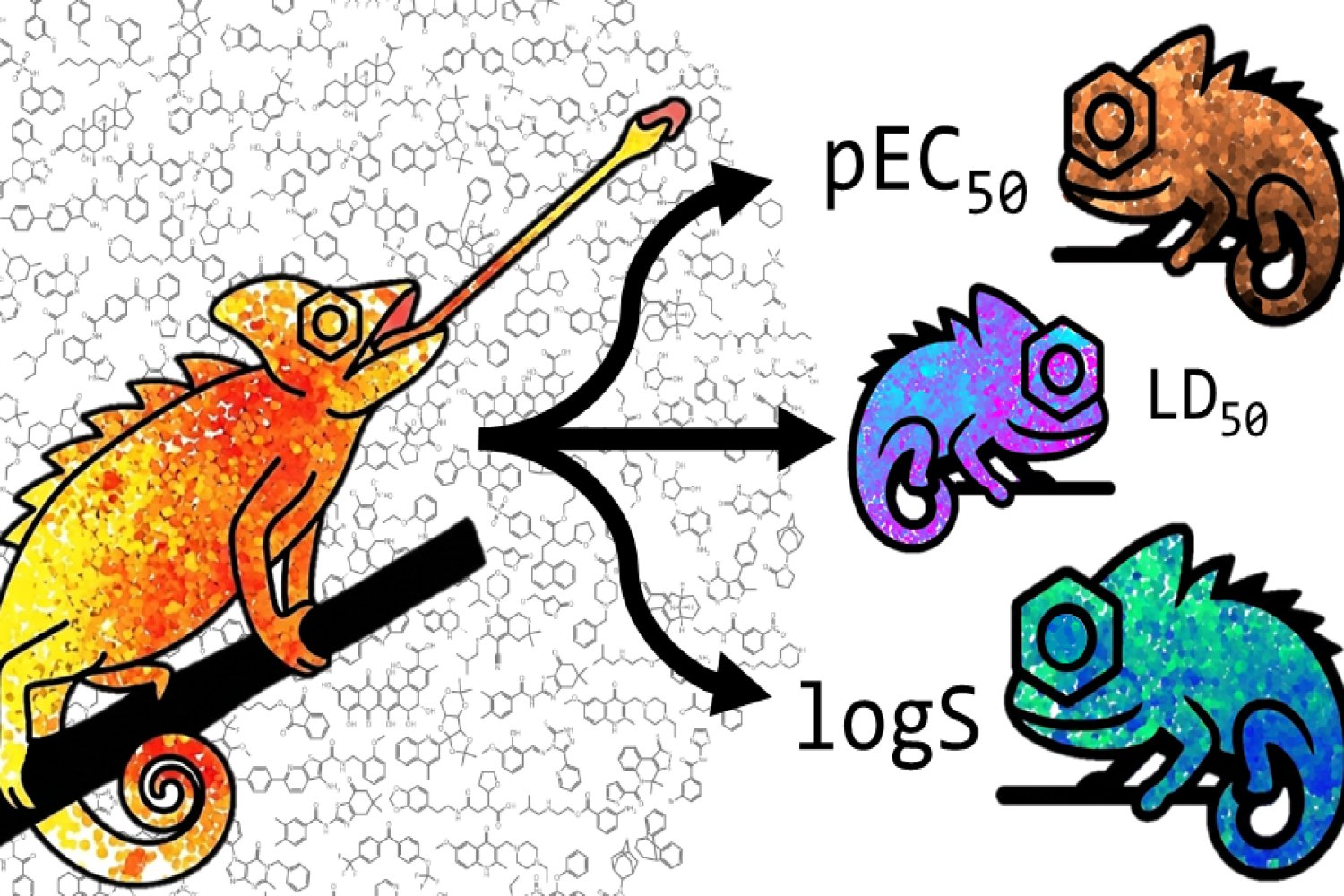
A machine-learning approach called CheMeleon provides a practical way to develop new drugs or other molecules with much less detailed, expensive experimentation.
MIT News · Artificial Intelligence· news.mit.eduOct 28, 2026
Professor Paris Smaragdis develops computers with superhuman hearing for applications like speech recognition, music understanding, and environmental monitoring.
Learn how Google DeepMind and GovTech Singapore uses lightweight on-device Gemma models to intercept conversational scams in private chats with zero cloud data egress.
We use cookies to run the site and, with your consent, for analytics and to show ads.
See our Cookie Policy.