Skip to content

A Systematic Literature Review of Emerging Big Data Analytics Using Hadoop: Applications, Trends, and Implications for Sustainability

Aug 2026 · ˜The œInternational journal of networked and distributed computing

Abstract

The rapid expansion of Big Data has transformed data-driven decision-making across diverse sectors, including healthcare, cybersecurity, smart cities, and the Internet of Things (IoT). However, traditional data management platforms struggle to address the increasing volume, velocity, variety, and veracity of modern data ecosystems, resulting in scalability constraints and inefficiencies. These challenges necessitate distributed, cloud-native, and energy-efficient architectures capable of supporting Artificial Intelligence (AI) and Machine Learning (ML)–driven analytics. This paper presents a systematic literature review (SLR) of emerging Big Data analytics frameworks centered on the Hadoop ecosystem and its modern extensions, including Apache Spark, Flink, Kafka, and data lakehouse technologies. Following the PRISMA 2020 guidelines, the review analyzes 138 primary studies published between 2015 and 2025, with 60 studies selected through rigorous inclusion and quality assessment criteria. The analysis evaluates architectural evolution from batch-oriented MapReduce systems to unified batch-stream processing and cloud-native data platforms, emphasizing performance optimization, resource efficiency, and sustainable computing practices. The findings reveal significant progress in integrating AI and ML pipelines with Hadoop-based infrastructures for applications such as real-time fraud detection, anomaly detection, predictive healthcare analytics, renewable energy forecasting, and intelligent urban management. Particular attention is given to explainable AI (XAI), federated data processing, and green computing strategies that enhance transparency, trust, and environmental sustainability. This review proposes a structured taxonomy of Hadoop-based Big Data systems, categorizes emerging research trends, benchmarks modern frameworks, and identifies open research challenges. The study provides theoretical, practical, and policy-level implications to guide researchers, system architects, and decision-makers in selecting scalable, low-latency, and energy-aware Big Data solutions aligned with next-generation digital transformation and sustainable development objectives. Not applicable, as this study is not a clinical trial.


View source

Similar papers

#machine learning Review Open access Oct 2014

Software development in startup companies: A systematic mapping study

The results indicate that software engineering work practices are chosen opportunistically, adapted and configured to provide value under the constrains imposed by the startup context.

Nicolò Paternoster, Carmine Giardino, M. Unterkalmsteiner et al. · 394 citations · ⚡54
#machine learning Review Open access Jun 2014

Why Early-Stage Software Startups Fail: A Behavioral Framework

This state-of-practice investigation was performed using a literature review followed by a multiple-case study approach and presents how inconsistency between managerial strategies and execution can lead to failure by means of a behavioral framework.

Carmine Giardino, Xiaofeng Wang, P. Abrahamsson · 175 citations · ⚡19
#machine learning Review Open access Oct 2016

“Failures” to be celebrated: an analysis of major pivots of software startups

This study conducts a case survey study based on the secondary data of the major pivots happened in 49 software startups, and demonstrates that customer need pivot is the most common among all pivot types.

Sohaib Shahid Bajwa, Xiaofeng Wang, Anh Nguyen-Duc et al. · 127 citations · ⚡15
#artificial intelligence Conference Open access Apr 2020

ECCOLA - a Method for Implementing Ethically Aligned AI Systems

The method, ECCOLA, is presented, which aims at making the high-level AI ethics principles more practical, making it possible for developers to more easily implement them in practice.

Ville Vakkuri, Kai-Kristian Kemell, P. Abrahamsson · 64 citations · ⚡6
#computer vision Review Apr 2024

AI-powered Code Review with LLMs: Early Results

The goal is to not only refine the accuracy of the LLM-based tool but also to underscore its potential in streamlining the software development lifecycle through proactive code improvement and education.

Z. Rasheed, Malik Abdul Sami, Muhammad Waseem et al. · 62 citations · ⚡3

Related blog posts

GPT-Lab Aug 28, 2026

We built an AI factory for HVAC control

What does it take to trust AI-driven HVAC optimization? Our AI Model Factory combines agents, machine learning, reinforcement learning and deterministic checks in a governed workflow designed for messy, real-world building data. The post We built an AI factory for HVAC control appeared first on GPT-Lab.

Microsoft Research Blog Aug 11, 2026

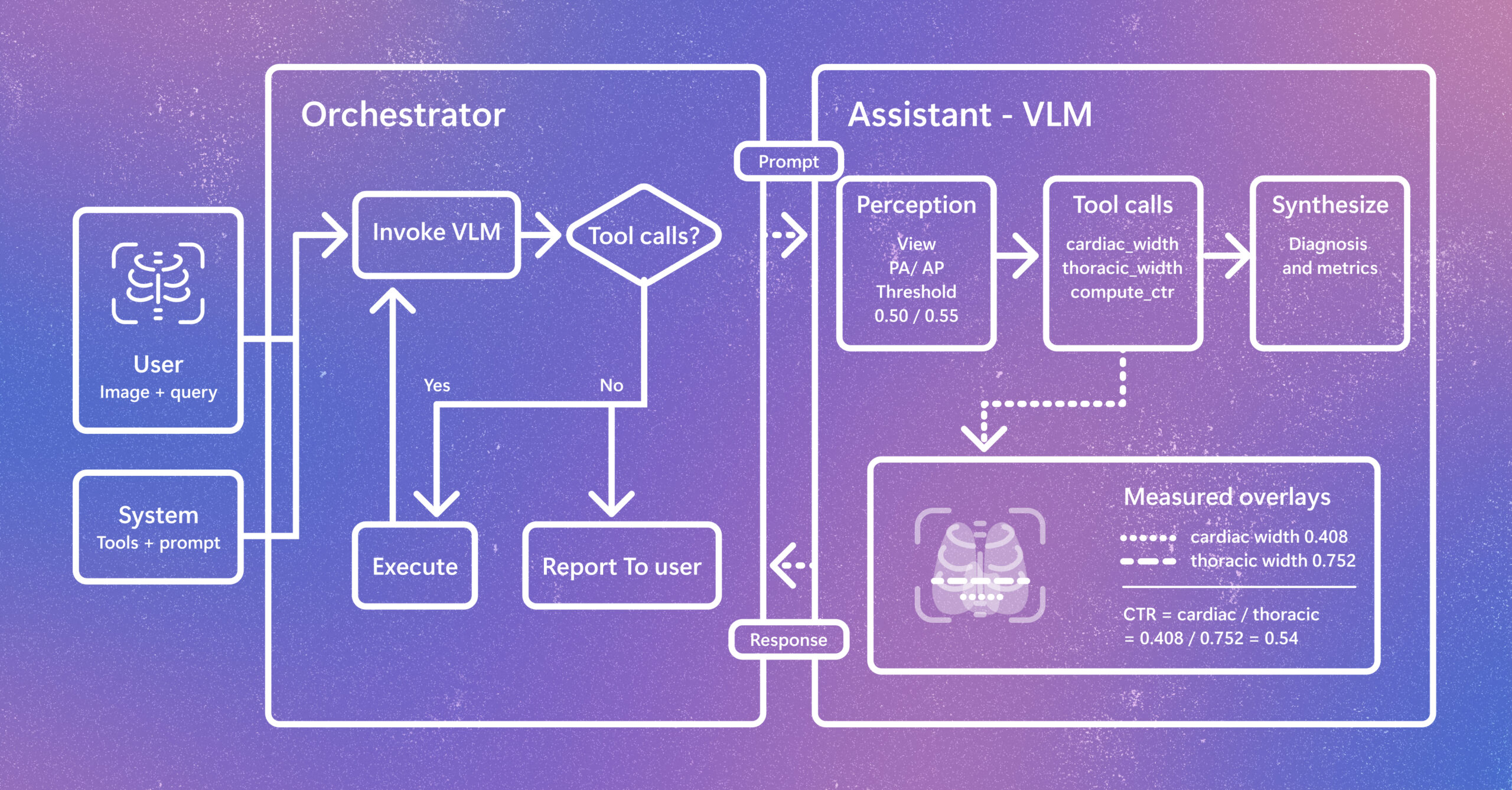
Introducing CARE-X: Towards Clinically Useful Radiology VLMs with Auxiliary Supervision, Reward-Aligned Learning, and Tool-Augmented Measurement

Radiology AI is evolving beyond report generation. CARE-X explores a unified approach that combines flexible reasoning, calibrated predictions, and measurement-based tools for chest X-ray interpretation. The post Introducing CARE-X: Towards Clinically Useful Radiology VLMs with Auxiliary Supervision, Reward-Aligned Learning, and Tool-Augmented Measurement appeared first on Microsoft Research.

We use cookies to run the site and, with your consent, for analytics and to show ads. See our Cookie Policy.