Skip to content

Hybrid AI-Blockchain Frameworks for Secure Spectrum Data Governance in Smart Grids

Aug 2026

Abstract

The emerging 6G technologies will bring billions of IoT sensors which are going to demand little radio spectrum. The resulting high level of connectivity poses some novel problems, among them network congestion, and privacy: because energy-consumption data might be shared unintentionally, it provides insight into personal behavioral patterns. In addition, the disproportionate access to highly developed infrastructure can contribute to the need to continue the digital divide between urban and rural areas. This paper presents a decentralized infrastructure combining federated learning and Hyperledger Fabric to deal with these issues. To implement it, PyTorch is used to perform distributed learning tasks, and MATLAB is used to generate the synthetic spectrum traces that reflect the real-world CBRS conditions based on the NTIA field measurements between 2021 and 2024. These traces were validated by Kolmogorov–Smirnov test ( p = 0.87). The framework outperforms conventional centralized DSS benchmarks while complying with 3GPP Release 18 transparency and ETSI ESG principles. The framework is a modular, open-source system with sharding that scales horizontally to over 5,000 nodes. The proposed solution successfully addresses the scarcity of the spectrum with the use of cooperative resource sharing through congested urban vehicle-to-everything (V2X) networks, remote solar-powered microgrids, and so on. The findings verify that the next generation 6G networks are capable of not only providing extremely high data rates but also improved privacy and fair connectivity in different environments.
View source

Similar papers

#machine learning Review Open access Oct 2014

Software development in startup companies: A systematic mapping study

The results indicate that software engineering work practices are chosen opportunistically, adapted and configured to provide value under the constrains imposed by the startup context.

Nicolò Paternoster, Carmine Giardino, M. Unterkalmsteiner et al. · 394 citations · ⚡54
#machine learning Review Open access Jun 2014

Why Early-Stage Software Startups Fail: A Behavioral Framework

This state-of-practice investigation was performed using a literature review followed by a multiple-case study approach and presents how inconsistency between managerial strategies and execution can lead to failure by means of a behavioral framework.

Carmine Giardino, Xiaofeng Wang, P. Abrahamsson · 175 citations · ⚡19
#machine learning Review Open access Oct 2016

“Failures” to be celebrated: an analysis of major pivots of software startups

This study conducts a case survey study based on the secondary data of the major pivots happened in 49 software startups, and demonstrates that customer need pivot is the most common among all pivot types.

Sohaib Shahid Bajwa, Xiaofeng Wang, Anh Nguyen-Duc et al. · 127 citations · ⚡15
#machine learning Review Open access May 2016

Key Challenges in Software Startups Across Life Cycle Stages

It is found that what perceived as biggest challenges by software startups do vary across different life cycle stages, even though its significance decreases when the learning focuses of the startups move from problem to solution and their products mature.

Xiaofeng Wang, Henry Edison, Sohaib Shahid Bajwa et al. · 62 citations · ⚡6

Related blog posts

Microsoft Research Blog Sep 30, 2026

Forecasting space weather risks on power grids

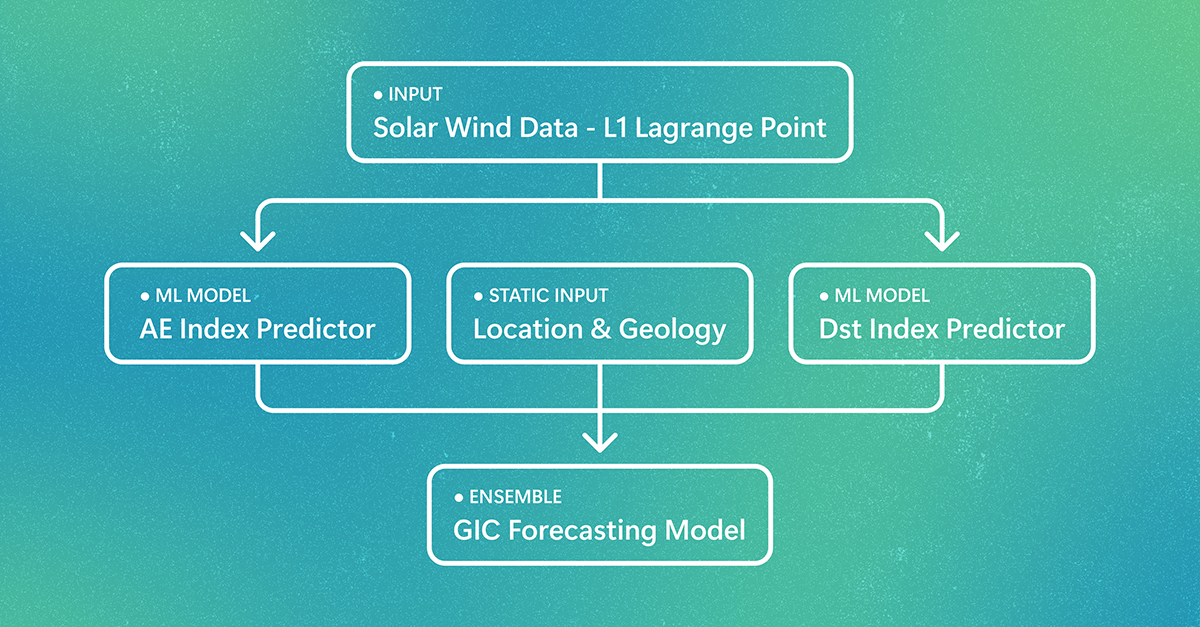
Extreme space-weather events can damage power systems on Earth and degrade GPS accuracy and satellite operations. A new machine learning system can predict where damage is likely to occur 30-60 minutes before a storm arrives. The post Forecasting space weather risks on power grids appeared first on Microsoft Research.

We use cookies to run the site and, with your consent, for analytics and to show ads. See our Cookie Policy.