Skip to content

Contrastive uncertainty learning for robust multi-structure segmentation in lower-pelvic MR

Oct 2026 · 0 citations · 13 references
Computer Science

Abstract

Boundary delineation of anatomical structures in prostate MRI is often compromised by regional ambiguity. Automated segmentation methods relying on global overlap loss functions tend to be insensitive to surface deviations, leading to significant errors in ambiguous regions. Most existing uncertainty-aware methods treat uncertainty as a post-hoc quality indicator or prediction filter. We propose Contrastive Uncertainty Learning (CUL), a supervised framework that uses predictive uncertainty to directly guide representation learning. Using Monte Carlo Dropout, CUL identifies voxel-wise uncertainty and structures the embedding geometry accordingly: low-uncertainty, correctly predicted features form stable voxels while high-uncertainty or misclassified features are actively repelled, preventing feature collapse at difficult boundaries. We evaluate CUL on a 589-scan 3D prostate MRI multi-structure segmentation task (8 anatomical structures) using a ViT with UperNet decoder architecture. Average Dice ($83.38\%$) remains comparable to the baseline ($83.35\%$), while surface distance decreases significantly ($p<0.001$) across 6 of 8 anatomical structures. A hard-case analysis reveals a $22{\times}$ asymmetry between significantly improved and degraded cases ($18.8\%$ vs $0.9\%$). Ablation studies show that removing uncertainty-guided sample selection eliminates improvements for the transition zone, while replacing the contrastive objective with a boundary loss additionally removes bladder improvements, demonstrating that both uncertainty-guided sampling and the contrastive objective are essential for the observed gains. These findings demonstrate that the proposed uncertainty-guided representation learning is a useful mechanism for reducing the risk of extreme errors in safety-critical medical segmentation


View source

Similar papers

#artificial intelligence Preprint Jul 2024

The Llama 3 Herd of Models

It is found that Llama 3 delivers comparable quality to leading language models such as GPT-4 on a plethora of tasks, and performs competitively with the state-of-the-art on image, video, and speech recognition tasks.

Aaron Grattafiori, Abhimanyu Dubey, Abhinav Jauhri et al. · 21,082 citations · ⚡3,832
#artificial intelligence Conference Open access Jun 2018

Gibson Env: Real-World Perception for Embodied Agents

This paper investigates developing real-world perception for active agents, proposes Gibson Environment for this purpose, and showcases a set of perceptual tasks learned therein.

F. Xia, Amir Zamir, Zhi-Yang He et al. · 1,069 citations · ⚡112
#computer vision Review Sep 2017

Agile Software Development Methods: Review and Analysis

This publication proposes a definition and a classification of agile software development approaches and analyses ten software development methods that can be characterized as being "agile" against the defined criterion.

P. Abrahamsson, O. Salo, Jussi Ronkainen et al. · 727 citations · ⚡54
#computer vision Jun 2008

The impact of agile practices on communication in software development

The study shows that agile practices improve both informal and formal communication, but indicates that, in larger development situations involving multiple external stakeholders, a mismatch of adequate communication mechanisms can sometimes even hinder the communication.

M. Pikkarainen, Jukka Haikara, O. Salo et al. · 401 citations · ⚡48
#machine learning Review Open access Oct 2014

Software development in startup companies: A systematic mapping study

The results indicate that software engineering work practices are chosen opportunistically, adapted and configured to provide value under the constrains imposed by the startup context.

Nicolò Paternoster, Carmine Giardino, M. Unterkalmsteiner et al. · 394 citations · ⚡54

Related blog posts

MIT News · Artificial Intelligence Oct 28, 2026

Making machines that can listen

Professor Paris Smaragdis develops computers with superhuman hearing for applications like speech recognition, music understanding, and environmental monitoring.

Microsoft Research Blog Aug 11, 2026

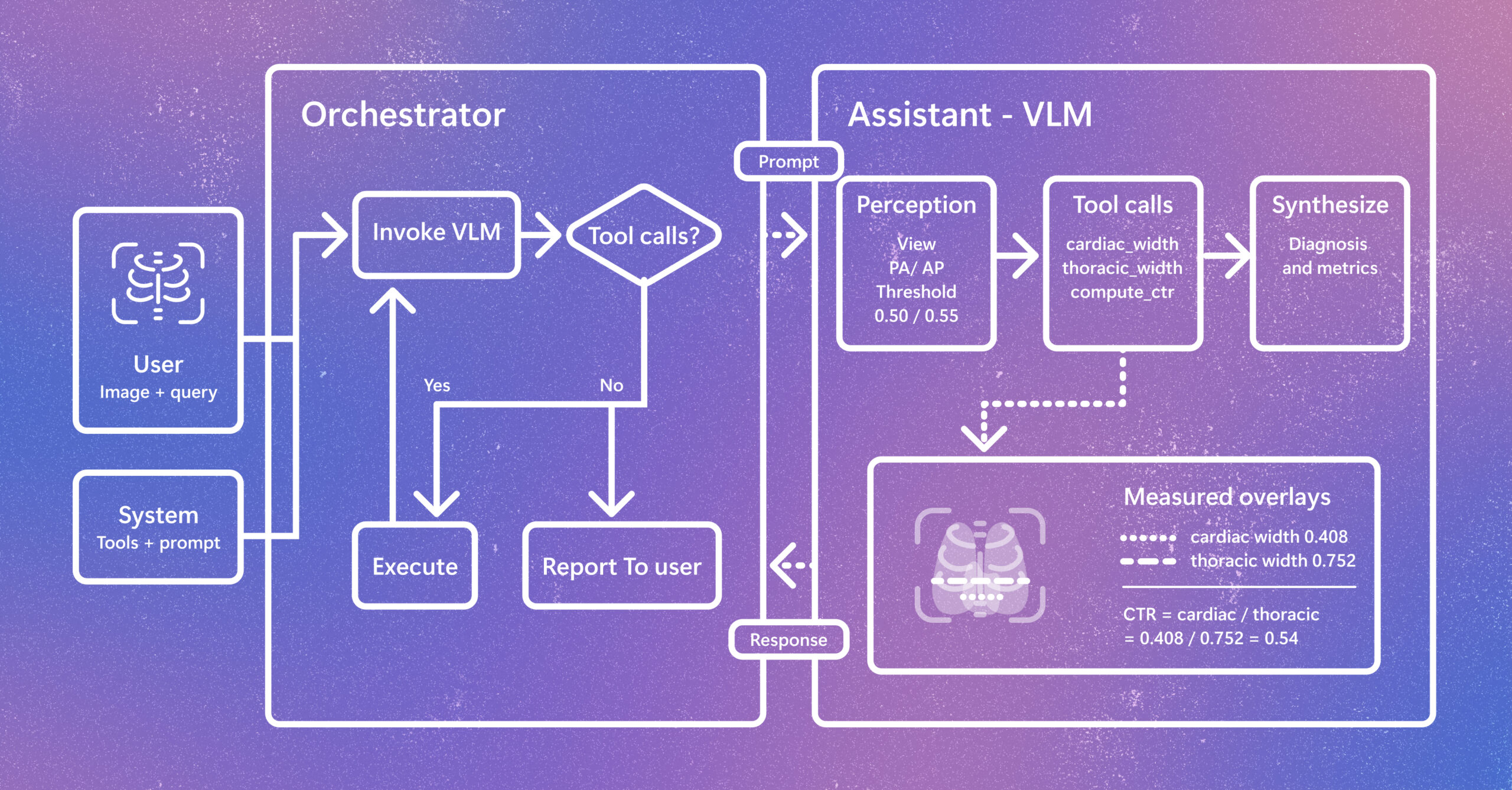
Introducing CARE-X: Towards Clinically Useful Radiology VLMs with Auxiliary Supervision, Reward-Aligned Learning, and Tool-Augmented Measurement

Radiology AI is evolving beyond report generation. CARE-X explores a unified approach that combines flexible reasoning, calibrated predictions, and measurement-based tools for chest X-ray interpretation. The post Introducing CARE-X: Towards Clinically Useful Radiology VLMs with Auxiliary Supervision, Reward-Aligned Learning, and Tool-Augmented Measurement appeared first on Microsoft Research.

We use cookies to run the site and, with your consent, for analytics and to show ads. See our Cookie Policy.