Skip to content

Frequency-Step Cache: Separating Synchronization and Repair for Efficient Autoregressive Video Diffusion

Oct 2026 · 0 citations · 28 references
Computer Science

Abstract

Autoregressive (AR) video generation enables long-horizon synthesis but requires repeated forward passes through large diffusion transformers. Training-free caching reduces this cost by reusing intermediate computation, yet existing controllers often couple two decisions: when to synchronize the cache exactly and how much computation to repair between synchronizations. We introduce Frequency-Step Cache (FSC), which separates these roles. FSC schedules exact full-computation anchors on a dense-to-sparse trajectory, while a lightweight latent-space risk based on frequency-resolved drift and token age controls inter-anchor repair through whole-step replay, selective token recomputation, or full repair. On SkyReels-V2, whole-step reuse provides most of the acceleration, while selective token computation is most effective as fidelity repair. A controlled ablation shows that using one reactive signal for both synchronization and repair reduces fidelity at matched latency, with the same separation advantage observed on FramePack and Matrix-Game. Across multiple autoregressive video backbones, FSC improves speed-quality trade-offs. On SkyReels-V2, FSC-Speed reaches 2.36x speedup versus MotionCache's 2.275x while improving SSIM by 0.019 and PSNR by 0.5 dB. At MotionCache-matched speed, FSC-Quality improves SSIM by 0.031 and PSNR by 1.0 dB and lowers LPIPS by 0.024. Without retuning, FSC-Quality transfers to SkyReels-V2 14B at 2.12x speedup versus 1.79x for MotionCache.


View source

Similar papers

#artificial intelligence Preprint Jul 2024

The Llama 3 Herd of Models

It is found that Llama 3 delivers comparable quality to leading language models such as GPT-4 on a plethora of tasks, and performs competitively with the state-of-the-art on image, video, and speech recognition tasks.

Aaron Grattafiori, Abhimanyu Dubey, Abhinav Jauhri et al. · 21,082 citations · ⚡3,832
#artificial intelligence Conference Open access Jun 2018

Gibson Env: Real-World Perception for Embodied Agents

This paper investigates developing real-world perception for active agents, proposes Gibson Environment for this purpose, and showcases a set of perceptual tasks learned therein.

F. Xia, Amir Zamir, Zhi-Yang He et al. · 1,069 citations · ⚡112
#computer vision Review Sep 2017

Agile Software Development Methods: Review and Analysis

This publication proposes a definition and a classification of agile software development approaches and analyses ten software development methods that can be characterized as being "agile" against the defined criterion.

P. Abrahamsson, O. Salo, Jussi Ronkainen et al. · 727 citations · ⚡54
#computer vision Jun 2008

The impact of agile practices on communication in software development

The study shows that agile practices improve both informal and formal communication, but indicates that, in larger development situations involving multiple external stakeholders, a mismatch of adequate communication mechanisms can sometimes even hinder the communication.

M. Pikkarainen, Jukka Haikara, O. Salo et al. · 401 citations · ⚡48
#machine learning Review Open access Oct 2014

Software development in startup companies: A systematic mapping study

The results indicate that software engineering work practices are chosen opportunistically, adapted and configured to provide value under the constrains imposed by the startup context.

Nicolò Paternoster, Carmine Giardino, M. Unterkalmsteiner et al. · 394 citations · ⚡54

Related blog posts

MIT News · Artificial Intelligence Oct 28, 2026

Making machines that can listen

Professor Paris Smaragdis develops computers with superhuman hearing for applications like speech recognition, music understanding, and environmental monitoring.

Microsoft Research Blog Aug 11, 2026

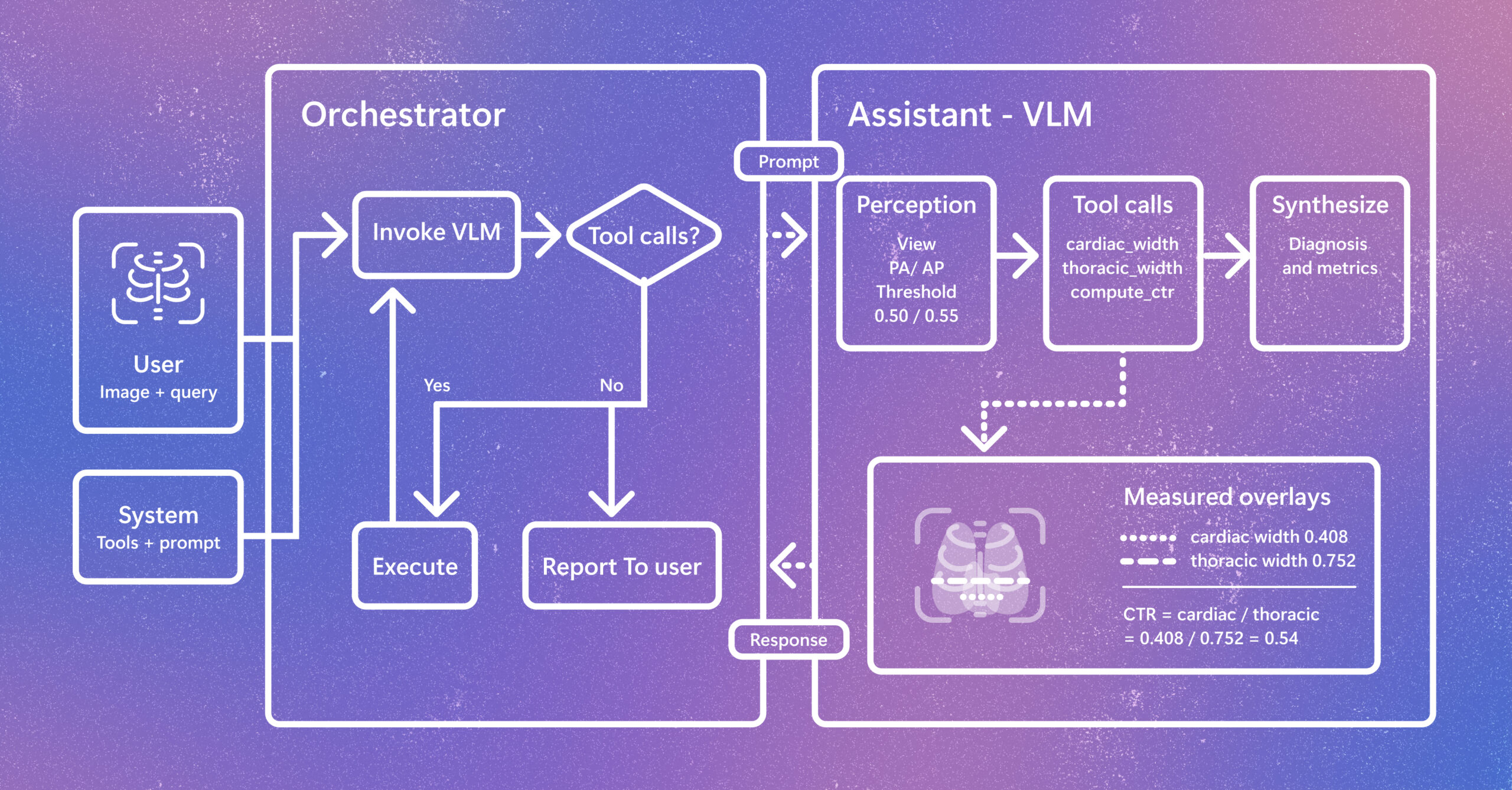
Introducing CARE-X: Towards Clinically Useful Radiology VLMs with Auxiliary Supervision, Reward-Aligned Learning, and Tool-Augmented Measurement

Radiology AI is evolving beyond report generation. CARE-X explores a unified approach that combines flexible reasoning, calibrated predictions, and measurement-based tools for chest X-ray interpretation. The post Introducing CARE-X: Towards Clinically Useful Radiology VLMs with Auxiliary Supervision, Reward-Aligned Learning, and Tool-Augmented Measurement appeared first on Microsoft Research.

We use cookies to run the site and, with your consent, for analytics and to show ads. See our Cookie Policy.