A novel federated learning (FL) explainable deep recurrent neural network (DRNN)-augmented long short-term memory (LSTM) framework for anomaly intrusion in IoMT systems, named federated recurrent short-term memory.
Abstract
The Internet of Medical Things (IoMT) enables remote patient monitoring, providing timely diagnostic assessments crucial for saving lives. Despite these benefits, IoMT systems face significant security challenges that endanger patient privacy and data integrity. Existing centralized machine learning (ML) and deep learning (DL) solutions, while useful, are “black boxes” that raise critical concerns about data privacy and ethical compliance, as sharing sensitive patient information in a centralized system may violate confidentiality, integrity, and availability, particularly in healthcare sectors where patient data is highly confidential. Motivated by these challenges, we propose a novel federated learning (FL) explainable deep recurrent neural network (DRNN)-augmented long short-term memory (LSTM) framework for anomaly intrusion in IoMT systems, named federated recurrent short-term memory. The proposed decentralized framework processes data on local devices, sharing only learned model weights with the central server to safeguard data integrity. Training the DRNN-LSTM presents a non-convex optimization problem that is computationally expensive. To address this issue, we propose a new Bayesian Optimization (BO) method, which models the objective function stochastically and intelligently selects the most promising hyperparameter configurations to identify the hyperparameter vector that maximizes the objective function. The Adam optimizer was implemented to address gradient descent resource issues and improve the speed of convergence with a learning rate of 0.001. We introduced Shapley Additive Explanations (XAI) to ensure security decisions are transparent, a key advantage over existing black-box approaches that helps meet ethical guidelines such as HIPAA and GDPR. The framework was evaluated on the Washington University in St. Louis Enhanced Healthcare Monitoring System (WUSTL-EHMS), as well as the new CIC-IoMT2024 (IoMT-specific) and BoT-IoT (general IoT) benchmark datasets. The results show strong detection capabilities, with high detection rates for critical attack types such as DoS with 99.94%, DoS SYN with 100%, and DoS TCP with 100%. The model also demonstrated exceptionally high precision for classes like DoS SYN, DDoS TCP, and ARP spoofing. Our proposed federated recurrent short-term memory framework achieves a robust balance between detection fidelity and computational efficiency, making it a reliable solution for intrusion detection in resource-constrained IoMT infrastructures.
Continuous, remote patient monitoring is now practically possible thanks to the expanding
use of wearable and bedside sensors enabled by the Internet of Things (IoT). However, the
centralised aggregation of physiological data needed by traditional deep learning pipelines
presents significant privacy, legal, and bandwid...
Firoza Sultana, Atiqur Rahman Laskar, Shamim Ahmed Shamim Khan Barbhuiya et al.· International Journal of Mod...· 0 citations
FL-EZTF, a privacy-preserving, Federated Deep Learning and Enhanced Zero Trust Framework, is presented, which combines federated learning, Enhanced Zero Trust Architecture (E-ZTA), and Secure Access Service Edge (SASE).
Unknown authors· International Journal of Eng...· 0 citations
Results indicate that a federated TinyML architecture with lightweight patient-state tracking, validation-based ensemble filtering, differential privacy, and post-quantum-secure communication can support privacy-aware and attack-resilient ICU monitoring experiments in resource-constrained IoMT settings.
Umar Hayat Khan, Rahim Khan, Tahani Alsaedi et al.· Scientific Reports· 0 citations
Healthcare Internet of Things (HIoT) deployments generate sensitive patient telemetry data on resource-constrained edge devices, which are prime targets for network intrusions. Centralizing raw telemetry for training intrusion detection system (IDS) models violates patient privacy and contravenes data-protection regula...
Nutan Gusain, J. Alzubi· International Journal on Com...· 0 citations
The use of cloud-based web systems has increased the issue of data privacy, compliance on regulations and secure control of distributed enterprise information. The traditional centralized machine learning models mandate aggregation of data in one server which makes it more dangerous to expose sensitive information. To...
Divya sai Jaladi, Ashok Mallempati, Dr. B. Jegajothi· 2026 4th International Confe...· 0 citations
The proposed FL framework provides a privacy-preserving, explainable, and computationally efficient solution for collaborative AI in medical imaging by combining adaptive federated learning, secure privacy mechanisms, and explainable AI techniques, demonstrating strong potential for deployment in multi-hospital clinica...
Chandra Shakher Tyagi, Partheeban Nagappan, T. R· Research on Biomedical Engin...· 0 citations
Related blog posts
MIT News · Artificial Intelligence· news.mit.eduOct 2, 2026
Martin Trust Center Managing Director Bill Aulet introduces Dear Dreamer, a free platform for middle and high school students who want to learn about entrepreneurship.
Microsoft Research Blog· microsoft.comSep 30, 2026
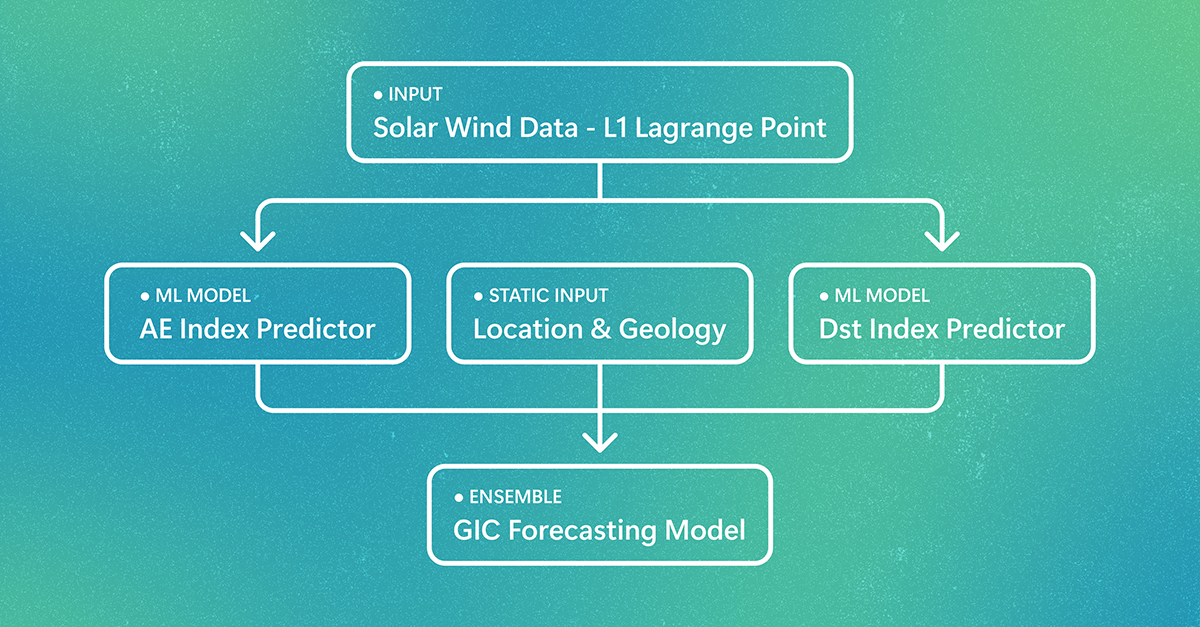
Extreme space-weather events can damage power systems on Earth and degrade GPS accuracy and satellite operations. A new machine learning system can predict where damage is likely to occur 30-60 minutes before a storm arrives. The post Forecasting space weather risks on power grids appeared first on Microsoft Research.
We use cookies to run the site and, with your consent, for analytics and to show ads.
See our Cookie Policy.