Artificial intelligence-driven resource management in edge-cloud computing continuum for internet of things applications: new trends and future directions
Aug 2026· Frontiers in The Internet of Things· 0 citations· 33 references
TL;DR
This review examines emerging trends in Artificial Intelligence (AI)-driven resource management within this continuum, with a focus on three directions: the transition from centralized to distributed and collaborative intelligence, cross-domain adaptation and knowledge transfer for heterogeneous IoT applications, and the nascent integration of foundation models into edge environments.
Abstract
The rapid proliferation of Internet of Things (IoT) devices across domains such as smart transportation, healthcare, and smart city infrastructure has intensified the demand for low-latency, energy-efficient, and scalable computing paradigms. While cloud computing has traditionally served as the backbone for IoT data processing, its inherent limitations have catalyzed the emergence of edge/fog computing, forming a distributed edge-cloud continuum. This review examines emerging trends in Artificial Intelligence (AI)-driven resource management within this continuum, with a focus on three directions: (1) the transition from centralized to distributed and collaborative intelligence, (2) cross-domain adaptation and knowledge transfer for heterogeneous IoT applications, and (3) the nascent integration of foundation models into edge environments. We ground our discussion in three complementary case studies: smart transportation as a representative vertical domain, cross-domain heterogeneous IoT application scheduling as a horizontal perspective, and industrial transferred arc plasma monitoring as an emerging industrial IoT scenario, and conclude with forward-looking research directions, including quantum-enhanced edge optimization, edge-native continual learning, digital twin-driven resource orchestration, and neuromorphic computing for ultra-low-power edge AI.
A comprehensive review of edge computing as a modern trend in information technology, including the convergence of edge computing with artificial intelligence (Edge AI), 6G networks, digital twins, and serverless edge architectures is presented.
Awiti Gideon Appiah, Dr. Lazarus Kwao, Benjamin Opoku Atuahene· International Journal of Cre...· 0 citations
This paper highlights key challenges, including interoperability, security, heterogeneous resource management, and sustainable computing, while demonstrating the potential of Edge–Cloud collaboration to improve computational efficiency, response time, energy efficiency, scalability, and privacy for next-generation smart applications.
Mahabala H. N.· International Journal of Eme...· 0 citations
: The combination of IoT (Internet of Things), edge computing, and AI (Artificial Intelligence) has brought intelligent and adaptive smart campuses. The present paper proposes an AI-based context-aware IoT that is based on the edge and cloud computing to simplify real-time campus operations, enhance the utilization of the available resources, and provide intelligent decision-making. The proposed architecture will address the main problem of current smart campus systems, such as high latency, reduced computational power at the edges, and absence of services integration. The architecture also supports edge computing, where local processing and context inference with AI are done on an edge node, and long-term optimization and cross-campus analysis, which is done by cloud computing through a hybrid approach of edge-cloud architecture. The architecture enables real time solutions to the services such energy management, safety monitoring and optimization of mobility of people, making the campus sustainable and adaptable to the requirements of dynamic users. A group of performance metrics, including latency, accuracy, energy efficiency, and scalability is used to test the recommended system. Experimentally, it is proved that the hybrid model is more responsive and resource-efficient when compared with the solutions based on clouds and edges only. This paper is a supplement to the smart campus systems by providing a scalable, adaptive, and efficient architecture that may be applied to different campus services. Future directions of this work will encompass enhancement of privacy saving mechanisms, integration of the digital twin technologies and a multi-campus architecture.
Abhijeet Kaiwade, Neeta Bendre· Proceedings of the 1st Inter...· 0 citations
This review explores the recent approaches of the state of the art focused on service orchestration in IoT edge-cloud environments, concentrating on architectures and methodologies that enable resource allocation and service management.
Rapid urbanization has increased the need for intelligent and sustainable smart city infrastructure management. Smart cities generate massive amounts of data through IoT devices, sensors, cloud platforms, and communication networks, making traditional centralized AI systems less effective due to scalability, latency, privacy, and reliability challenges. Distributed Artificial Intelligence (DAI) addresses these issues by distributing intelligence across multiple interconnected nodes, enabling decentralized learning and decision-making. This study examines the role of DAI technologies such as multi-agent systems, edge computing, federated learning, IoT networks, and cloud-edge collaboration in managing urban services. A review of recent applications demonstrates DAI’s effectiveness in traffic management, energy distribution, water systems, predictive maintenance, public safety, and environmental monitoring. The proposed framework enhances real-time processing, resource optimization, fault tolerance, and data privacy. Results indicate that DAI outperforms centralized approaches in response time, scalability, accuracy, and reliability. The study concludes that DAI is a key enabler of future smart cities, with emerging technologies such as Explainable AI (XAI), blockchain, digital twins, and autonomous urban management expected to further improve smart city operations and citizen services.
R. Sharma· International Journal of App...· 0 citations
The Internet of Things (IoT) systems generate vast amounts of data from numerous connected devices, posing significant challenges in terms of data processing, latency, and bandwidth utilization. Traditional cloud-based analytics systems face limitations, especially in real-time data processing. Edge computing, which brings computation closer to the data source, presents an ideal solution to overcome these challenges. This paper explores the design and implementation of edge computing pipelines for distributed analytics in IoT systems. It discusses the architecture of edge computing in IoT, the role of distributed analytics, and the flow of data through edge analytics pipelines. The paper also examines the benefits of edge computing, such as reduced latency, bandwidth efficiency, and enhanced real-time decision-making. Furthermore, we address the challenges in scaling, securing, and maintaining edge devices and propose various applications across smart cities, industrial IoT, healthcare, and agriculture. Finally, the paper highlights emerging trends and future directions for enhancing edge analytics capabilities in the ever-evolving IoT ecosystem.
Jose Fernandez· International Journal of Dat...· 0 citations
AI is making software generation faster, but speed does not remove the need for expertise. As more work is delegated to AI, tacit knowledge may become one of the most important human advantages in software engineering. The post Beyond Prompt Engineering: The Role of Tacit Knowledge in Software Engineering appeared first on GPT-Lab.
MIT News · Artificial Intelligence· news.mit.eduSep 9, 2026
A weeklong summer workshop brought higher education faculty to campus to explore how AI and machine learning materials can be adapted for their classrooms.
MIT News · Artificial Intelligence· news.mit.eduSep 2, 2026
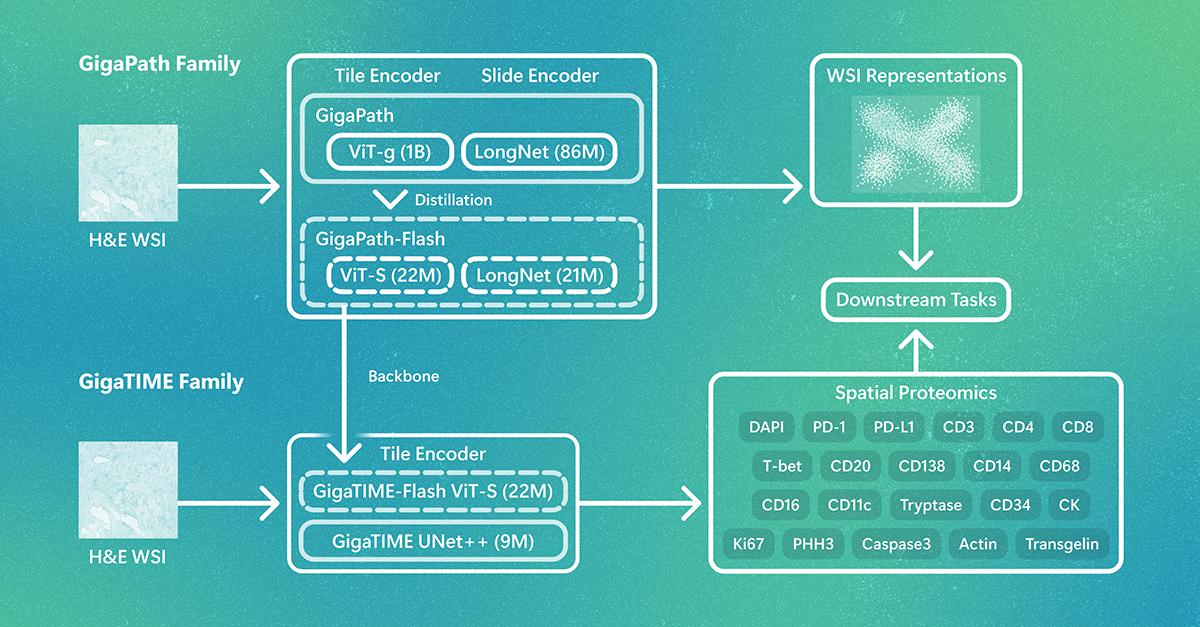
What if pathology foundation models could do more with less? GigaPath-Flash and GigaTIME-Flash cut computational demands while maintaining strong performance, opening the door to larger studies and broader exploration. The post GigaPath-Flash and GigaTIME-Flash: Toward population-scale discovery with efficient pathology foundation models appeared first on Microsoft Research.
We use cookies to run the site and, with your consent, for analytics and to show ads.
See our Cookie Policy.